Even Donald Trump Knows Bitcoin Is a Scam

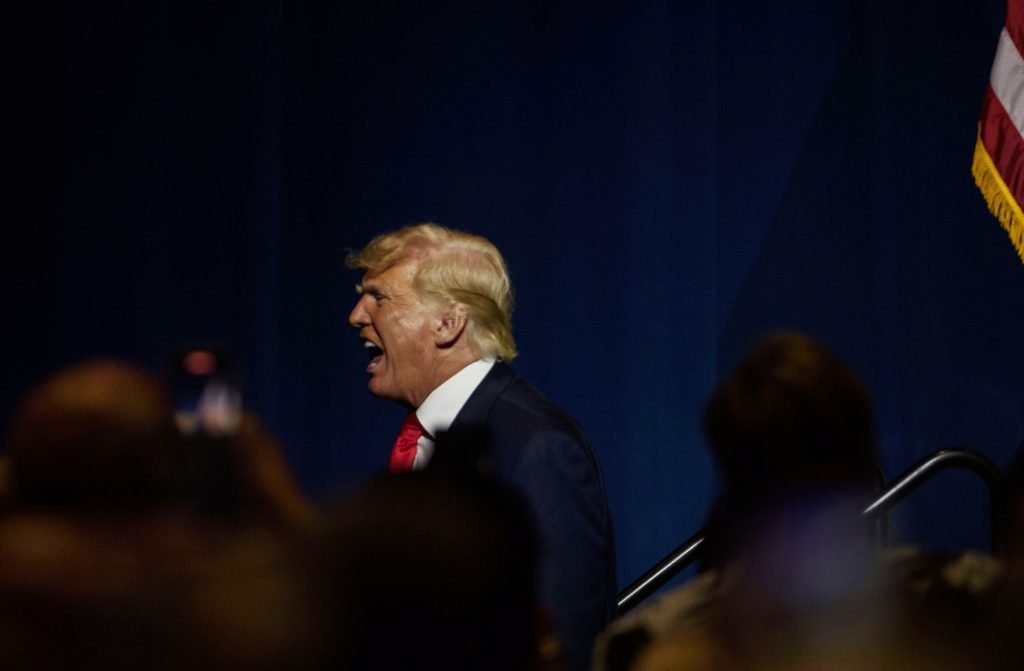
The structural integrity of his brain might be questionable, but if anyone can spot a scam, it’s former President Donald Trump, whose business history is riddled with complaints of unpaid bills and shady financial dealings. On Monday, in an interview with Fox Business, Trump denounced Bitcoin, the volatile digital currency. “Bitcoin, it just seems like a scam,” said Trump. “I don’t like it because it’s another currency competing against the dollar.” (Trump added, strangely for a supposed billionaire, that he was not invested in the stock market at the moment.)Cue the obligatory Onion article: The worst person you know just made a great point. Trump hit on something that even Bitcoin critics sometimes overlook. Bitcoin’s status as a stateless, nonsovereign currency is, to its adherents, an obvious benefit. It frees them, in their view, from the shackles of fiat currency, which is run by tyrannical central banks that print currency out of thin air. For committed coiners, there are a range of other benefits, but this sense of independence from the state itself is key. For critics, though, it’s a quick road to feudalism, to a speculative market dominated by the biggest bag holders and those who operate cryptocurrency exchanges and other intermediaries. Rather than promoting economic liberty by being a stateless currency, Bitcoin provides entreé to a wildcat market dominated by fraudsters, scammers, and powerful institutional investors. There’s a reason why Trump said what he did: He recognized his milieu.In the ideologically tinged Bitcoin battle, one need not be either a fanatical coiner or a fiat nut. Nor does one have to abide by Trump’s jingoistic economic policy to understand that a currency backed by the state carries certain benefits, and an inherent stability, that will never be found in a volatile digital currency invented by a still unknown creator, which is backed by nothing more than code and the faith of its holders. With its dramatic swings in recent weeks, Bitcoin has, yet again, proved its unfitness as a currency and its continued resemblance to something more like a wildly manipulative multilevel marketing scheme. The thousands of true believers at a recent Bitcoin conference in Miami would argue otherwise. Headlined by dozens of crypto and blockchain industry luminaries—think the Winklevii, Jack Dorsey, Tony Hawk, a Wyoming senator, and other crypto influencers—the conference was, as livestreamed on Twitter and chronicled in The New York Times, the expected mix of irrational exuberance, conspicuous consumption, and prophecies of world-changing technology (Lamborghini giveaways, $20,000 “whale passes” for elite investors, promises of infinite riches for anyone who buys in now). There were also some exceedingly odd moments, such as a rambling speech by former Congressman Ron Paul, in which he confessed to not understanding Bitcoin (though he did understand “liberty,” he said), before saying that he thought that “the pandemic was manufactured.” He went on to warn that Blackrock, the biggest asset manager in the world, wanted to institute a Marxist utopia.This is the mishmash of money-soaked spectacle and crackpot belief that defines Bitcoin, a decade into its existence. For the everyday investor or consumer, there seems little reason to recommend it. The digital asset’s immense environmental impact, its profound volatility, its resemblance to a get-rich-quick scheme pushed by wealthy investors who were lucky to buy in early and institutional traders who perform complex arbitrage schemes across crypto exchanges in various overseas jurisdictions—the whole thing screams “Scam! Stay away!” so loudly that even our dim-witted ex-president can hear the warning. (Or just stumble into a correct take, broken clock–style.) It’s not just Bitcoin that poses a problem. According to the Federal Trade Commission, as the price of Bitcoin surged between October 2020 and March 2021, so too did the number of cryptocurrency-related scams. “Consumers reported losing nearly $82 million to crypto scams during the fourth quarter of 2020 and first quarter of 2021, more than 10 times the amount from the same six-month period a year earlier,” reported The Wall Street Journal, drawing on FTC data. The growing Bitcoin bubble created opportunities for scammers to rip off more people.If you agree with Trump’s suspicion of Bitcoin, don’t worry: A dash of accidentally arrived at truth from an execrable person doesn’t validate the rest of Trump’s economic program, namely his hope that the dollar continues to be the world’s preeminent currency. That is a separate issue, speaking to larger matters of economic nationalism, monetary policy, and global trade. One of the great delusions of the coinerati has been that Bitcoin belongs in this echelon of discussion because it will eventually, somehow, replace the dollar as the global reserve currency of choice. That’s not going to happen.However valuable Bitcoin has become in the last year—despite dramatic swings, its current market capitalization is about $675 billion—numerous issues still prevent its widespread adoption. From Miami to El Salvador, politicians promise to make their polities “Bitcoin hubs,” integrating Bitcoin into mainstream banking, allowing people to draw salaries and pay bills in the digital currency, but these overtures seem mostly like P.R. stunts to draw in tech investors—as has proven effective in Miami. Ultimately, when it comes to understanding Bitcoin and crypto, despite the overblown promises of attention-seeking politicians, we are still at the level of petty scams—investors bilked for coin offerings that go nowhere or crypto hedge funds that are little more than Ponzi schemes. Donald Trump, perhaps because he comes from a level of sewer-dwelling financial chicanery much like this one, recognizes the fraud at work. Why can’t others?
Read More
Be the first to write a comment.