Crypto Currency

Why Bitcoin’s adoption of Ordinals and BRC-20 is saving it from irrelevance

Share this article URL Copied Nic Carter from Castle Island Ventures and Elizabeth Olson, an Ordinals educator, discussed how the adoption of Ordinals and BRC-20 is saving Bitcoin from irrelevance in a recent panel titled “Bitcoin Renaissance” at Consensus, which took place today. “I would actually argue to say that Ordinals and these fungible token

Share this article

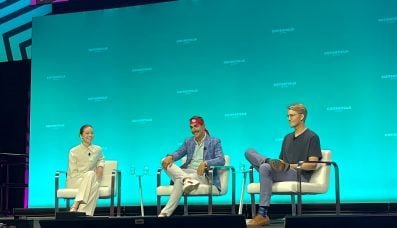
Nic Carter from Castle Island Ventures and Elizabeth Olson, an Ordinals educator, discussed how the adoption of Ordinals and BRC-20 is saving Bitcoin from irrelevance in a recent panel titled “Bitcoin Renaissance” at Consensus, which took place today.

“I would actually argue to say that Ordinals and these fungible token standards, like runes, these are actually saving Bitcoin,” Olson said. 

She pointed out that Bitcoin Ordinals, alongside runes and BRC-20, have incurred over $160 million in fees paid to miners, helping to secure the Bitcoin network.

Olson also mentioned the potential of OP_CAT, a protocol proposed by Satoshi Nakamoto himself, which could bring recursive covenants and a permissionless bridge with a two-way peg to Bitcoin by the end of the year.

Carter argued that Bitcoin’s success is not predetermined and that it needs to adapt to stay relevant. 

“Bitcoin changes at an extremely slow rate. We don’t even know how to make changes now,” he said. 

Carter believes that small incremental changes to Bitcoin, such as adding new opcodes like OP_CAT and Zk, could massively enhance its usability.

When asked about investments in the Bitcoin space, Carter mentioned that Castle Island Ventures is an investor in Babylon and three other Bitcoin L2s. He cautioned that while there has been a surge of interest in Bitcoin L2s, some projects may be opportunistic and lack the technological enabling factors to deliver on their claims.

Share this article

Share this article

Nic Carter from Castle Island Ventures and Elizabeth Olson, an Ordinals educator, discussed how the adoption of Ordinals and BRC-20 is saving Bitcoin from irrelevance in a recent panel titled “Bitcoin Renaissance” at Consensus, which took place today.

“I would actually argue to say that Ordinals and these fungible token standards, like runes, these are actually saving Bitcoin,” Olson said. 

She pointed out that Bitcoin Ordinals, alongside runes and BRC-20, have incurred over $160 million in fees paid to miners, helping to secure the Bitcoin network.

Olson also mentioned the potential of OP_CAT, a protocol proposed by Satoshi Nakamoto himself, which could bring recursive covenants and a permissionless bridge with a two-way peg to Bitcoin by the end of the year.

Carter argued that Bitcoin’s success is not predetermined and that it needs to adapt to stay relevant. 

“Bitcoin changes at an extremely slow rate. We don’t even know how to make changes now,” he said. 

Carter believes that small incremental changes to Bitcoin, such as adding new opcodes like OP_CAT and Zk, could massively enhance its usability.

When asked about investments in the Bitcoin space, Carter mentioned that Castle Island Ventures is an investor in Babylon and three other Bitcoin L2s. He cautioned that while there has been a surge of interest in Bitcoin L2s, some projects may be opportunistic and lack the technological enabling factors to deliver on their claims.

Share this article

?xml>

?xml>
Read More

Be the first to write a comment.

Leave a Reply

Your email address will not be published. Required fields are marked *

Crypto Currency

Bitcoin rebounds after sharp losses as market assesses technological and trade risks

Bitcoin rebounds after sharp losses as market assesses technological and trade risks

Bitcoin rebounds after sharp losses as market assesses technological and trade risks
Read More

Continue Reading
Crypto Currency

Bitcoin Price Prediction Hits a Wall at $70K as XRP Tests $1.50 and 12B Tokens Sold Push APEMARS Stage 9 Toward Close – Is It the Best Crypto to Invest In?

Bitcoin faces renewed pressure as the $70,000 level continues to act as a ceiling in the latest Bitcoin Price Prediction outlook. Institutional signals appear mixed despite corporate accumulation headlines, and technical indicators show hesitation rather than confirmation. At the same time, XRP trades just below $1.50 after forming higher lows…

Bitcoin faces renewed pressure as the $70,000 level continues to act as a ceiling in the latest Bitcoin Price Prediction outlook. Institutional signals appear mixed despite corporate accumulation headlines, and technical indicators show hesitation rather than confirmation. At the same time, XRP trades just below $1.50 after forming higher lows…
Read More

Continue Reading
Crypto Currency

Bitcoin Latest News Today: DeepSnitch AI Traders Bet on 100x Upside As the Project Demonstrates Rapid Development, BTC Remains Under $68K, XRP at $1.41

Bitcoin latest news today continues feeding the bearish sentiment, despite Willy Woo believing the recent Bitcoin sell-off will stop and that BTC will reach mid-$70K again. Meanwhile, XRP and DeepSnitch AI remain more affordable. The latter, especially, presents a more solid entry at $0.04146 with 100x community projections backing its future upside…

Bitcoin latest news today continues feeding the bearish sentiment, despite Willy Woo believing the recent Bitcoin sell-off will stop and that BTC will reach mid-$70K again. Meanwhile, XRP and DeepSnitch AI remain more affordable. The latter, especially, presents a more solid entry at $0.04146 with 100x community projections backing its future upside…
Read More

Continue Reading
Crypto Currency

Brazil Solar Mega-Project Studies Bitcoin Mining Plan

TLDR Engie received full commercial approval for the Assu Sol solar complex in Brazil on February 13, 2026. The project has a peak capacity of 895 MWp and includes 16 plants with over 1.5 million panels. Brazil has faced recurring curtailment since 2023 due to grid bottlenecks and excess renewable generation…

TLDR Engie received full commercial approval for the Assu Sol solar complex in Brazil on February 13, 2026. The project has a peak capacity of 895 MWp and includes 16 plants with over 1.5 million panels. Brazil has faced recurring curtailment since 2023 due to grid bottlenecks and excess renewable generation…
Read More

Continue Reading