Antivirus

Best free anti-ransomware software 2019


Of all the malware attacks you can experience, ransomware has to be one of the worst. While some paid-for anti-virus programs will protect against ransomware, most free ones do not. The result is that most PC’s are likely vulnerable to this particularly nasty form of attack.Ransomware became big news when WannaCry first appeared in 2017,…


Of all the malware attacks you can experience, ransomware has to be one of the worst. While some paid-for anti-virus programs will protect against ransomware, most free ones do not. The result is that most PC’s are likely vulnerable to this particularly nasty form of attack.

Ransomware became big news when WannaCry first appeared in 2017, crippling organizations all around the world, and while attack volume has lessened since then, the threat of attack has now become routine.

There are two main forms of ransomware. The first encrypts your files so you can’t access them, unless you pay a ransom, usually to an anonymous bitcoin account, to the attacker. The other form locks up your PC so that your only apparent option is to pay to gain access to your PC again.

This is why it’s all the more important to ensure that you have some form of protection on your PC against ransomware attacks. And while we list five of the best white knights who aim to help recover your PC from ransomware, it remains a stressful process you’re best avoiding by having protection in the first place.

  • This is our best antivirus buying guide
  • See how afree VPNcan help keep you safer online

If you haven’t yet fallen victim to a ransomware attack and want to protect your PC proactively, consider a dedicated prevention tool like ZoneAlarm Anti-Ransomware, which uses behavioral analysis to identify processes that act like ransomware – even if it’s not yet a specific known threat – and automatically backs up your files if it detects anything. It carries a subscription fee, so we haven’t included it in our main roundup, but $1.99 per month for one PC is a modest fee compared to the ransoms charged by criminals.

  • Discover thebest free antivirus software
  • Want your company or services to be added to this buyer’s guide? Please email your request to desire.athow@futurenet.com with the URL of the buying guide in the subject line.

avast-ransomware-tools.jpg

Image credit: Avast

(Image: © Avast)

1. Avast Free Ransomware Decryption Tools

Solutions designed to defeat different strains of ransomware

Step-by-step guidance
Tackles 21 forms of ransomware
Frequently updated

Not all ransomware encrypts data in the same way, so security software providers have to create specific solutions as new threats emerge. At the time of writing, the security experts at Avast have developed Free Ransomware Decryption Tools to tackle 21 different strains of file-locking ransomware.

To help you work out which one you need, Avast has provided a detailed description of how each form of ransomware works, what extension you’ll see on the encrypted files, and an example of the type of message the virus creators have prepared for their victims. 

Once you’ve downloaded the appropriate tool, it will guide you through the process of wiping out the ransomware without paying the criminals. You’ll need to provide two versions of the same file – an encrypted one, and the original.

This will be easiest if you made a backup before the infection, but Avast also suggests locations where you might be able to find unaffected original files. The  tool will then compare the two and use the results to determine the password.

Download here:Avast Free Ransomware Decryption Tools
trend-micro-antiransomware.jpg

Image credit: Trend Micro

(Image: © Trend Micro)

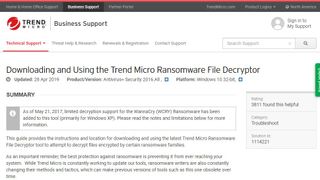
2. Trend Micro Ransomware File Decryptor

A single download that can defeat 27 breeds of ransomware

All tools provided in one download
Regular updates
Decryption may be incomplete

Trend Micro Ransomware File Decryptor is updated regularly with new ransomware definitions, and at the time of writing it can release files locked by 27 different types of ransomware and their variants.

Unlike Avast, Trend Micro bundles all its decryption tools into one bundle, but you still need to tell it what form of ransomware it’s

!–>
Read More

Be the first to write a comment.

Leave a Reply

Your email address will not be published. Required fields are marked *

Antivirus

Why There’s Simply No Need For Android Antivirus Apps Anymore

Many Android users install an antivirus app on a new device without thinking twice. In 2026, there are good reasons to skip that step entirely…

Many Android users install an antivirus app on a new device without thinking twice. In 2026, there are good reasons to skip that step entirely…
Read More

Continue Reading
Antivirus

‘People use smartphones more but invest less in their security’: New report claims McAfee and Norton remain the most loved antivirus brands as users ditch lesser-known security products for free tools like Microsoft Defender or Apple Xprotect

Copy link Facebook X Whatsapp Reddit Pinterest Flipboard Threads Email Share this article 0 Join the conversation Follow us Add us as a preferred source on Google Newsletter Subscribe to our newsletter Most smartphone users rely on built-in security without additional protection Paid antivirus adoption on mobile devices continues to decline steadily A significant share


  • Most smartphone users rely on built-in security without additional protection
  • Paid antivirus adoption on mobile devices continues to decline steadily
  • A significant share of users remains unprotected or unaware of safeguards

Most Americans now use their smartphones more than their computers, but very few spend money to protect those phones from hackers, new research has claimed.

A Cybernews report surveyed over 1,000 American adults, and found only 18% of mobile phone users pay for third-party antivirus software.

Built-in tools like Microsoft Defender and Apple’s XProtect have become the default choice for most people, while McAfee and Norton lead the paid market for the second year in a row.

Latest Videos From

You may like

  • Best antivirus software Best Antivirus Software 2026
  • People using Windows 11 laptops Can Windows 11’s built-in antivirus keep you safe? Microsoft thinks so
  • Norton 36src Premium Norton 360 Premium will protect your devices from AI scams, malware, and identity theft for less than $30

Smartphone owners are skipping extra security protections

Most consumers believe the security features already built into their phones are sufficient for daily use, and see little reason to spend extra money on something they think they already own for free.

Roughly 14% of mobile users say they have no cybersecurity tools installed at all on their devices. Another 16% cannot even name what protections they currently have in place.

On desktop computers, the situation looks very different, with far fewer unprotected machines and much wider adoption of third-party security tools.

Windows Defender and Apple’s native security features now serve as the primary defense for 53% of computer users and 51% of mobile users.

Most people choose these free options because they trust the operating system vendor to provide adequate baseline protection.

Paid antivirus adoption on computers has actually grown by 2% since last year, reaching 41% of users.

On mobile devices, however, third-party antivirus usage has dropped by roughly 10% over the same period, falling from 28% to just 18%.

What to read next

  • Customer at home looking happy because his network is protected by ESET Home Security We all need digital protection and the ESET Home Security Plan is the bees knees
  • A hand holding a mobile phone scans a QR code on a blurry laptop screen. The phone issues a warning that the QR code could be malicious. Microsoft phishing threat report shows 146% surge in quishing
  • Malware attack virus alert , malicious software infection , cyber security awareness training to protect business Time for an upgrade? Report warns outdated operating systems could be the ‘unnecessary risk’ your business forgot about

Mobile users face growing risks

Ransomware attacks targeting smartphones are still less common than those aimed at computers, but the threat landscape is shifting rapidly.

Users who depend solely on the free security tools that came with their phones may be underestimating what modern cybercriminals can do.

Paid subscriptions have gained ground over free alternatives, yet the majority of mobile owners still avoid spending money on dedicated protection.

Cybercrime exposure does influence some users to change their habits, but personal experience is not the main driver of adoption for most people.

Many users employ layered security approach, combining antivirus with VPNs and password managers.

However, the data shows that a large segment of mobile users remain either unprotected or unsure about what safeguards they have.

Established brands like McAfee and Norton continue to benefit from user trust, while lesser-known products struggle to gain acceptance even when their features are comparable.


Google logo on a black background next to text reading

Follow TechRadar on Google News and add us as a preferred source to get our expert news, reviews, and opinion in your feeds. Make sure to click the Follow button!

Read More

Continue Reading
Antivirus

Surfshark One review: Adequate antivirus protection with caveats

At a glanceExpert’s Rating Pros Clean, extremely simple interface Alternative ID lets you mask your whole identity, not just an email address VPN service is solid Cons Full scans hit PC performance hard Very few settings to adjust Not as many features as similarly priced rivals Our Verdict If VPN coverage is your first priority…

At a glanceExpert’s Rating

Pros

Clean, extremely simple interface

Alternative ID lets you mask your whole identity, not just an email address

VPN service is solid

Cons

Full scans hit PC performance hard

Very few settings to adjust

Not as many features as similarly priced rivals

Our Verdict
If VPN coverage is your first priority…
Read More

Continue Reading
Antivirus

NITDA raises alarm on DeepLoad AI malware attacks, proffers solutions

“Never paste commands from a website into your computer; legitimate software never asks for this. Do not open files named ‘Chrome Setup’ or ‘Firefox Installer’ from USB drives; scan all USB devices with antivirus software before use,” the agency said, warning corporate companies of possible cyber attacks…

“Never paste commands from a website into your computer; legitimate software never asks for this. Do not open files named ‘Chrome Setup’ or ‘Firefox Installer’ from USB drives; scan all USB devices with antivirus software before use,” the agency said, warning corporate companies of possible cyber attacks…
Read More

Continue Reading