Crypto Currency

Bitcoin restaking: programmable slashing and enhanced security

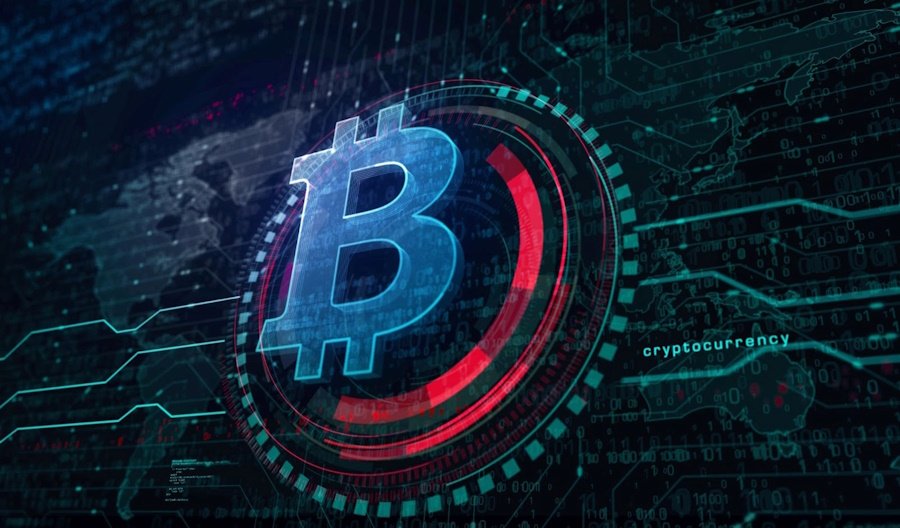
Programmable slashing deters malicious acts in shared security blockchain models. SatLayer enables custom slashing rules for diverse decentralized applications. Bitcoin restaking enhances security while offering flexible incentive structures. At the heart of many modern-day crypto protocols lies a powerful yet nuanced concept called ‘slashing.’ In its most basic terms, it can be viewed as an


Bitcoin restaking: programmable slashing and enhanced security

  • Programmable slashing deters malicious acts in shared security blockchain models.
  • SatLayer enables custom slashing rules for diverse decentralized applications.
  • Bitcoin restaking enhances security while offering flexible incentive structures.

At the heart of many modern-day crypto protocols lies a powerful yet nuanced concept called ‘slashing.’ In its most basic terms, it can be viewed as an economic line of defense helping establish a delicate balance of incentives to encourage proper behavior while deterring malicious activities.

To be more elaborate, slashing conditions offer up financial guardrails within blockchain networks, imposing monetary penalties on participants who violate protocol rules. As a result, they create a system where operators must have skin in the game (i.e. put their capital) before being entrusted with network validation responsibilities.

This is particularly vital in shared security models, where the same set of validators secures multiple chains or applications, as misbehavior in one area can trigger penalties across the entire ecosystem.

For instance, a validator considering double-signing (producing conflicting blocks at the same height) must weigh the potential short-term gain against the guaranteed loss of staked assets – a calculation that typically makes malicious behavior economically irrational.

The economics of trust

Without quality slashing conditions, restaking protocols would lack the necessary financial deterrents to prevent malicious behavior, potentially leading to catastrophic security failures and loss of user funds. However, the implementation of slashing conditions requires careful consideration of numerous factors, including the severity of different offenses, the appropriate penalty levels, and the mechanisms through which violations are detected and proven.

Too lenient, and the rules may fail to deter malicious behavior; too harsh, and they might discourage participation altogether. This delicate balance is essential for creating a system that maximizes security while remaining attractive to potential validators and stakers.

One project that achieves this equilibrium well is SatLayer, a shared security platform leveraging Bitcoin as primary security collateral while offering unprecedented flexibility in slashing condition implementation.

By deploying as a set of smart contracts atop the popular BTC staking platform Babylon, SatLayer enables Bitcoin restakers to secure any type of decentralized application as a Bitcoin Validated Service (BVS) — all while maintaining full Turing-complete programmability with minimal trust assumptions.

Differentiators galore

What truly distinguishes SatLayer from the rest of the fray is its ability to allow each BVS to implement its own specific slashing conditions tailored to its security requirements.

Unlike one-size-fits-all approaches that apply identical penalties across different contexts, SatLayer recognizes that various applications may have distinct security needs and threat models. A bridge service connecting multiple blockchains, for in

Read More

Be the first to write a comment.

Leave a Reply

Your email address will not be published. Required fields are marked *

Crypto Currency

Why Did the Crypto Market Crash Today?

The post Why Did the Crypto Market Crash Today? appeared first on Coinpedia Fintech News In just the past hour, the crypto market lost nearly $90.3 billion in value, with the total market cap falling 3.37% to around $2.59 trillion. Bitcoin, the world’s largest cryptocurrency, dropped to nearly $77,678…

The post Why Did the Crypto Market Crash Today? appeared first on Coinpedia Fintech News
In just the past hour, the crypto market lost nearly $90.3 billion in value, with the total market cap falling 3.37% to around $2.59 trillion. Bitcoin, the world’s largest cryptocurrency, dropped to nearly $77,678…
Read More

Continue Reading
Crypto Currency

XRP beat bitcoin gains as CLARITY Act advanced, but a real bullrun still needs Congress

Markets XRP beat bitcoin gains as Clarity Act advanced, but a real bullrun still needs Congress The token jumped 5% after a Senate committee moved the market-structure bill forward, reviving hopes that legal clarity can pull deeper institutional money into XRP products. By Shaurya Malwa Updated Jun 2, 2026, 4:52 a.m. Published May 16, 2026

Markets

XRP beat bitcoin gains as Clarity Act advanced, but a real bullrun still needs Congress

The token jumped 5% after a Senate committee moved the market-structure bill forward, reviving hopes that legal clarity can pull deeper institutional money into XRP products.

Make preferred on

Share this article
X iconX (Twitter)LinkedInFacebookEmail

Make preferred on

(CoinDesk)
Summary

  • XRP jumped above $1.50 after the Senate Banking Committee advanced the Digital Asset Market Clarity Act, a key step toward clearer U.S. rules for crypto markets.
  • The bill, which still faces several legislative hurdles, would give institutions a more defined framework for custody, trading, market making and ETF allocation of digital assets including XRP.
  • Growing institutional use of the XRP Ledger for tokenized assets, DeFi activity and spot XRP ETF inflows underscores rising demand even as the token remains below its 2025 highs.

XRP traders got the regulatory headline they had been waiting for on Thursday after the Senate Banking Committee advanced the Digital Asset Market Clarity Act in a 15-9 vote, moving one of Washington’s main crypto market-structure bills closer to a full Senate fight.

XRP traded zoomed above $1.5 after the vote, adding 5% over a 24-hour period and 7.6% on the week, making it one of the stronger performers among major tokens such as bitcoin and ether, which have added under 3% for the week.

The outsized reaction came as few large crypto assets have been shaped as directly by U.S. regulatory uncertainty as XRP.

The SEC sued Ripple in December 2020, setting off years of exchange suspensions, institutional hesitation and legal noise around whether XRP could trade freely in U.S. markets. A 2023 ruling from Judge Analisa Torres helped clear secondary-market XRP trading from being treated as securities transactions, but the broader market never got what large allocators usually want – federal legislation that is harder for a future regulator to reinterpret.

The CLARITY bill would put more digital assets under a defined market-structure regime and give institutions a cleaner framework for custody, trading, market making and ETF allocation.

Ripple CEO Brad Garlinghouse called the committee vote “the moment” in a post on X, saying the industry deserves “the same rules and protections as every other asset class.”

The Senate Banking version still has to merge with the Agriculture Committee version, pass the full Senate, survive House reconciliation and reach the president’s desk. Senator Cynthia Lummis has said lawmakers have agreement on most of the bill, while Senator Elizabeth Warren has objected to parts of the process. The Memorial Day recess gives the current push a practical deadline.

Optimism and demand for XRP stems from several fundamental factors directly impacted both the token and its closely-related firm Ripple.

Alexis Sirkia, an early XRP and Ethereum market maker who now leads decentralized clearing firm Yellow Network told CoinDes that the “the real story of XRP in mid-2026 will not be its consolidating price, but the quiet, almost imperceptible rewiring of global finance.”

“With legal clouds lifted and institutional capital proving remarkably sticky, the XRP Ledger is transforming into a compliance-grade tokenization and settlement layer, speaking the precise language that institutional capital does,” Sirkia added.

The XRP Ledger, the underlying network of xrp tokens, has recorded a bump in activity in the past few months. Tokenized real-world assets on the chain have crossed $3 billion, placing it among the leading non-Ethereum networks for institutional tokenization.

Last week’s Ripple-JPMorgan-Mastercard-Ondo pilot processed a tokenized U.S. Treasury redemption in under five seconds, demonstrating the chain can bridge public blockchain rails with traditional interbank settlement.

Meanwhile, the broader DeFi ecosystem built around XRP through bridged representations has grown to over $560 million in combined value locked, led by Flare and Doppler Finance.

U.S.-listed spot XRP ETFs drew $25.8 million in net inflows earlier this week in their largest daily haul since early January, bringing cumulative inflows to $1.35 billion.

The inflows followed Ripple’s closing of a $200 million debt facility for its Ripple Prime brokerage and a successful pilot tokenized U.S. Treasury settlement on the XRP Ledger with JPMorgan, Mastercard and Ondo Finance.

As such, XRP remains well below its 2025 highs, and the $1.50 area continues to act as the level bulls need to reclaim.

The committee vote gave XRP a catalyst. Full legal clarity is still the trade.

Latest Crypto News
  1. 1
    Forget max pain theory. Bitcoin is well below the $72,000 magnet going into $10 billion options expiry

  2. 2
    Live markets: Bitcoin, ether lead $1 billion liquidation losses as AI trade keeps going

  3. 3
    MemeCore’s M token suddenly crashes 80% with no clear trigger

  4. 4
    Ripple’s RLUSD stablecoin goes live in Japan after regulatory approval

  5. 5
    Bitcoin has a new line in the sand. Thursday’s core PCE could stress test it.

  6. 6
    XRP slides 2.8% as weak bounce keeps $1 support in focus

  7. 7
    Bitcoin back above $60,000, ETH, SOL recoup losses as AI stocks stage rebound

  8. 8
    Upheaval at the Ethereum Foundation has some of crypto’s biggest names feeling bullish

  9. 9
    Kalshi targets a massive $40 billion valuation, widening lead over rival Polymarket

  10. 10
    Binance withdraws Greek MiCA bid but vows to remain in Europe

Latest Research
CoinDesk

CEX Volumes Drop to Lowest Since September 2024 as RWA Perps Hit Record High

In May, combined exchange volumes fell 3.45% to $4.41T; the lowest since September 2024. RWA perpetual futures volumes rose 10.4% against the trend, hitting a new all-time high.

Why it matters:

In May, combined exchange volumes fell 3.45% to $4.41T; the lowest since September 2024. RWA perpetual futures volumes rose 10.4% against the trend, hitting a new all-time high.

View Full Report
More From Markets
Magnet. (pithonius/Pixabay)

Forget max pain theory. Bitcoin is well below the $72,000 magnet going into $10 billion options expiry

BTC falls to its 2src-day moving average. (Meg Boulden/Unsplash)

MemeCore’s M token suddenly crashes 80% with no clear trigger

Japan flag in front of a building (Roméo A./Unsplash)

Ripple’s RLUSD stablecoin goes live in Japan after regulatory approval

!–>!–>!–>!–>
Read More

Continue Reading
Crypto Currency

Strategy has put Bitcoin sales on the table for repurchases – but will it affect BTC price?

Strategy agreed on May 15 to repurchase roughly $1.5 billion principal of its 2029 convertible notes for an estimated $1.38 billion in cash. The firm told investors in its Form 8-K that it may fund the repurchase with available cash reserves, ATM sale proceeds, and/or Bitcoin sale proceeds…

Strategy agreed on May 15 to repurchase roughly $1.5 billion principal of its 2029 convertible notes for an estimated $1.38 billion in cash. The firm told investors in its Form 8-K that it may fund the repurchase with available cash reserves, ATM sale proceeds, and/or Bitcoin sale proceeds…
Read More

Continue Reading
Crypto Currency

Take your shot at a solo-mining win with this $60 desktop Bitcoin miner (+ free shipping)

Macworld TL;DR: The BlockChance™ Bitcoin Ticket Miner is a compact, silent solo-mining device with a touchscreen display, Wi-Fi support, and 1,000 KH/s hashing power for $59.99 with free shipping. There’s something undeniably funny—and also kind of amazing—about the idea that a tiny gadget sitting on your desk could technically mine an entire Bitcoin block…

Macworld

TL;DR: The BlockChance™ Bitcoin Ticket Miner is a compact, silent solo-mining device with a touchscreen display, Wi-Fi support, and 1,000 KH/s hashing power for $59.99 with free shipping.

There’s something undeniably funny—and also kind of amazing—about the idea that a tiny gadget sitting on your desk could technically mine an entire Bitcoin block…
Read More

Continue Reading