Antivirus

Do I really need antivirus for Windows 10?

If you’re running Windows 10, should you get an antivirus app? There are certainly some good reasons to do so, as we’ll explore in this article, not the least of which is that Microsoft’s operating system is so popular that it makes a seriously tempting target for malware authors in terms of the potential spoils…

If you’re running Windows 10, should you get an antivirus app? There are certainly some good reasons to do so, as we’ll explore in this article, not the least of which is that Microsoft’s operating system is so popular that it makes a seriously tempting target for malware authors in terms of the potential spoils to be gotten.

  • Our definitive list of today’s best Windows 10 antivirus programs
  • Looking for even more protection? Grab a great VPN for PC
  • See why we rate Bitdefender so highly in our testing

Big target

Windows 10 is the most widely used desktop operating system in the world, and as the OS of choice for many PCs everywhere, it represents a broad and juicy target for malware authors.

unwise folks who remain on Windows 7) are the biggest targets for malware authors.

Now, it’s true that in recent times, malicious actors are giving Apple’s Mac platform more attention, but Windows is still the operating system which is most under threat, of course. Particularly when it comes to malware, with Mac threats tending to be the likes of potentially unwanted programs (known as PUPs) or adware. The vast majority of the really malicious stuff is hurled at Windows machines.

Malware is growing increasingly more sophisticated

(Image credit: Andriano.cz / Shutterstock)

Threat level

Going by the latest ‘state of malware’ report covering 2019 from Malwarebytes [PDF], the amount of malware detections may be remaining at the same level as the previous year, but it’s still a large quantity – and what’s worrying is that these threats are becoming more sophisticated in general. (Note that other security outfits have pointed to a growth in malware over the course of 2019, like Kaspersky).

Clearly, there’s no shortage of perils out there online, with Malwarebytes observing that adware and Trojans (apps that look like legitimate programs, but deliver a malware payload) remain a major problem for Windows machines. Furthermore, there’s a disturbing increase in the use of ‘HackTools’, which as the name suggests are tools facilitating hacking into PCs, and are now being used against consumers (rather than just businesses), with a 42% year-on-year increase.

The likes of ransomware remain a threat to your files, exploiting crises in the real world to try to trick unsuspecting users, and so broadly speaking, the nature of Windows 10 as a big target for malware, and the growing sophistication of threats are good reasons why you should bolster your PC’s defenses with a good antivirus.

Windows Defender?

So, having established the need for an antivirus on Windows 10 – and elsewhere, we’ve addressed the broader question of whether antivirus software is necessary at all in 2020 (the answer being ‘yes’, in a word) – let’s come onto another point that some folks might argue.

Namely that with Windows 10, you get protection by default in terms of Windows Defender. So that’s fine, and you don’t need to worry about downloading and installing a third-party antivirus, because Microsoft’s built-in app will be good enough. Right?

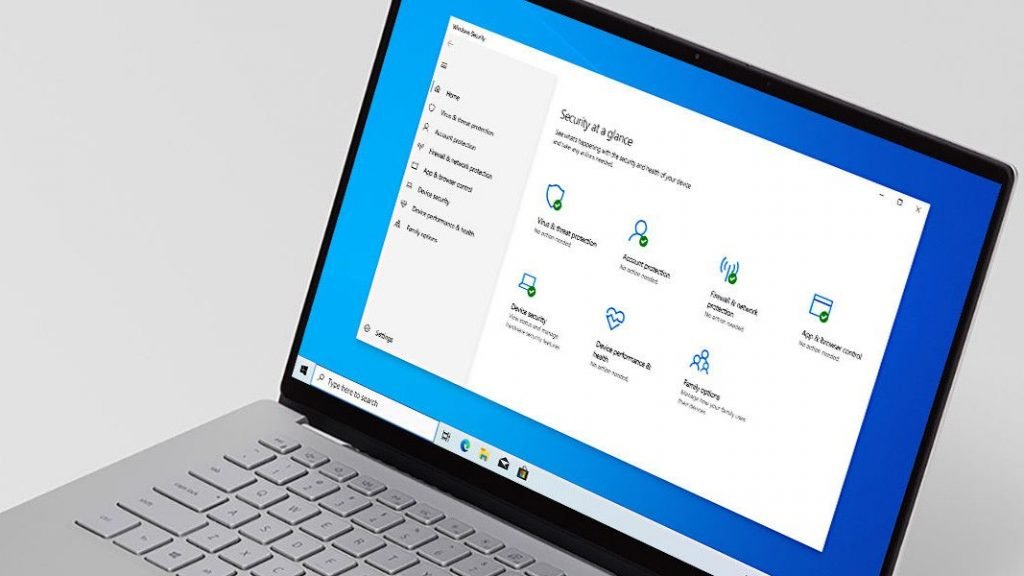
Well, yes and no. Windows Defender used to be something of a laughing-stock in security circles, but all that’s now in the past. The Defender of today is actually a robust app that can indeed defend your PC true to its name, and has actually achieved some impressive rankings in the reports from independent test labs.

Windows Defender provides security by default for Windows 1src

(Image credit: Microsoft)

However, the truth is that while Windows Defender is a solid enough solution you can rely on, there are third-party antivirus apps which offer more functionality, and are still free – they just take a little effort to install.

So if you can take a little time out, it’s worth installing one of the leading free antivirus apps to replace Windows Defender in order to get more features and better security still – and indeed avoid a potential fly in the ointment in terms of Microsoft breaking Defender, which has happened a couple of times in the recent past.

It’s also worth considering that if you want to considerably beef up the levels of security on your PC with extra layers of defense like anti-ransomware shields or added web browsing protection, you might even want to consider a paid antivirus.

Do I really need antivirus for Windows 10?

Whichever way you dice it, it would seem to be a wise choice to get an antivirus for Windows 10, and make the effort to upgrade from the default levels of security provided by Windows Defender. After all, it’s easy enough to grab a decent free app to help keep you even safer online.

  • Read more: How to choose the best antivirus for you
Bitdefender Antivirus Plus

33% off
Norton
Kaspersky
Trend Micro
Webroot

Read More

Be the first to write a comment.

Leave a Reply

Your email address will not be published. Required fields are marked *

Antivirus

Your antivirus is probably slowing your PC more than protecting it

Antivirus is one of the first things most people install on a new PC. After all, nobody wants malware ruining their PC or, worse, stealing their data. And to be fair, most popular antivirus suites do a decent job of protecting your PC. But the problem is, they aren’t exactly optimized to be lean or

Antivirus is one of the first things most people install on a new PC. After all, nobody wants malware ruining their PC or, worse, stealing their data. And to be fair, most popular antivirus suites do a decent job of protecting your PC. But the problem is, they aren’t exactly optimized to be lean or lightweight. And things have become even worse ever since antivirus suites have started bundling extras like VPNs, parental controls, and browser add-ons.

All of this leaves the apps and games you actually use with fewer resources, which causes frequent slowdowns and even lag. So the uncomfortable irony is that the software meant to protect your PC ends up being the very thing holding it back.

How antivirus software can slow down your PC

When constant protection becomes constant pressure

Antivirus softwares love to present themselves as silent protectors. Always watching, always keeping you safe, and never getting in your way. Sure enough, part of this is true. They work in the background, but it’s not without any impact.

Antivirus programs work by scanning files as they are opened, downloaded, copied, or modified. That means every app you launch and every document you touch triggers a quick inspection. There are also the scheduled scans, which often run when you least expect them. So if your PC has ever felt slow, even when you’ve got nothing running, it’s probably the antivirus program combing through your files in the background.

Now, the performance hit isn’t the same every time. During light, routine scans, the impact can be minimal, anywhere from 0 to 20 percent. However, during full or partial scans, this can rise up to as high as 50 percent. The impact also varies depending on the antivirus program you’re using. Some are lightweight and efficient, while others are far more demanding.

Most of the time, you may not even notice this slowdown. But as soon as you start gaming, editing videos, or running any resource-intensive apps, the story will change. That’s when both your app or game and antivirus program start to compete for the same system resources, and the performance takes a hit.

To make matters worse, modern antivirus rarely sticks to just antivirus duties. Most of them come bundled with all sorts of extras, like VPNs, password managers, and system optimizers. All of these extras run separate processes. So yes, it’s not just one program you’re dealing with. Your PC is actually running multiple different software under a single name.

You can verify if the antivirus is the bottleneck

Be sure before you act

!–>

Read More

Continue Reading
Antivirus

If you’re struggling to play tactics sim Menace, it could be because your antivirus is randomly deleting files

This week saw the early access launch of turn-based tactics game Menace, created by the piss-swigging misanthropes behind Battle Brothers. Julian has been having a wonderful time playing it and learning about the importance of spare ammo and adequate reconnaissance. It could have been worse, Julian…

This week saw the early access launch of turn-based tactics game Menace, created by the piss-swigging misanthropes behind Battle Brothers. Julian has been having a wonderful time playing it and learning about the importance of spare ammo and adequate reconnaissance. It could have been worse, Julian…
Read More

Continue Reading
Antivirus

You don’t need to pay for third-party antivirus software to protect your PC anymore

Summary Most consumer devices already come with strong default security measures equivalent to or better than third-party software. Common vectors of attack for malware are already blocked by modern systems before they even reach your antivirus program. Individual consumer PCs are not a primary target for cybercriminals, and cyberattacks are often conducted by exploiting vulnerabilities

Summary

  • Most consumer devices already come with strong default security measures equivalent to or better than third-party software.
  • Common vectors of attack for malware are already blocked by modern systems before they even reach your antivirus program.
  • Individual consumer PCs are not a primary target for cybercriminals, and cyberattacks are often conducted by exploiting vulnerabilities against third-party software, not the computer OS itself.

Do you still pay for third-party antivirus software like Norton or McAfee? You may be surprised to learn that there’s no real benefit to doing so. Software like this is mostly obsolete today.

Who pays for third-party antivirus software, and why?

It might sound like a bold claim, saying that you don’t need third-party antivirus software anymore. After all, recent statistics show that roughly half of American consumers use such programs. Interestingly enough, those same statistics also show that users over 65 are more than twice as likely to subscribe to paid antivirus software than those under 45.

Why is that? Well, there is certainly more than one reason, but a big one is simply misunderstanding and tradition.

In the past, having third-party antivirus software was prudent, almost mandatory to keep your computer safe. Some people who grew up in that era are comfortable with the idea of paying for these subscriptions, not realizing that things have changed: your computer protects itself just fine these days.

Not only do computers come out of the box equipped with incredibly good security these days, but most malware threats aren’t even targeting individual consumers. But you don’t have to take my word for it right away. Let’s dive into this in more detail.

Default security measures are more than enough today

All of your consumer devices come with default protection right off the shelf. With iOS and Android, their official app stores weed out malware and keep you safe. Mac has been using XProtect anti-malware for more than a decade, and it has an excellent record.

A screen showing an update for Windows Defender on Windows 11. Credit: Microsoft

Windows has Microsoft Defender Antivirus, which has consistently aced security tests run by third-party organizations. Since around seven years ago, Defender Antivirus has consistently earned perfect or near-perfect scores in protecting your PC.

Needless to say, that’s as good as it gets, and the program comes free with your Windows computer. There’s no paid antivirus software that can outperform this free, default option from Microsoft. They may offer more features, but not more practical benefits. But even beyond these built-in systems, there are other re

Read More

Continue Reading
Antivirus

AV vendor goes to war with security shop over update server scare

eScan lawyers up after Morphisec claimed ‘critical supply-chain compromise’ A spat has erupted between antivirus vendor eScan and threat intelligence outfit Morphisec over who spotted an update server incident that disrupted some eScan customers earlier this month.……

eScan lawyers up after Morphisec claimed ‘critical supply-chain compromise’ A spat has erupted between antivirus vendor eScan and threat intelligence outfit Morphisec over who spotted an update server incident that disrupted some eScan customers earlier this month.……
Read More

Continue Reading