Antivirus

Everything you need to know about ransomware in 2019

Fabian Wosar makes a living ruining ransomware gangs’ days, and he has the hate-mail to prove it.“At one point, I managed to annoy a ransomware author so much that they literally renamed their ransomware in my name,” he says. “So they renamed their ransomware to ‘fabiansomware’, which is kind of really bizarre.” Wosar is the head…


Fabian Wosar makes a living ruining ransomware gangs’ days, and he has the hate-mail to prove it.

“At one point, I managed to annoy a ransomware author so much that they literally renamed their ransomware in my name,” he says. “So they renamed their ransomware to ‘fabiansomware’, which is kind of really bizarre.” 

Wosar is the head of research at IT security company Emsisoft, whose free ransomware decryption tools have been downloaded over a million times (1,144,351, to be exact, not including downloads from mirror sites). With the average ransomware writer demanding $522 (about £400, AU$750) to restore victims’ files, that’s a potential $597,351,222 (about £455,000,000, AU$833,000,000) kept out of the pockets of ransomware authors. Not bad for a 40-person company without an office.

“Emsisoft started out as a very, very small company with only two employees,” says Wosar. “When you try to get into the antivirus and antimalware field and you only have two people, there’s no way you can compete based on manpower with the big houses like Symantec and Kaspersky or Bitdefender, which all have thousands of employees.
Ransomware comment

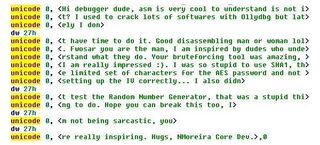
Not all the comments Wosar receives are insults; some ransomware authors are impressed

“It was very evident from the very beginning that we just have to be more agile, that we need to make sure that all our internal processes have a lot less overhead and we also had to be a lot smarter about how we put our limited resources to good use. And this business mindset that was originally born as kind of a necessity soon became the core philosophy behind all our products.

Emsisoft has grown steadily over the last 15 years, with no outside investment. It’s still a lot smaller than many of its rivals, but that hasn’t stopped it competing with the security software giants.

“We started out very much as a very home user focused company,” Wosar says, “but we started moving into the business market in recent years, with growing success and we came to realise that home users and enterprises often have vastly different requirements and needs. Most traditional companies solve that by just throwing more resources at it, and often splitting the product line, having different products for different clienteles, but that’s something that we simply can’t do.

“So our philosophy of keeping things lean we now focus on making all these advanced enterprise-level protection features not only available to home users, but also to make them approachable and useful to them so they can actually understand them and know what is happening, and putting the user into power by making them a lot more accessible, which will become a lot more eminent with a couple of upcoming products that we are going to release in 2019 that I can’t tell much about. But that’s out focus now, just giving the power to the man.”

A brief history of ransomware

Wosar’s interest in security began when he was just 11. “I got infected by a virus called Tequila in the good old DOS days, and I just got kind of drawn in,” he says.

He first became interested in ransomware in 2012, when BleepingComputer founder Lawrence Abrams asked if he could help some forum users who’d fallen victim to the ACCDFISA (Anti Cyber Crime Department of Federal Internet Security Agency) virus – one of the first examples of file-encrypting ransomware.

“Ransomware first became big in the form of screen lockers,” Wosar explains. “Essentially you’re browsing the internet and suddenly a screen pops up locking your entire screen, telling you the FBI or GCHQ just saw you doing something naughty. Now you have to go to your local store and pick up a Paysafecard and type in the code to unlock your system. Because obviously the state would take Paysafecard, right?”

That is always kind of interesting, when people get so angry that they want to insult me so badly that they actually end up making their ransomware less secure in the process

Fabian Wosar, Emsisoft

It soon became common knowledge that screen lockers were relatively easy to remove (just restart the computer in Safe Mode and remove the infection), so the people behind them turned to file encryption instead. This is a much bigger issue, and one that Wosar has dedicated years to tackling – much to the annoyance of the criminals.

Wosar receives regular insults, and often finds them within the ransomware itself, which can have unintended consequences.

“There’s a certain kind of encryption called a block cipher that operates on blocks of data,” Wosar says. “When you think about it, if you don’t change your encryption from block to block, then even if you only have an encr

Read More

Be the first to write a comment.

Leave a Reply

Your email address will not be published. Required fields are marked *

Antivirus

Why There’s Simply No Need For Android Antivirus Apps Anymore

Many Android users install an antivirus app on a new device without thinking twice. In 2026, there are good reasons to skip that step entirely…

Many Android users install an antivirus app on a new device without thinking twice. In 2026, there are good reasons to skip that step entirely…
Read More

Continue Reading
Antivirus

‘People use smartphones more but invest less in their security’: New report claims McAfee and Norton remain the most loved antivirus brands as users ditch lesser-known security products for free tools like Microsoft Defender or Apple Xprotect

Copy link Facebook X Whatsapp Reddit Pinterest Flipboard Threads Email Share this article 0 Join the conversation Follow us Add us as a preferred source on Google Newsletter Subscribe to our newsletter Most smartphone users rely on built-in security without additional protection Paid antivirus adoption on mobile devices continues to decline steadily A significant share


  • Most smartphone users rely on built-in security without additional protection
  • Paid antivirus adoption on mobile devices continues to decline steadily
  • A significant share of users remains unprotected or unaware of safeguards

Most Americans now use their smartphones more than their computers, but very few spend money to protect those phones from hackers, new research has claimed.

A Cybernews report surveyed over 1,000 American adults, and found only 18% of mobile phone users pay for third-party antivirus software.

Built-in tools like Microsoft Defender and Apple’s XProtect have become the default choice for most people, while McAfee and Norton lead the paid market for the second year in a row.

Latest Videos From

You may like

  • Best antivirus software Best Antivirus Software 2026
  • People using Windows 11 laptops Can Windows 11’s built-in antivirus keep you safe? Microsoft thinks so
  • Norton 36src Premium Norton 360 Premium will protect your devices from AI scams, malware, and identity theft for less than $30

Smartphone owners are skipping extra security protections

Most consumers believe the security features already built into their phones are sufficient for daily use, and see little reason to spend extra money on something they think they already own for free.

Roughly 14% of mobile users say they have no cybersecurity tools installed at all on their devices. Another 16% cannot even name what protections they currently have in place.

On desktop computers, the situation looks very different, with far fewer unprotected machines and much wider adoption of third-party security tools.

Windows Defender and Apple’s native security features now serve as the primary defense for 53% of computer users and 51% of mobile users.

Most people choose these free options because they trust the operating system vendor to provide adequate baseline protection.

Paid antivirus adoption on computers has actually grown by 2% since last year, reaching 41% of users.

On mobile devices, however, third-party antivirus usage has dropped by roughly 10% over the same period, falling from 28% to just 18%.

What to read next

  • Customer at home looking happy because his network is protected by ESET Home Security We all need digital protection and the ESET Home Security Plan is the bees knees
  • A hand holding a mobile phone scans a QR code on a blurry laptop screen. The phone issues a warning that the QR code could be malicious. Microsoft phishing threat report shows 146% surge in quishing
  • Malware attack virus alert , malicious software infection , cyber security awareness training to protect business Time for an upgrade? Report warns outdated operating systems could be the ‘unnecessary risk’ your business forgot about

Mobile users face growing risks

Ransomware attacks targeting smartphones are still less common than those aimed at computers, but the threat landscape is shifting rapidly.

Users who depend solely on the free security tools that came with their phones may be underestimating what modern cybercriminals can do.

Paid subscriptions have gained ground over free alternatives, yet the majority of mobile owners still avoid spending money on dedicated protection.

Cybercrime exposure does influence some users to change their habits, but personal experience is not the main driver of adoption for most people.

Many users employ layered security approach, combining antivirus with VPNs and password managers.

However, the data shows that a large segment of mobile users remain either unprotected or unsure about what safeguards they have.

Established brands like McAfee and Norton continue to benefit from user trust, while lesser-known products struggle to gain acceptance even when their features are comparable.


Google logo on a black background next to text reading

Follow TechRadar on Google News and add us as a preferred source to get our expert news, reviews, and opinion in your feeds. Make sure to click the Follow button!

Read More

Continue Reading
Antivirus

Surfshark One review: Adequate antivirus protection with caveats

At a glanceExpert’s Rating Pros Clean, extremely simple interface Alternative ID lets you mask your whole identity, not just an email address VPN service is solid Cons Full scans hit PC performance hard Very few settings to adjust Not as many features as similarly priced rivals Our Verdict If VPN coverage is your first priority…

At a glanceExpert’s Rating

Pros

Clean, extremely simple interface

Alternative ID lets you mask your whole identity, not just an email address

VPN service is solid

Cons

Full scans hit PC performance hard

Very few settings to adjust

Not as many features as similarly priced rivals

Our Verdict
If VPN coverage is your first priority…
Read More

Continue Reading
Antivirus

NITDA raises alarm on DeepLoad AI malware attacks, proffers solutions

“Never paste commands from a website into your computer; legitimate software never asks for this. Do not open files named ‘Chrome Setup’ or ‘Firefox Installer’ from USB drives; scan all USB devices with antivirus software before use,” the agency said, warning corporate companies of possible cyber attacks…

“Never paste commands from a website into your computer; legitimate software never asks for this. Do not open files named ‘Chrome Setup’ or ‘Firefox Installer’ from USB drives; scan all USB devices with antivirus software before use,” the agency said, warning corporate companies of possible cyber attacks…
Read More

Continue Reading