Internet Security

In Latin America, the business of trolling threatens Twitter’s disruptive power

Matthew Carpenter-Arévalo Contributor Share on Twitter Matthew Carpenter-Arévalo is a former Google and Twitter manager and current CEO of Céntrico Digital, a Latin American-based digital agency. More posts by this contributor Can Bitcoin find its practical use case as a currency in Latin America? Desperate for jobs, Venezuelan immigrants turn to ride-hailing services across Latin…


In 2012, the emblematic podcast This American Life did a special on politics in Afghanistan. They noted that in order to be a politician in Afghanistan, one needs to command a personal armed militia. That’s how politics is practiced in a fragmented country with a long history of violence, and without a stable, credible centralized authority.

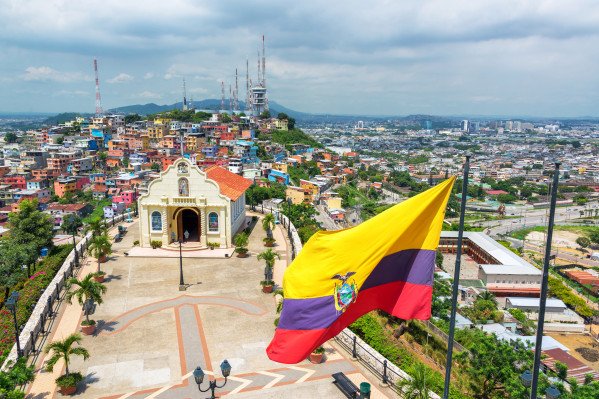
In the quaint and relatively peaceful Andean nation of Ecuador, snuggled between Colombia and Peru, a similar phenomenon takes place: politicians don’t require armed guards, but they do require their digital equivalent: Twitter troll centers, or businesses that sell online harassment as a service.

Indeed, much of the country’s public debate, or lack thereof, is now defined by the anonymous accounts that threaten, cajole and, ultimately, aim to silence voices of dissent. Though Ecuador may be too small to register on the Twitter executive team’s radar, under their noses the lucrative business of weaponizing the platform is already being exported to other countries in the region. The abuse of Twitter through troll centers not only threatens the company’s vision to become the world’s agora, it may also be putting lives at risk.


Imagine a populist president raging against his country’s elites, including the news media, as corrupt enemies of the people. Because of his innate distrust of journalists, he uses Twitter to speak divisive rhetoric directly to his digital faithful. At his disposal is an army of hardcore supporters ready to do his bidding, echo his message and attack anyone who dares disagree. If you recognize the character in this story, it’s probably because you’re familiar with Rafael Correa (56), the populist former president of Ecuador (January 2007- May 2017).

Correa now lives in Belgium and cannot return to Ecuador without facing trial for having ordered the kidnapping of a political opponent. The opponent in question fled Ecuador to neighboring Colombia in 2012, where he was trailed by members of Ecuador’s secret police and briefly kidnapped. Witnesses from the state security apparatus have since come forward to point the finger at Correa as the intellectual author of the crime.

The staunchest defenders of concentrated power are those who hold that power.

Correa denies the charges and claims they are merely politically motivated theater orchestrated by his former mentee and now sworn enemy, current Ecuadorian president, Lenín Moreno. But even if that were the case, Correa still has a number of other uncomfortable questions to answer to the Ecuadorian people. Since 2013, Latin America has been rocked by a corruption scandal called Lava Jato (the car wash) in which the Brazilian construction company Odebrecht paid bribes to politicians across the region to win public works projects (the Netflix series O Mecanismo, or The Mechanism in English, dramatizes the unfolding of the case in Brazil). In total, Odebrecht is said to have paid $788 million U.S. dollars in bribes in 12 countries in exchange for government contracts.

As a result of Lava Jato, former presidents in Brazil and Panama are in jail. In Peru, two former presidents are incarcerated, one is being held prior to an extradition hearing in California and, in April of this year, one dramatically committed suicide when police came to escort him to prison.

Ecuador’s government was no exception to the Brazil construction firm’s corruption: Rafael Correa’s former vice president and preferred successor, Jorge Glas, was convicted in December of 2017 of having directed multi-million-dollar contracts to the Brazilian firm in exchange for massive payoffs hidden through a series of offshore accounts. Indeed, Glas’s poor approval rating was the cause for Correa asking Moreno to come out of retirement and run for president.

Were Lava Jato not enough to spark wide-scale public outrage, a new scandal called Arroz Verde (green rice), revealed in May of 2019, exposed how the Correa election campaigns had government contractors cover expenses in order to flaunt spending restrictions. Numerous former ministers from the Correa government are currently either in jail or awaiting trial, under house arrest or have fled the country. Correa’s legacy as a tough yet modernizing progressive president is currently threatened by corruption scandals of previously unimaginable proportions.

It wasn’t supposed to be that way. When Rafael Correa was elected in 2007, Ecuador was emerging from a period of political, social and economic instability. In 2000, the country’s banks failed and the following economic collapse lead to Ecuador adopting the U.S. dollar as its official currency. Two years prior, a war with neighboring Peru resulted in the loss of a significant portion of Ecuador’s claim to the Amazon rain forest. In the early 2000s, close to 10% of the population, more than a million Ecuadorians, migrated to Spain and the United States in search of work. Three democratically elected presidents in a row were overthrown by street protests, including one colorful actor who was disposed after only six months in office. He was officially declared to have abandoned his role due to mental incapacity.

A relatively obscure leftist economics professor, Correa had a short stint as the country’s finance minister in 2005 during a transitional government. He left his post after a public spat with the International Monetary Fund. The IMF demanded Ecuador use its oil revenues to pay off its staggering external debt. Correa insisted that the country’s first priority should be its social debt and that the monies should be invested in health and education.

The fight vaulted Correa into the public eye and he was able to ride the momentum all the way to the presidency, defeating the country’s richest man in a run-off vote. Through his bombastic rhetoric, Correa took aim at the country’s business, political and media elites and fingered them as the origin of the country’s problems. He captured the populations’ unrest through the campaign slogan Dale Correa, which means both “Go Correa” and “Give ‘Em the Belt!”

Once in office, Rafael Correa set about an aggressive reform agenda. He rewrote the Constitution, the country’s 20th, and re-organized the state apparatus. Fueled by record high oil prices, Correa invested massively in highways, schools, hospitals and much-needed infrastructure like hydroelectric dams.

Shunning the country’s traditional alliance with the United States, Correa turned instead to China, a decision that, as The New York Times has documented, ended in billions of dollars being misspent on Chinese-built hydroelectric dams that don’t actually work at full capacity. In addition, China sold Ecuador technology which, though promoted as a 911 public safety tool, was used by the Correa government to keep tabs on and harass political opponents.

When Americans talk about Donald Trump’s latest scandals, Latin Americans mostly roll their eyes. After all, Latin Americans have seen the Donald Trump character interpreted by numerous strongmen, or caudillos, throughout the region’s history. They have even seen how it plays out on Twitter. Both Venezuela’s late President Hugo Chávez and Rafael Correa saw in Twitter an opportunity to go around their countries’ respective traditional media and speak directly to the citizens, a benefit of social media President Trump has also touted.

Correa would regularly engage in banter with citizens and do the work of government through tweets. His famous expression Favor Atender (please see to this) followed by a mention of a high-level minister or official was his calling card to government to get directly involved in resolving citizen complaints brought to his attention through Twitter. Correa went so far as to host lunches in the presidential palace for the Twitter users who most supported and defended him. The novelty of the hands-on approach soon revealed its dark side.

What happened next is the stuff of Benghazi-like conspiracy theories.

Many historians point to the 30th of September 2010 as the date when Rafael Correa started breaking bad. The day began as any other in the perpetually sunny capital of Quito. As mountain climbers will note, people at high altitudes sometimes make bad decisions due to the thin air, and Ecuador’s capital Quito stands at 9,350 feet. On this day, the National Police declared to the news media they were going on strike to protest a restructuring of their compensation packages. A group of police officers took a regiment and Rafael Correa decided that the best course of action was to go in person and confront them. Surrounded by his handlers and sustaining himself with a cane after a recent knee operation, Correa berated  the police officers, ripped his shirt open like a tropical hulk and dared the officers to shoot him in the chest. “Here I am and if you want to kill me, go ahead and kill me!” he cried.

What happened next is the stuff of Benghazi-like conspiracy theories. Depending on who you believe, Correa was either kidnapped and taken to a police hospital or went there voluntarily. The army eventually responded and a shoot-out ensued between the police and the army in the streets of Quito. Five people were killed, including three police officers, a soldier and a citizen. The president was eventually rescued by the military and restored to his functions about 12 hours after the debacle began. In a country used to coups and presidential turnover, democracy seemed to have won.

From the beginning of his time in office, Rafael Correa was determined not to suffer the fate of his overthrown predecessors. Having experienced the potential for that fate up-close, Rafael Correa reacted by removing his tyrannical constraints. Correa became increasingly belligerent on and off Twitter. Notoriously thin-skinned, Correa made a habit of throwing people in jail for flipping him off. He even stopped his motorcade to personally stick his finger in the nose of an irreverent teenager who Correa later had thrown in jail (the young man was eventually freed after apologizing).

Correa continued his crusade against journalists who wro

Read More

Be the first to write a comment.

Leave a Reply

Your email address will not be published. Required fields are marked *

Internet Security

COLDCARD SECURITY RISK: IMMEDIATE ACTION REQUIRED

Bitcoin Magazine COLDCARD SECURITY RISK: IMMEDIATE ACTION REQUIRED IMPORTANT: Major security vulnerability discovered in Coldcard hardware wallets. For your own safety read disclosures and take necessary actions immediately. This post COLDCARD SECURITY RISK: IMMEDIATE ACTION REQUIRED first appeared on Bitcoin Magazine and is written by Shinobi…

Bitcoin Magazine

COLDCARD SECURITY RISK: IMMEDIATE ACTION REQUIRED
IMPORTANT: Major security vulnerability discovered in Coldcard hardware wallets. For your own safety read disclosures and take necessary actions immediately.
This post COLDCARD SECURITY RISK: IMMEDIATE ACTION REQUIRED first appeared on Bitcoin Magazine and is written by Shinobi…
Read More

Continue Reading
Internet Security

Coldcard Security Notice Puts Bitcoin Wallet Entropy Risk Back In Focus

A Coldcard security issue has put Bitcoin hardware-wallet safety back under the microscope after reports that a firmware flaw affected seed generation…

A Coldcard security issue has put Bitcoin hardware-wallet safety back under the microscope after reports that a firmware flaw affected seed generation…
Read More

Continue Reading
Internet Security

How a national security threat label has reignited Indonesia’s LGBTQ debate

Advertisement Asia How a national security threat label has reignited Indonesia’s LGBTQ debate Indonesia last October classified the “spread of LGBTQ culture” as one of the country’s non-military threats. A series of developments thrust the provision into the public eye this month, sparking a debate.   A street vendor walks past a banner reading ‘Indonesia

Advertisement

Asia

How a national security threat label has reignited Indonesia’s LGBTQ debate

Indonesia last October classified the “spread of LGBTQ culture” as one of the country’s non-military threats. A series of developments thrust the provision into the public eye this month, sparking a debate.


How a national security threat label has reignited Indonesia's LGBTQ debate

A street vendor walks past a banner reading ‘Indonesia LGBT Emergency’ in front a mosque in Jakarta, Indonesia, January 25, 2018. (REUTERS/Beawiharta)


New: You can now listen to articles.


This audio is generated by an AI tool.

Ericssen

Ericssen

Ericssen

21 Jul 2026 06:00AM
(Updated: 21 Jul 2026 10:59AM)


Bookmark


Bookmark


Share

SINGAPORE: For more than eight months, a provision tucked away in an Indonesian presidential regulation on national defence drew little public attention.

In an appendix to Presidential Regulation No. 111/2025 on the General National Defence Policy signed in October last year, the government classified the “spread of LGBTQ culture” as one of the country’s non-military threats. 

The clause, referring to lesbian, gay, bisexual, transsexual and queer culture, appeared alongside a range of other threats deemed capable of affecting national resilience. They included illegal trafficking, natural resource theft, terrorism, atheism and radicalism.

A presidential regulation is a legally binding regulation published in the State Gazette, while General National Defence Policy documents are highly technical and usually attract little public attention outside government and defence circles.

But a series of developments thrust the provision into the public eye this month, sparking a debate on the place of LGBTQ issues in state policy and the extent to which social issues should be framed within Indonesia’s defence strategy.

The issue quickly spread beyond social media into mainstream Indonesian media with national outlets including Antara, Kumparan, and Tempo examining the regulation and prompting public responses from senior government officials.

Some observers and activists say the clause could heighten discrimination against LGBTQ individuals in society, even as Indonesian ministers have defended the regulation while saying the government has no intention of curtailing the fundamental rights of citizens.

“As Indonesian citizens, LGBTQ people are entitled to education, employment, healthcare and other public services without restrictions, segregation or discrimination,” Indonesia’s Human Rights Minister Natalius Pigai told CNA in a phone interview.

CNA Games
Guess Word
Guess Word
Crack the word, one row at a time

Buzzword
Buzzword
Create words using the given letters

Mini Sudoku
Mini Sudoku
Tiny puzzle, mighty brain teaser

Mini Crossword
Mini Crossword
Small grid, big challenge

Word Search
Word Search
Spot as many words as you can

Show More

Show Less

Indonesia’s Human Rights Minister Natalius Pigai. (Photo courtesy of Human Rights Ministry)

But he added that Indonesian society is not ready to accept the LGBTQ community, even as the state remains obliged to respect, protect and fulfil every citizen’s rights to education, employment, healthcare and public services.

“The time has not yet come to formally recognise them as an official group because society is not yet ready to accept them,” he said.

HOW THE CLAUSE CAME TO PUBLIC ATTENTION

While it remains unclear what first drew widespread attention to the provision, it resurfaced amid a series of developments involving LGBTQ issues. One was a Pride Month-themed social media post in mid-June by Suara Mahasiswa, a student publication at the University of Indonesia.

The post had led to a heated online debate, with critics arguing it was inconsistent with Indonesia’s religious and social norms. They questioned why it invoked the Pancasila national ideology to defend the LGBTQ community. Pancasila comprises five principles: Belief in one God, civilised humanity, national unity, democracy and social justice.

The backlash prompted the university to publicly distance itself from the post and launch an internal review.

Then in late June, the Indonesian Ulema Council (MUI) said it was preparing an academic paper and a draft bill to criminalise LGBTQ-related conduct for Parliament’s National Legislation Programme.

MUI deputy chairman Muhammad Cholil Nafis argued that moral appeals alone were no longer sufficient to curb what he described as the growing activities and campaign surrounding LGBTQ culture.

“If there are no legal penalties at all, it eventually becomes normal. We should not normalise it. Punishment helps people understand that it is not normal,” he said.

“Deviant activities, such as same-sex parties, are now increasingly being displayed openly in public without any sense of shame,” he added.

Scrutiny then shifted to the new regulation that had previously gone largely unnoticed.

The belated attention came as no surprise to Agus Wahyudi, head of the Inter-Religious Studies Programme at Gadjah Mada University (UGM) in Yogyakarta.

Documents such as the General National Defence Policy typically circulate within government bureaucracy and rarely become the subject of public debate, he said.

But a provision can take on political significance when a series of events – in this case, the Pride Month-themed social media post and the MUI’s planned bill – draws the public’s notice, said Agus.

“What changed was not necessarily the policy itself, but the public attention it attracted,” Agus said.

WHY WAS IT PLACED IN A NATIONAL DEFENCE DOCUMENT?

Asked whether the presidential regulation represented the first national policy to explicitly mention LGBTQ, human rights lawyer Asfinawati said Indonesia’s 2008 Pornography Law referred to “lesbian” and “homosexual” acts in its explanatory notes to a provision banning the production, distribution and sale of pornographic material.

It defined what the law described as “deviant sexual intercourse” for the purposes of pornography offences, rather than creating a standalone offence based on sexual orientation or gender identity.

Presidential Regulation No. 111/2025 goes further by classifying the “spread of LGBTQ culture” itself as a non-military threat, argued Asfinawati, the former chair of the Indonesian Legal Aid Foundation.

“This regulation no longer links it to sexual conduct. Simply having a particular sexual orientation or gender identity is placed within a threat framework,” she said.

Experts have questioned whether a national defence framework was an appropriate instrument for addressing issues such as sexual orientation and gender identity.

In principle, national defence should focus on military threats, said Tangguh Chairil, a lecturer in security studies at the Department of International Relations at Binus University, Jakarta.

Indonesia, however, classifies threats into three categories: Military, non-military and hybrid. As a result, issues beyond the traditional defence sphere are increasingly viewed as national security issues.

“Because the definition is so broad, almost anything can be treated as a national security threat,” Tangguh told CNA.

Classifying LGBTQ culture as a non-military threat under a defence framework means the issue may be treated as a security concern requiring state attention and resources, he added.

“Issues that have been successfully securitised tend to receive greater attention than others,” he said.

Yusril Ihza Mahendra, Coordinating Minister for Legal Affairs, Human Rights, Immigration, and Corrections, told news outlet Tempo on Jul 9 that “non-military threat” was used to categorise risks against national resilience.

In the socio-cultural context, “resilience” refers to values, ethics, character of the younger generation, families, digital space, and social cohesion, he said.

“What the government perceives as a threat is the campaign, propaganda, and dissemination of LGBT behaviour aimed at altering the values that align with the nation’s culture and morality,” he added.

Indonesia’s Chief Minister for Law and Human Rights, Yusril Ihza Mahendra, speaks as Australia’s Minister for Home Affairs, Tony Burke, listens during a press conference following their meeting in Jakarta, Indonesia, December 3, 2024. (REUTERS/Willy Kurniawan)

Asfinawati said the regulation cannot serve as the legal basis for introducing new criminal provisions or for regional governments to impose criminal sanctions unless authorised by law.

Under Indonesian law, a person’s sexual orientation as well as consensual same-sex relations between adults are not, by themselves, criminal offences. The exception is Aceh province, which implements Islamic crimina

Read More

Continue Reading
Internet Security

Nigeria: UNICEF chief urges child protection amid security, humanitarian crises

Violence in Nigeria The head of the U.N. children’s agency visited northwestern Nigeria on Friday as conflict, poverty and rising food insecurity leave millions of children in the region in need of aid. Catherine Russell, executive director of UNICEF, toured the state of Sokoto, where the agency is seeking to draw attention to worsening humanitarian

Violence in Nigeria

The head of the U.N. children’s agency visited northwestern Nigeria on Friday as conflict, poverty and rising food insecurity leave millions of children in the region in need of aid.

Catherine Russell, executive director of UNICEF, toured the state of Sokoto, where the agency is seeking to draw attention to worsening humanitarian challenges facing children.

She met with state officials and visited UNICEF-supported programs aimed at improving the health of both mothers and children and protecting vulnerable youngsters.

“We have to make sure that children are protected in these conflicts,” she said.

“That their healthcare is protected, that their food is protected, that their education is protected. Children can’t waste years of their life because conflicts are going on.”

Northern Nigeria is already gripped by an intensifying security crisis that has killed thousands.

The ongoing Middle East conflict has deepened food insecurity for millions living in poverty, making children in poor households more vulnerable.

According to UNICEF between 18.3 million and 23.4 million more children in monetarily poor households worldwide have fallen into deeper poverty, including 6.5 million to 8.8 million in Africa.

Nigeria has one of the world’s largest populations of impoverished children, and humanitarian organizations warn that those in the country’s conflict-torn north remain among the most vulnerable.

For some, UNICEF-supported programs have made a tangible difference.

Zainab Bello, 19, said she had been out of school before joining the agency’s “Digital Village” program.

“I was taught digital literacy… how to use a digital tool,” she said.

“I also learned how I can promote my vocational skills on various social media platforms.”

The head of the U.N. children’s agency visited northwestern Nigeria on Friday as conflict, poverty and rising food insecurity leave millions of children in the region in need of aid.

Catherine Russell, executive director of UNICEF, toured the state of Sokoto, where the agency is seeking to draw attention to worsening humanitarian challenges facing children.

She met with state officials and visited UNICEF-supported programs aimed at improving the health of both mothers and children and protecting vulnerable youngsters.

“We have to make sure that children are protected in these conflicts,” she said.

“That their healthcare is protected, that their food is protected, that their education is protected. Children can’t waste years of their life because conflicts are going on.”

Northern Nigeria is already gripped by an intensifying security crisis that has killed thousands.

The ongoing Middle East conflict has deepened food insecurity for millions living in poverty, making children in poor households more vulnerable.

According to UNICEF between 18.3 million and 23.4 million more children in monetarily poor households worldwide have fallen into deeper poverty, including 6.5 million to 8.8 million in Africa.

Nigeria has one of the world’s largest populations of impoverished children, and humanitarian organizations warn that those in the country’s conflict-torn north remain among the most vulnerable.

For some, UNICEF-supported programs have made a tangible difference.

Zainab Bello, 19, said she had been out of school before joining the agency’s “Digital Village” program.

“I was taught digital literacy… how to use a digital tool,” she said.

“I also learned how I can promote my vocational skills on various social media platforms.”

Read More

Continue Reading