Internet Security

LIZ PEEK: Can Trump Make the UN Great Again despite its globalist agenda?

close Video Israeli Ambassador to the United Nations Danny Danon condemns the UN for allegedly including Israel in sexual violence blacklist Danny Danon, the Israeli Ambassador to the United Nations (UN), blasts the UN for what he claims is their decision to include Israel in a sexual violence blacklist that also includes Hamas. NEWYou can

NEWYou can now listen to Fox News articles!

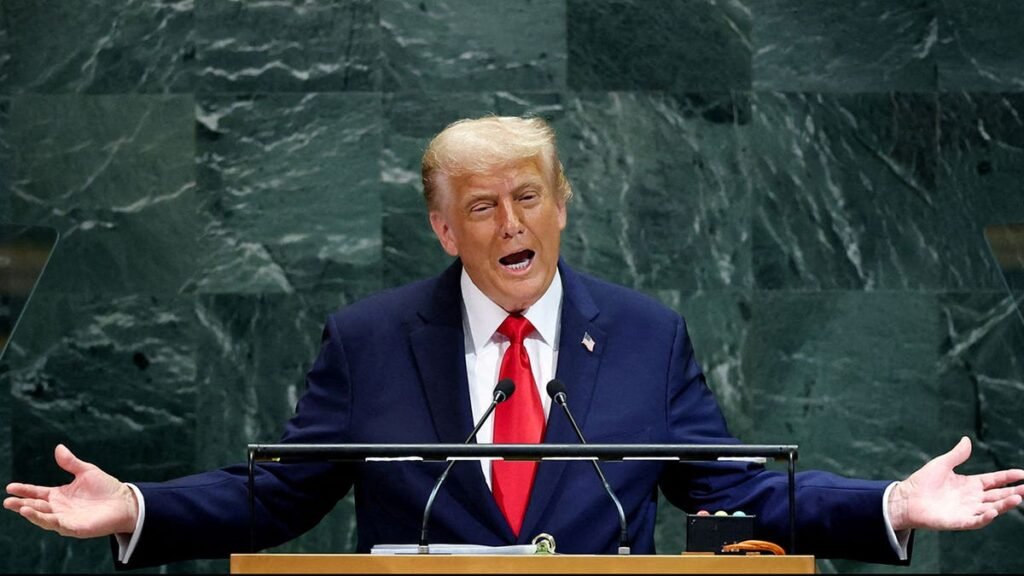
Today, President Trump will address the U.N. General Assembly. As New Yorkers fume over traffic nightmares created by the president and by hordes of visiting diplomats, they may (again) question, as do many Americans, why U.S. taxpayers support this badly managed and scandal-scarred institution. Especially when the U.N. so frequently works against our interests and seems incapable of accomplishing its primary mission.

A new Gallup poll shows that 73% of Americans think the U.N. does a poor job of “maintaining international peace and security,” and 70% say the same about the U.N. “upholding international law” and “protecting human rights.” That’s a lousy report card for an organization that spends roughly $70 billion per year.

Elsewhere in the world, the U.N. scores better, which is not surprising since poor countries, which constitute the majority of members, look to wealthier nations for handouts via the U.N. The nations of Sub-Saharan Africa, for instance, are especially keen on the sprawling organization.

WALTZ DELIVERS BLUNT WARNING TO NATIONS DEFYING IRAN SANCTIONS, TOUTS GREENLAND DEAL

Trump heads to UN General Assembly as foreign policy challenges mount Video

How does that wealth transfer happen? One way was described by President Trump’s U.N. Ambassador Mike Waltz in recent testimony before Congress: “The U.N. let countries use peacekeeping missions as cash cows for their militaries. Peacekeepers could bring equipment, park it, never use it, take it home brand new, and get it paid for by the U.N.” Those operations can employ “10,000 to 18,000 soldiers”; the costs, Waltz says, are “quite significant.” He is ending that practice — just one step in reforming the bloated U.N., whose budget has quadrupled over the past 25 years.

Americans have reason for skepticism, given the frequent votes that go against the U.S. or our ally Israel. For thirty-three years in a row, the General Assembly has voted to end our embargo on Cuba, and for decades it has opposed Israel’s attempts to protects its citizens from Palestinian terrorists. Waltz calls the body a “cesspool of antisemitism.”

WALTZ SLAMS FRANCE AFTER STUNNING SOCIAL MEDIA ATTACK ON US AFTER UN VOTE

Not only is the U.N. frequently hostile to the U.S., it is often ridiculous. Most recently, the U.N. voted overwhelmingly to adopt a new map which blows up Africa’s presence on the globe; the U.S. was the sole dissenter. In a memo explaining our outlier vote, Deputy U.S. Representative Yaryna Ferencevych called such resolutions “barnacles on our work here” and wrote: “Instead of focusing on genuine problems of international peace… this body is debating map projects from the 16th century, and their role in promoting reparations and “cognitive justice.”

The U.N. rarely has much real-world impact. Critics might question, for instance, what the U.N. has done to resolve the Russia-Ukraine War, or how it has helped keep the world’s oil flowing through the Strait of Hormuz. The answer in both cases is zero.

Instead, the U.N. is hyper-focused on climate change, gender equality and other issues that may scratch a globalist itch, but appear little related to the cause of peace.

Demonstrators gather outside United Nations General Assembly Video

Meanwhile, the U.N. is going broke. Last year the Economist reported: “On May 5th the U.N. will brief members on a previously unreported $600m (17%) cut to its $3.7bn [administrative] budget aimed at avoiding default this year. It will include a hiring freeze… Yet it may not be enough. A combination of deadbeat members and mad budget rules have led to a liquidity crisis.”

TRUMP BRINGS NEW HEAT TO CONTROVERSIAL UN AGENCY AS ALLEGED HAMAS TIES ENGULF SCORES OF EMPLOYEES

The article goes on to warn that a “leaked memo” suggesting that the Trump administration might cut off funding to the U.N. threatened “a financial crash in the citadel of peace and security.”

The Trump White House has not bankrupted the U.N. by withholding payments. Instead, it appointed Waltz to drive much-needed reforms and who is, according to Politico, “generally well-regarded, including among many Democrats on Capitol Hill.” That’s rare praise for a Trump appointee.

TRUMP ADMINISTRATION PROBES UNRWA OVER ALLEGED EMPLOYMENT OF 1,500 TERRORISTS

Waltz is working to downsize the bloated U.N., focusing on its staff of 100,000 — individuals who are paid roughly 17% more than equivalent U.S. civil servants, according to Waltz. According to testimony he gave to Congress a few months ago, Waltz’s team pushed through a “historic 15% cut $570 million out of the U.N.’s regular budget. That will eliminate nearly 3000 headquarters positions.” That change alone provided a savings for U.S. taxpayers of $126 million. Waltz recently told Fox Digital that budget cuts now total $1 billion.

Waltz is also overhauling U.N. peacekeeping operations, some of which, as he has said, have been around for “30, 50 or even 80 years.” Waltz argues such forces are important to provide breathing room for political settlement of a conflict, but it “can’t then become an excuse to not have a political resolution. When you have a peacekeeping force, for example, in DRC and Congo, at the cost of a billion dollars a year, that’s been there for 30 years,” it should end.

Mike Waltz: 'Under President Trump we're demanding reform' at the United Nations Video

Waltz is just getting started; reforming an institution so large and complex takes time, which he may not have. Soon, the U.N. will elect a new secretary-general to succeed Portugal’s António Guterres, who has served since 2017. Currently, most of the candidates who have stepped forward appear eager to embrace the reforms advocated by the White House, alarmed that President Trump is ready to eviscerate the U.N.’s funding if changes are not made and a U.S.-friendly official not elected.

CLICK HERE FOR MORE FOX NEWS OPINION

Finances are not Trump’s only weapon. As Politico reported, when the White House announced the creation of the Board of Peace last year to oversee the Israel-Gaza conflict, “U.N. officials and diplomats were really, really unnerved,” seeing that Board as some sort of “rival peacemaking institute.”

TRUMP-BACKED BOARD OF PEACE, ISRAEL ‘WILL TAKE ACTION’ IF HAMAS REMAINS OUT OF COMPLIANCE: NETANYAHU ADVISOR

However, permanent members of the Security Council, which include Russia, China, France, the U.K. and the U.S., can veto candidates. That is making the race unpredictable. If the members cannot agree, they could extend Gutterres’ term by another year, which would likely mean that President Trump would have less say in the outcome.

CLICK HERE TO DOWNLOAD THE FOX NEWS APP

That could trash the White House’s push to Make the U.N. Great Again and would be disastrous for the U.N.

CLICK HERE TO READ MORE FROM LIZ PEEK

NEWYou can now listen to Fox News articles!

Today, President Trump will address the U.N. General Assembly. As New Yorkers fume over traffic nightmares created by the president and by hordes of visiting diplomats, they may (again) question, as do many Americans, why U.S. taxpayers support this badly managed and scandal-scarred institution. Especially when the U.N. so frequently works against our interests and seems incapable of accomplishing its primary mission.

A new Gallup poll shows that 73% of Americans think the U.N. does a poor job of “maintaining international peace and security,” and 70% say the same about the U.N. “upholding international law” and “protecting human rights.” That’s a lousy report card for an organization that spends roughly $70 billion per year.

Elsewhere in the world, the U.N. scores better, which is not surprising since poor countries, which constitute the majority of members, look to wealthier nations for handouts via the U.N. The nations of Sub-Saharan Africa, for instance, are especially keen on the sprawling organization.

WALTZ DELIVERS BLUNT WARNING TO NATIONS DEFYING IRAN SANCTIONS, TOUTS GREENLAND DEAL

Trump heads to UN General Assembly as foreign policy challenges mount Video

How does that wealth transfer happen? One way was described by President Trump’s U.N. Ambassador Mike Waltz in recent testimony before Congress: “The U.N. let countries use peacekeeping missions as cash cows for their militaries. Peacekeepers could bring equipment, park it, never use it, take it home brand new, and get it paid for by the U.N.” Those operations can employ “10,000 to 18,000 soldiers”; the costs, Waltz says, are “quite significant.” He is ending that practice — just one step in reformin

!—->!—->!—->!—->!—->!—->!—->!—->!—->!—->!—->!—->!—->!—->!—->!—->
Read More

Be the first to write a comment.

Leave a Reply

Your email address will not be published. Required fields are marked *

Internet Security

YOURSAY | Forget outside hackers, watch out for corrupt insiders

News ✕ YOURSAY | Forget outside hackers, watch out for corrupt insiders Yoursay Published: Nov 4, 2026 9:19 AM YOURSAY | ‘Biggest security risk isn’t a hacker sitting behind a computer halfway around the world.’ M’sia a potential target for security threats amid global volatility, PM says Knucklehead2: Why does Malaysia need to worry about


YOURSAY | Forget outside hackers, watch out for corrupt insiders
News

YOURSAY | Forget outside hackers, watch out for corrupt insiders

YoursayPublished: Nov 4, 2026 9:19 AM

YOURSAY | ‘Biggest security risk isn’t a hacker sitting behind a computer halfway around the world.’

M’sia a potential target for security threats amid global volatility, PM says

Knucklehead2: Why does Malaysia need to worry about sophisticated hackers when a small “token of appreciation” to the right public servant can achieve the same result?

In a culture where some still treat “rezeki jangan ditolak” (do not reject good fortune) as a principle rather than a warning sign, the weakest link is often not the technology but the human being behind it.

We spend millions talking about cybersecurity, firewalls, and cyber threats, yet how many public services and frontline agencies have been compromised, exposed, or disrupted in recent years?

Sometimes the biggest security risk isn’t a hacker sitting behind a computer halfway around the world. It’s the insider sitting behind a government desk saying, “Show me the money.” That’s old-school hacking, and arguably far more dangerous.

BlueCougar1744: Malaysia does not have to worry about external threats (as Prime Minister Anwar Ibrahim warned).

He recently said that “Malaysia could be a potential target of cyber and other security threats amid escalating geopolitical tensions worldwide.”

The threat is from within if radicals are not curbed. Just because Islam is our official religion, it must not provide a free passport for the radicals and religious bigots to exploit using race and religious issues.

Sealthedeal: Talking up a non-existent threat from Israel again? It’s getting boring.

By far the biggest threat is from individuals in government departments selling personal data on ordinary citizens.

It has happened many times in the past, but who has ever been prosecuted?

Mano: We do not need external enemies. We have many politicians and government servants from the elite to the ordinary, who have done, and are still undermining the Constitution, law and order, including the borders.

The enemies are the blatant support for pardons (and house arrest) for kleptocrats like former premier Najib Abdul Razak, who has stolen so much that we would have fed thousands of families for years (with the money taken).

GrayEagle1207: Well, if Malaysia did not stick its nose into other countries’ affairs, carry out senseless provocation, and instead maintain peace with everyone, we should not worry, just like Singapore.

Cyber-attacks can happen to anyone, but systematic targeted attacks are for a reason. Chickens coming home to roost? Hopefully, Malaysia will be prepared (for any attacks).

Turnedback: Our defence is very weak due to massive corruption that involves irregularities in the purchasing of outdated weapons.

Many high-profile corruption cases related to weapons for the armed forces have been exposed, but as of today, those ministers and heads of the department have not been called to account or held responsible for what happened.

GP2025: How come a small nation like Malaysia is on the radar of hacktivists and cyberattacks? The latter goes for rich nations, not small nations.

If Malaysia is now on the radar of Israeli cyber troopers, who is the cause of it? Someone doesn’t understand the consequences of his spin.

Blue Skies: Sweden recently had to throw away refrigerated products because of suspected interference in the settings, leading to food spoilage.

Smaller shops were the target of the cyberattacks. Probably a test case before going on to bigger attacks.

So even if our DPM assures us that the country has more than six months’ food supplies and no need to stock up on some, what happens when the stores selling them have their systems hacked?

What if ATMs were hacked as well? If this happens, we cannot buy anything; stores will be looted at will.

Spinnot: Singapore, the Philippines and Indonesia are also promoting household emergency preparedness, with guidance on preparing essential supplies and emergency bags.

Singapore places particular emphasis on household resilience and continuity of essential services.

Residents are encouraged to keep basic necessities available and prepare for disruptions that could affect access to food, electricity, communications and other services.

MarioT: When the world is so divided with different ideologies and ambitions, it is best to be neutral. Being too objective and critical of others can expose the country to external threats.

Good international diplomacy, in turn, brings prosperity to the nation. Internal threats of extremism must not be ruled out.

Apanama is back: Malaysians should not be worried about cyberattacks, among other threats.

We have the best brains like PAS president Abdul Hadi Awang and our PM. Najib will be back soon too (house arrest) and we also have his wife.

We are always protected from Israel and the like. The administration will ban anything that comes with the shadow of Israel.

The administration is always prepared until it does not know what preparedness is all about.

The country is like TuJu (the much-criticised local navigation app). Do your own reading and research and stay up to date. Prepare yourselves, folks!


The above is a selection of comments posted by Malaysiakini subscribers. Only paying subscribers can post comments. In the past year, Malaysiakinians have posted over 100,000 comments. Join the Malaysiakini community and help set the news agenda. Subscribe now.

These comments are compiled to reflect the views of Malaysiakini subscribers on matters of public interest. Malaysiakini does not intend to represent these views as fact.

View Comments4

Our own internal politicians are more toxic than any external threats. They propa

!–>!–>!–>!–>!–>!–>!–>!–>!–>!–>!–>!–>!–>
Read More

Continue Reading
Internet Security

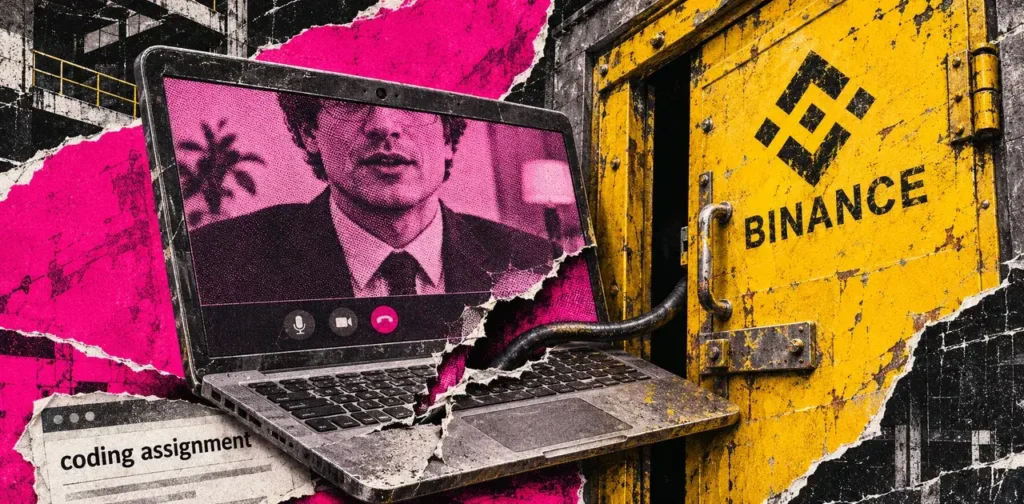
Binance stopped 57 North Korean cyber threats but fell for a fake job interview

Binance said it thwarted 57 suspected North Korea-linked cyber threats in 2026, yet a fake interview compromised one of its engineers. The disclosure, in the exchange’s Nov. 3 security report, reveals how attackers used a recruitment scam involving staged interviews, fabricated identities, and malicious software to access systems involved in the $6.34 billion cryptocurrency theft…

Binance said it thwarted 57 suspected North Korea-linked cyber threats in 2026, yet a fake interview compromised one of its engineers. The disclosure, in the exchange’s Nov. 3 security report, reveals how attackers used a recruitment scam involving staged interviews, fabricated identities, and malicious software to access systems involved in the $6.34 billion cryptocurrency theft…
Read the full story on CryptoSlateUnderstand the crypto stories that matter and what to watch next…
Read More

Continue Reading
Internet Security

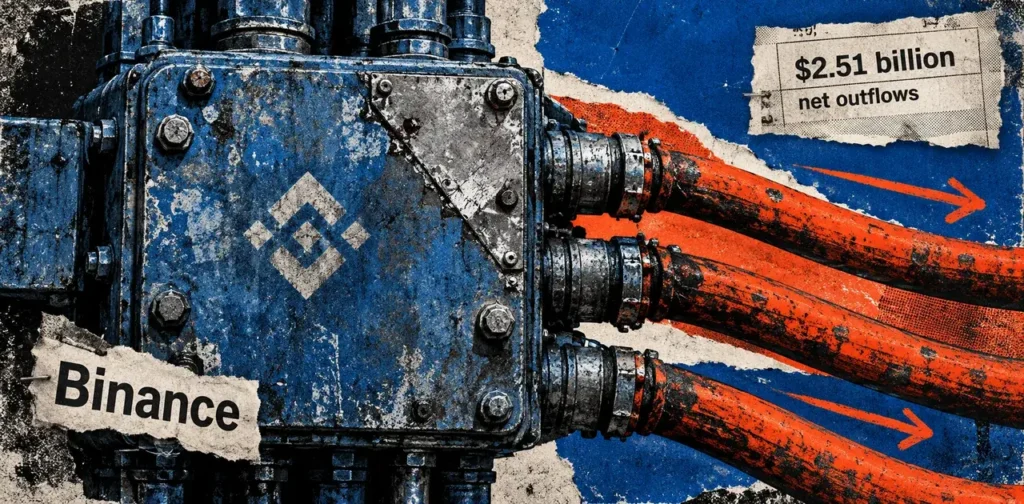
Tracked Binance wallets record $2.5 billion in outflows as withdrawals reopen after hack

Binance’s tracked cryptocurrency wallets recorded $2,510 million in net outflows on Nov. 1 after the exchange resumed withdrawals following its $6.3 billion security breach. According to DeFiLlama data, the outflows included approximately $1,083 million in USDT, $912 million in Bitcoin, $385 million in USDC and $131 million in wrapped Ethereum…

Binance’s tracked cryptocurrency wallets recorded $2,510 million in net outflows on Nov. 1 after the exchange resumed withdrawals following its $6.3 billion security breach. According to DeFiLlama data, the outflows included approximately $1,083 million in USDT, $912 million in Bitcoin, $385 million in USDC and $131 million in wrapped Ethereum…
Read More

Continue Reading
Internet Security

Bitcoin Holds Near $78K After Binance Hack as Institutions and Crypto Politics Shape the Recovery

Bitcoin recovered toward $78,000 after Binance covered approximately 95% of losses from its $6.3 billion security breach. Meanwhile, institutional ETF demand and crypto-backed political spending are shaping the market’s outlook ahead of the US midterm elections…

Bitcoin recovered toward $78,000 after Binance covered approximately 95% of losses from its $6.3 billion security breach. Meanwhile, institutional ETF demand and crypto-backed political spending are shaping the market’s outlook ahead of the US midterm elections…
Read More

Continue Reading