Internet Security

Public security ministry warns Quebec forest fires could worsen

Share this Story: Public security ministry warns Quebec forest fires could worsen Copy Link Email Facebook Twitter Reddit Pinterest LinkedIn Tumblr Breadcrumb Trail Links Local News Public security ministry warns Quebec forest fires could worsen The objective is still to fight priority fires, but some municipalities have had no choice but to evacuate in the

Public security ministry warns Quebec forest fires could worsen

The objective is still to fight priority fires, but some municipalities have had no choice but to evacuate in the past few hours.

Article content

Current weather conditions could “reinvigorate” forest fires in Quebec and trigger new ones, the ministry of public security warned Saturday morning.

Advertisement 2
Story continues below

Article content

The flammability rating is currently “very high” to “extreme” in several areas of the province, the ministry said. Low rainfall and rising temperatures are behind these significant fire risks.

Article content

Therefore, several regions remain under “high surveillance,” namely, Abitibi-Témiscamingue, Côte-Nord, Nord-du-Québec and Saguenay—Lac-St-Jean.

SOPFEU, province’s forest fire prevention agency, is “currently fighting 81 active fires in the intensive zone, of which 25 are out of control and 43 are priorities,” the ministry said.

As of Saturday morning, 114 forest fires were active in Quebec, 82 of which were in the intensive zone, SOPFEU figures showed.

The objective is still to fight priority fires to protect communities and certain strategic infrastructure, but some new municipalities have had no choice but to evacuate in the past few hours.

Several sectors of Senneterre, in Abitibi-Témiscamingue, were the subject of an evacuation notice on Friday afternoon. Residents of Chemin du Millage 20, de la Chute, des Pionniers, Dion and Ménard had until 5 p.m. Friday to leave their homes, the city said on its Facebook page.

Article content

Advertisement 3
Story continues below

Article content

In the evening, Valcanton, in Nord-du-Québec, ordered the evacuation of the Beaucanton, Val-Paradis and Lac Pajegasque sectors.

As for the residents of the Cree community of Mistissini, located northeast of Chibougamau, they had to evacuate the area on Friday morning. Approximately 3,800 community members were directed to Saguenay.

In Lebel-sur-Quévillon, in Jamésie, a complete evacuation took place Thursday evening as two major fires threatened one of the two roads that connect the small municipality to the rest of the province.

Citizens residing in certain sectors of the city of Val-d’Or, in Abitibi-Témiscamingue, have also been evacuated since Tuesday.

All these municipalities are impatiently awaiting the return of the rain, but very little precipitation is expected in the regions by Sunday, or even Monday or Tuesday in the west of the province.

On Saturday morning, Environment Canada issued smog warnings and special air quality weather bulletins for almost all regions of Quebec, except for areas along the St. Lawrence Valley.

Advertisement 4
Story continues below

Article content

“(Saturday) a plume of fine particles at high to very high concentrations will maintain its trajectory and will further affect the regions of Côte-Nord, Gaspésie, Nord-du-Québec, Saguenay—Lac-St-Jean and des Terres-cries-de-la-Baie-James,” the public security ministry said.

Thus, smog warnings are in effect in Abitibi-Témiscamingue and Saguenay—Lac-St-Jean, as well as in Rivière-du-Loup, Trois-Pistoles, La Tuque and Mont-Laurier, among others.

“Smoke from wildfires can be harmful to everyone’s health, even if the concentrations are low,” Environment Canada said. “Everyone can take steps to reduce their exposure to wildfire smoke.”

Among other things, the federal agency recommended reducing activity levels if you feel discomfort while breathing; wearing a properly fitted respirator, such as an N95; and reducing sources of indoor air pollution.

People with lung diseases such as asthma or heart disease, the elderly, children, pregnant women, and people who work outdoors are at greater risk of health effects from smoke, Environment Canada said.

Several other sectors are also subject to a special weather report aimed at warning the population of poor air quality. Such bulletins were published from east to west of Quebec, even reaching Newfoundland and Labrador.

Related Stories

  1. People take in the site of the skyline of Montreal and the Montérégie mountains from the lookout at Kondiaronk Belvedere on Mount-Royal on Monday June 5, 2src23. Forest fires in northern Quebec covered the city with an orange haze as smog from the fires brought down the air quality in the city.

    Explainer: What is keeping wildfires burning in Quebec?

  2. Walking up the mountain near the Mordecai Richler Gazebo and noticing a small cast of orange covering the city, on Monday June 5, 2src23. Forest fires in northern Quebec covered the city with an orange haze as smog from the fires brought down the air quality in the city.

    Allison Hanes: Fires force Quebec to confront big picture of climate change

  3. A large wildfire burns in this handout image provided by the government of Alberta and posted on its social media page.

    Climate change is exacerbating forest fires and vice versa, experts say

Article content

Comments

Postmedia is committed to maintaining a lively but civil forum for discussion and encourage all readers to share their views on our articles. Comments may take up to an hour for moderation before appearing on the site. We ask you to keep your comments relevant and respectful. We have enabled email notifications—you will now receive an email if you receive a reply to your comment, there is an update to a comment thread you follow or if a user you follow comments. Visit our Community Guidelines for more information and details on how to adjust your email settings.

SHARE YOUR THOUGHTS

To contribute to the conversation, you need to be logged in. If you are not yet registered, create your account now – it’s FREE.

Login/Create an Account Subscribe for Unlimited Online Access

Join the Conversation

Latest National Stories

    Advertisement 1
    Story continues below

    Article content

    Current weather conditions could “reinvigorate” forest fires in Quebec and trigger new ones, the ministry of public security warned Saturday morning.

    Advertisement 2
    Story continues below

    Article content

    The flammability rating is currently “very high” to “extreme” in several areas of the province, the ministry said. Low rainfall and rising temperatures are behind these significant fire risks.

    Article content

    Therefore, several regions remain under “high surveillance,” namely, Abitibi-Témiscamingue, Côte-Nord, Nord-du-Québec and Saguenay—Lac-St-Jean.

    SOPFEU, province’s forest fire prevention agency, is “currently fighting 81 active fires in the intensive zone, of which 25 are out of control and 43 are priorities,” the ministry said.

    As of Saturday morning, 114 forest fires were active in Quebec, 82 of which were in the intensive zone, SOPFEU figures showed.

    The objective is still to fight priority fires to protect communities and certain strategic infrastructure, but some new municipalities have had no choice but to evacuate in the past few hours.

    Several sectors of Senneterre, in Abitibi-Témiscamingue, were the subject of an evacuation notice on Friday afternoon. Residents of Chemin du Millage 20, de la Chute, des Pionniers, Dion and Ménard had until 5 p.m. Friday to leave their homes, the city said on its Facebook page.

    Article content

    Advertisement 3
    Story continues below

    Article content

    In the evening, Valcanton, in Nord-du-Québec, ordered the evacuation of the Beaucanton, Val-Paradis and Lac Pajegasque sectors.

    As for the residents of the Cree community of Mistissini, located northeast of Chibougamau, they had to evacuate the area on Friday morning. Approximately 3,800 community members were directed to Saguenay.

    In Lebel-sur-Quévillon, in Jamésie, a complete evacuation took place Thursday evening as two major fires threatened one of the two roads that connect the small municipality to the rest of the province.

    Citizens residing in certain sectors of the city of Val-d’Or, in Abitibi-Témiscamingue, have also been evacuated since Tuesday.

    All these municipalities are impatiently awaiting the return of the rain, but very little precipitation is expected in the regions by Sunday, or even Monday or Tuesday in the west of the province.

    On Saturday morning, Environment Canada issued smog warnings and special air quality weather bulletins for almost all regions of Quebec, except for areas along the St. Lawrence Valley.

    Advertisement 4
    Story continues below

    Article content

    “(Saturday) a plume of fine particles at high to very high concentrations will maintain its trajectory and will further affect the regions of Côte-Nord, Gaspésie, Nord-du-Québec, Saguenay—Lac-St-Jean and des Terres-cries-de-la-Baie-James,” the public security ministry said.

    Thus, smog warnings are in effect in Abitibi-Témiscamingue and Saguenay—Lac-St-Jean, as well as in Rivière-du-Loup, Trois-Pistoles, La Tuque and Mont-Laurier, among others.

    “Smoke from wildfires can be harmful to everyone’s health, even if the concentrations are low,” Environment Canada said. “Everyone can take steps to reduce their exposure to wildfire smoke.”

    Among other things, the federal agency recommended reducing activity levels if you feel discomfort while breathing; wearing a properly fitted respirator, such as an N95; and reducing sources of indoor air pollution.

    People with lung diseases such as asthma or heart disease, the elderly, children, pregnant women, and people who work outdoors are at greater risk of health effects from smoke, Environment Canada said.

    Several other sectors are also subject to a special weather report aimed at warning the population of poor air quality. Such bulletins were published from east to west of Quebec, even reaching Newfoundland and Labrador.

    Related Stories

    1. People take in the site of the skyline of Montreal and the Montérégie mountains from the lookout at Kondiaronk Belvedere on Mount-Royal on Monday June 5, 2src23. Forest fires in northern Quebec covered the city with an orange haze as smog from the fires brought down the air quality in the city.

      Explainer: What is keeping wildfires burning in Quebec?

    2. Walking up the mountain near the Mordecai Richler Gazebo and noticing a small cast of orange covering the city, on Monday June 5, 2src23. Forest fires in northern Quebec covered the city with an orange haze as smog from the fires brought down the air quality in the city.

      Allison Hanes: Fires force Quebec to confront big picture of climate change

    3. A large wildfire burns in this handout image provided by the government of Alberta and posted on its social media page.

      Climate change is exacerbating forest fires and vice versa, experts say

    Article content

    Comments

    Postmedia is committed to maintaining a lively but civil forum for discussion and encourage all readers to share their views on our articles. Comments may take up to an hour for moderation before appearing on the site. We ask you to keep your comments relevant and respectful. We have enabled email notifications—you will now receive an email if you receive a reply to your comment, there is an update to a comment thread you follow or if a user you follow comments. Visit our Community Guidelines for more information and details on how to adjust your email settings.

    SHARE YOUR THOUGHTS

    To contribute to the conversation, you need to be logged in. If you are not yet registered, create your account now – it’s FREE.

    Login/Create an Account Subscribe for Unlimited Online Access

    Join the Conversation

    Latest National Stories

      Advertisement 1
      Story continues below

      Read More

      Be the first to write a comment.

      Leave a Reply

      Your email address will not be published. Required fields are marked *

      Internet Security

      Crypto hardware wallets compared for 2026

      From touchscreen and QR-code devices to NFC cards and Bitcoin-only models, this guide compares hardware wallets by security, connectivity, usability and recovery options to help users choose the right fit…

      From touchscreen and QR-code devices to NFC cards and Bitcoin-only models, this guide compares hardware wallets by security, connectivity, usability and recovery options to help users choose the right fit…
      Read More

      Continue Reading
      Internet Security

      Nexo says 67% of affluent investors own crypto but few make it central to wealth plans

      Nexo says 67% of affluent investors own crypto, but integration stays low. Security, fees and platform complexity emerge as key barriers to adoption. US investors show deepest crypto integration despite lower ownership rates. High-net-worth investors are increasingly buying crypto, but many are still reluctant to make it a major part of their long-term wealth plans


      An investor checks rising cryptocurrency charts on a laptop and smartphone with a city skyline visible through the office window.

      • Nexo says 67% of affluent investors own crypto, but integration stays low.
      • Security, fees and platform complexity emerge as key barriers to adoption.
      • US investors show deepest crypto integration despite lower ownership rates.

      High-net-worth investors are increasingly buying crypto, but many are still reluctant to make it a major part of their long-term wealth plans, according to a new Nexo survey.

      The report found that 67% of affluent investors across the US, UK and Argentina already own crypto. However, security concerns, high fees and complicated platforms are stopping many from using digital assets for retirement planning or replacing traditional investments.

      Nexo published its “Future of Digital Wealth 2026” report on September 23 after surveying 1,000 affluent investors. Its new Crypto Integration Index, which measures how deeply crypto is incorporated into investors’ finances, produced an average score of 4.83 out of 10.

      Ownership outpaces deeper integration

      Nexo said a score near the survey average of 4.83 represents a small, short-horizon crypto position outside retirement planning.

      Only 4.7% of surveyed investors scored seven or higher, a level Nexo describes as structurally integrated, where crypto has replaced a traditional asset and forms part of longer-term financial planning.

      The report found that just under 20% of respondents expect crypto to become their number-one personal wealth driver over the next decade, ahead of salary, equities and real estate.

      More than 40% are already invested in crypto without yet building wealth with it.

      “Once an investor gets past the risk perception stage, what’s left is security, fees, and platform user-friendliness and capabilities – the same things we’ve spent years building Nexo to solve,” said Neil Steinhardt, COO, Nexo US.

      That’s the gap between owning crypto and actually building wealth with it, and it’s exactly where our platform is designed to meet investors.

      Integration also varies by market. Argentina had the highest ownership rate at 74%, but a CII score of 4.62. The US had the lowest ownership at 62%, but the deepest integration with a score of 5.07.

      The UK recorded 65% ownership and a CII score of 4.75.

      Platform trust becomes the next hurdle

      The report said crypto integration peaks among investors aged 35 to 44, with 28% treating digital assets as a core retirement asset.

      Investors aged 18 to 25 reported the highest ownership and conviction, with more than 90% holding crypto, but only 2% maintaining a horizon of 10 years or longer.

      Among

      Read More

      Continue Reading
      Internet Security

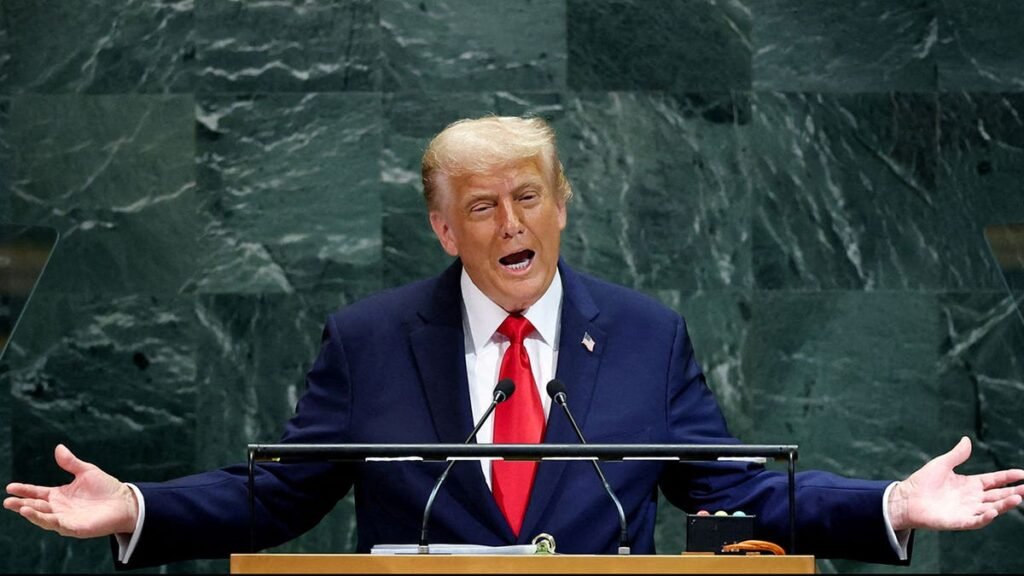
      LIZ PEEK: Can Trump Make the UN Great Again despite its globalist agenda?

      close Video Israeli Ambassador to the United Nations Danny Danon condemns the UN for allegedly including Israel in sexual violence blacklist Danny Danon, the Israeli Ambassador to the United Nations (UN), blasts the UN for what he claims is their decision to include Israel in a sexual violence blacklist that also includes Hamas. NEWYou can

      NEWYou can now listen to Fox News articles!

      Today, President Trump will address the U.N. General Assembly. As New Yorkers fume over traffic nightmares created by the president and by hordes of visiting diplomats, they may (again) question, as do many Americans, why U.S. taxpayers support this badly managed and scandal-scarred institution. Especially when the U.N. so frequently works against our interests and seems incapable of accomplishing its primary mission.

      A new Gallup poll shows that 73% of Americans think the U.N. does a poor job of “maintaining international peace and security,” and 70% say the same about the U.N. “upholding international law” and “protecting human rights.” That’s a lousy report card for an organization that spends roughly $70 billion per year.

      Elsewhere in the world, the U.N. scores better, which is not surprising since poor countries, which constitute the majority of members, look to wealthier nations for handouts via the U.N. The nations of Sub-Saharan Africa, for instance, are especially keen on the sprawling organization.

      WALTZ DELIVERS BLUNT WARNING TO NATIONS DEFYING IRAN SANCTIONS, TOUTS GREENLAND DEAL

      Trump heads to UN General Assembly as foreign policy challenges mount Video

      How does that wealth transfer happen? One way was described by President Trump’s U.N. Ambassador Mike Waltz in recent testimony before Congress: “The U.N. let countries use peacekeeping missions as cash cows for their militaries. Peacekeepers could bring equipment, park it, never use it, take it home brand new, and get it paid for by the U.N.” Those operations can employ “10,000 to 18,000 soldiers”; the costs, Waltz says, are “quite significant.” He is ending that practice — just one step in reforming the bloated U.N., whose budget has quadrupled over the past 25 years.

      Americans have reason for skepticism, given the frequent votes that go against the U.S. or our ally Israel. For thirty-three years in a row, the General Assembly has voted to end our embargo on Cuba, and for decades it has opposed Israel’s attempts to protects its citizens from Palestinian terrorists. Waltz calls the body a “cesspool of antisemitism.”

      WALTZ SLAMS FRANCE AFTER STUNNING SOCIAL MEDIA ATTACK ON US AFTER UN VOTE

      Not only is the U.N. frequently hostile to the U.S., it is often ridiculous. Most recently, the U.N. voted overwhelmingly to adopt a new map which blows up Africa’s presence on the globe; the U.S. was the sole dissenter. In a memo explaining our outlier vote, Deputy U.S. Representative Yaryna Ferencevych called such resolutions “barnacles on our work here” and wrote: “Instead of focusing on genuine problems of international peace… this body is debating map projects from the 16th century, and their role in promoting reparations and “cognitive justice.”

      The U.N. rarely has much real-world impact. Critics might question, for instance, what the U.N. has done to resolve the Russia-Ukraine War, or how it has helped keep the world’s oil flowing through the Strait of Hormuz. The answer in both cases is zero.

      Instead, the U.N. is hyper-focused on climate change, gender equality and other issues that may scratch a globalist itch, but appear little related to the cause of peace.

      Demonstrators gather outside United Nations General Assembly Video

      Meanwhile, the U.N. is going broke. Last year the Economist reported: “On May 5th the U.N. will brief members on a previously unreported $600m (17%) cut to its $3.7bn [administrative] budget aimed at avoiding default this year. It will include a hiring freeze… Yet it may not be enough. A combination of deadbeat members and mad budget rules have led to a liquidity crisis.”

      TRUMP BRINGS NEW HEAT TO CONTROVERSIAL UN AGENCY AS ALLEGED HAMAS TIES ENGULF SCORES OF EMPLOYEES

      The article goes on to warn that a “leaked memo” suggesting that the Trump administration might cut off funding to the U.N. threatened “a financial crash in the citadel of peace and security.”

      The Trump White House has not bankrupted the U.N. by withholding payments. Instead, it appointed Waltz to drive much-needed reforms and who is, according to Politico, “generally well-regarded, including among many Democrats on Capitol Hill.” That’s rare praise for a Trump appointee.

      TRUMP ADMINISTRATION PROBES UNRWA OVER ALLEGED EMPLOYMENT OF 1,500 TERRORISTS

      Waltz is working to downsize the bloated U.N., focusing on its staff of 100,000 — individuals who are paid roughly 17% more than equivalent U.S. civil servants, according to Waltz. According to testimony he gave to Congress a few months ago, Waltz’s team pushed through a “historic 15% cut $570 million out of the U.N.’s regular budget. That will eliminate nearly 3000 headquarters positions.” That change alone provided a savings for U.S. taxpayers of $126 million. Waltz recently told Fox Digital that budget cuts now total $1 billion.

      Waltz is also overhauling U.N. peacekeeping operations, some of which, as he has said, have been around for “30, 50 or even 80 years.” Waltz argues such forces are important to provide breathing room for political settlement of a conflict, but it “can’t then become an excuse to not have a political resolution. When you have a peacekeeping force, for example, in DRC and Congo, at the cost of a billion dollars a year, that’s been there for 30 years,” it should end.

      Mike Waltz: 'Under President Trump we're demanding reform' at the United Nations Video

      Waltz is just getting started; reforming an institution so large and complex takes time, which he may not have. Soon, the U.N. will elect a new secretary-general to succeed Portugal’s António Guterres, who has served since 2017. Currently, most of the candidates who have stepped forward appear eager to embrace the reforms advocated by the White House, alarmed that President Trump is ready to eviscerate the U.N.’s funding if changes are not made and a U.S.-friendly official not elected.

      CLICK HERE FOR MORE FOX NEWS OPINION

      Finances are not Trump’s only weapon. As Politico reported, when the White House announced the creation of the Board of Peace last year to oversee the Israel-Gaza conflict, “U.N. officials and diplomats were really, really unnerved,” seeing that Board as some sort of “rival peacemaking institute.”

      TRUMP-BACKED BOARD OF PEACE, ISRAEL ‘WILL TAKE ACTION’ IF HAMAS REMAINS OUT OF COMPLIANCE: NETANYAHU ADVISOR

      However, permanent members of the Security Council, which include Russia, China, France, the U.K. and the U.S., can veto candidates. That is making the race unpredictable. If the members cannot agree, they could extend Gutterres’ term by another year, which would likely mean that President Trump would have less say in the outcome.

      CLICK HERE TO DOWNLOAD THE FOX NEWS APP

      That could trash the White House’s push to Make the U.N. Great Again and would be disastrous for the U.N.

      CLICK HERE TO READ MORE FROM LIZ PEEK

      NEWYou can now listen to Fox News articles!

      Today, President Trump will address the U.N. General Assembly. As New Yorkers fume over traffic nightmares created by the president and by hordes of visiting diplomats, they may (again) question, as do many Americans, why U.S. taxpayers support this badly managed and scandal-scarred institution. Especially when the U.N. so frequently works against our interests and seems incapable of accomplishing its primary mission.

      A new Gallup poll shows that 73% of Americans think the U.N. does a poor job of “maintaining international peace and security,” and 70% say the same about the U.N. “upholding international law” and “protecting human rights.” That’s a lousy report card for an organization that spends roughly $70 billion per year.

      Elsewhere in the world, the U.N. scores better, which is not surprising since poor countries, which constitute the majority of members, look to wealthier nations for handouts via the U.N. The nations of Sub-Saharan Africa, for instance, are especially keen on the sprawling organization.

      WALTZ DELIVERS BLUNT WARNING TO NATIONS DEFYING IRAN SANCTIONS, TOUTS GREENLAND DEAL

      Trump heads to UN General Assembly as foreign policy challenges mount Video

      How does that wealth transfer happen? One way was described by President Trump’s U.N. Ambassador Mike Waltz in recent testimony before Congress: “The U.N. let countries use peacekeeping missions as cash cows for their militaries. Peacekeepers could bring equipment, park it, never use it, take it home brand new, and get it paid for by the U.N.” Those operations can employ “10,000 to 18,000 soldiers”; the costs, Waltz says, are “quite significant.” He is ending that practice — just one step in reformin

      !—->!—->!—->!—->!—->!—->!—->!—->!—->!—->!—->!—->!—->!—->!—->!—->
      Read More

      Continue Reading
      Internet Security

      Niger Miners’ Deaths: CSOs Demand Transparent Probe, Caution Against Speculation

      A coalition of civil society organisations led by Stand Up Nigeria (SUN) has appealed to Nigerians to remain calm and avoid spreading unverified information on social media over the deaths of 37 suspected illegal miners in the custody of the Nigeria Security and Civil Defence Corps (NSCDC) in Niger State…

      A coalition of civil society organisations led by Stand Up Nigeria (SUN) has appealed to Nigerians to remain calm and avoid spreading unverified information on social media over the deaths of 37 suspected illegal miners in the custody of the Nigeria Security and Civil Defence Corps (NSCDC) in Niger State…
      Read More

      Continue Reading