Internet Security

Two years after WannaCry, a million computers remain at risk

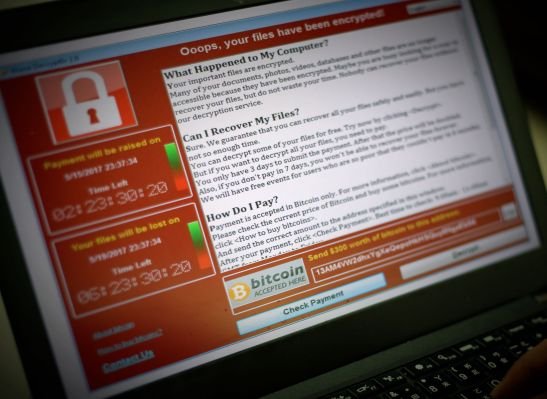
Two years ago today, a powerful ransomware began spreading across the world. WannaCry spread like wildfire, encrypting hundreds of thousands of computers in more than 150 countries in a matter of hours. It was the first time that ransomware, a malware that encrypts a user’s files and demands cryptocurrency in ransom to unlock them, had…


Two years agotoday, a powerful ransomware began spreading across the world.

WannaCry spread like wildfire, encrypting hundreds of thousands of computers in more than 150 countries in a matter of hours. It was the first time that ransomware, a malware that encrypts a user’s files and demands cryptocurrency in ransom to unlock them, had spread across the world in what looked like a coordinated cyberattack.

Hospitals across the U.K. declared a “major incident” after they were knocked offline by the malware. Government systems, railway networks and private companies were also hit.

Security researchers quickly realized the malware was spreading like a computer worm, across computers and over the network, using the Windows SMB protocol. Suspicion soon fell on a batch of highly classified hacking tools developed by the National Security Agency, which weeks earlier had been stolen and published online for anyone to use.

“It’s real,” said Kevin Beaumont, a U.K.-based security researcher at the time. “The shit is going to hit the fan big style.”
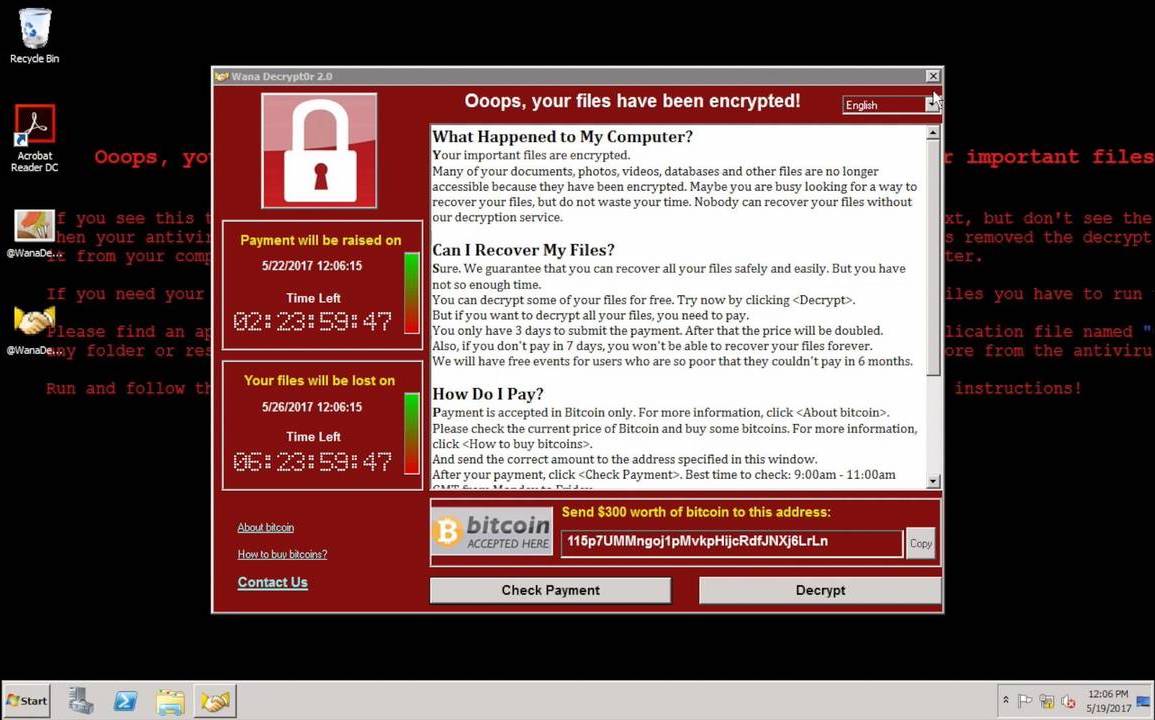
WannaCry relied on stolen NSA-developed exploits, DoublePulsar and EternalBlue, to hack into Windows PCs and spread through the network (Image: file photo)

An unknown hacker group — later believed to be working for North Korea — had taken those published NSA cyberweapons and launched their attack — likely not realizing how far the spread would go.The hackers used the NSA’s backdoor, DoublePulsar, to create a persistent backdoor that was used to deliver the WannaCry ransomware. Using the EternalBlue exploit, the ransomware spread to every other unpatched computer on the network.

A single vulnerable and internet-exposed system was enough to wreak havoc.

Microsoft,already aware of the theft of hacking tools targeting its operating systems, had released patches. But consumers and companies alike moved slowly to patch their systems.

In just a few hours, the ransomware had caused billions of dollars in damages. Bitcoin wallets associated with the ransomware were filling up by victims to get their files back — more often th

Read More

Be the first to write a comment.

Leave a Reply

Your email address will not be published. Required fields are marked *

Internet Security

Niger Miners’ Deaths: CSOs Demand Transparent Probe, Caution Against Speculation

A coalition of civil society organisations led by Stand Up Nigeria (SUN) has appealed to Nigerians to remain calm and avoid spreading unverified information on social media over the deaths of 37 suspected illegal miners in the custody of the Nigeria Security and Civil Defence Corps (NSCDC) in Niger State…

A coalition of civil society organisations led by Stand Up Nigeria (SUN) has appealed to Nigerians to remain calm and avoid spreading unverified information on social media over the deaths of 37 suspected illegal miners in the custody of the Nigeria Security and Civil Defence Corps (NSCDC) in Niger State…
Read More

Continue Reading
Internet Security

Artists can express humanitarian concerns, but not undermine public order and security: Tan Kiat How

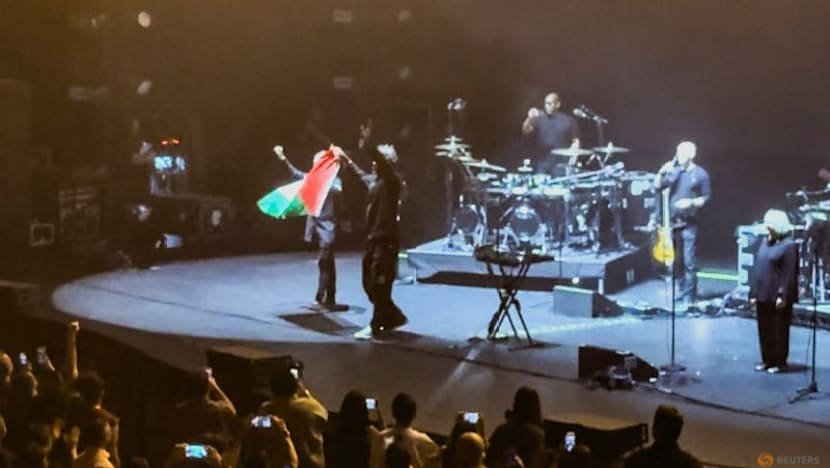
Advertisement Singapore Artistes can express humanitarian concerns, but not undermine public order and security: Tan Kiat How Senior Minister of State Tan Kiat How cited several performances dealing with social and humanitarian issues that had been allowed to proceed in Singapore. Robert Del Naja and Grant Marshall from Massive Attack stand with a Palestinian flag

Advertisement

Singapore

Artistes can express humanitarian concerns, but not undermine public order and security: Tan Kiat How

Senior Minister of State Tan Kiat How cited several performances dealing with social and humanitarian issues that had been allowed to proceed in Singapore.

Artistes can express humanitarian concerns, but not undermine public order and security: Tan Kiat How

Robert Del Naja and Grant Marshall from Massive Attack stand with a Palestinian flag onstage at the end of their performance in Singapore, July 29, 2026, in this screengrab from video obtained from social media. Simran Panaech/via REUTERS


New: You can now listen to articles.


This audio is generated by an AI tool.

Justin Ong Guang-Xi

Justin Ong Guang-Xi

Justin Ong Guang-Xi

10 Sep 2026 01:42PM
(Updated: 10 Sep 2026 02:06PM)


Bookmark


Bookmark


Share

SINGAPORE: Artistes can express humanitarian concerns about international conflicts, but such expression should not undermine public order, security or stability in Singapore, Senior Minister of State for Digital Development and Information Tan Kiat How said on Thursday (Sep 10).

“Singapore should not be used by foreigners as a platform to further political causes, including those relating to conflicts or political issues overseas,” he said.

Artistes, whether Singaporean or foreign, are expected to abide by Singapore’s laws and the conditions of the arts entertainment licence when performing here, he added.

Mr Tan was responding in parliament to MP Hazlina Abdul Halim (PAP-East Coast), who asked how authorities distinguish prohibited political advocacy from expressions of humanitarian concern.

CNA Games
Guess Word
Guess Word
Crack the word, one row at a time

Buzzword
Buzzword
Create words using the given letters

Mini Sudoku
Mini Sudoku
Tiny puzzle, mighty brain teaser

Mini Crossword
Mini Crossword
Small grid, big challenge

Word Search
Word Search
Spot as many words as you can

Show More

Show Less

She also asked how an artiste’s intent and the context of an expression are taken into account, and whether licensing conditions would be reviewed to exclude peaceful expressions of support for humanitarian causes.

Mr Tan said that besides an artiste’s intention, the Infocomm Media Development Authority (IMDA) considers the likely impact of a performance when assessing whether it meets licensing conditions.

Under IMDA’s Arts Entertainment Classification Code, content should not undermine public order, national security or stability.

The code, which sets out the framework for assessing and classifying live or public arts entertainment, also states that content should be “sensitive to the concerns of different racial or religious groups and the prevailing community expectations of what is necessary to safeguard racial harmony and religious harmony”.

In July, members of British band Massive Attack were issued stern warnings and barred from re-entering Singapore after flying a Palestinian flag during a concert, with one of the members shouting “Free Palestine”.


06:31 Min

The government recognises the humanitarian impact of international conflicts and that artistes may wish to express concern for those affected. Such expressions are not prohibited but should not undermine public order, national security or stability in Singapore. This condition is made clear in the Arts Entertainment Classification Code issued by the Infocomm Media Development Authority. Senior Minister of State for Digital Development and Information Tan Kiat How highlighted this approach in reply to an MP’s questions in parliament on Thursday (Sep 10). He stressed that Singapore should not be used by foreigners as a platform to further political causes, including those relating to conflicts or political issues overseas. 

Ms Hazlina asked Mr Tan for examples of performances involving social causes that had been allowed to take place.

He cited To The Unforgotten, an event held in May this year that featured a song, poem and multimedia artwork about the Israel-Gaza conflict. It was classified R18.

Another example was 6 Microlectures on Genocides. Also classified R18, the play comprised short works that explore themes of genocide, war crimes and contemporary conflicts, Mr Tan said.

He also pointed to the 2024 stand-up comedy show Namaste, which was classified Advisory 16 and included a segment in which comedians spoke about the Israel-Gaza conflict.

“So having material and content on causes itself is not prohibited, and the licensing framework is designed to, of course, protect young people from unwanted content, but also allow people to make decisions on what they can watch,” said Mr Tan.

“But at the same time, having some boundaries on the kind of content that may stir up public disorder or national security considerations.”

Mr Tan said assessments were “very contextual” and encouraged applicants for Arts Entertainment Licences to engage IMDA early.

“The earlier the applicants engage IMDA, the earlier conversations can start, and earlier we can give clarity and guidance on the kind of content that may be approved and

!–>!–>
Read More

Continue Reading
Internet Security

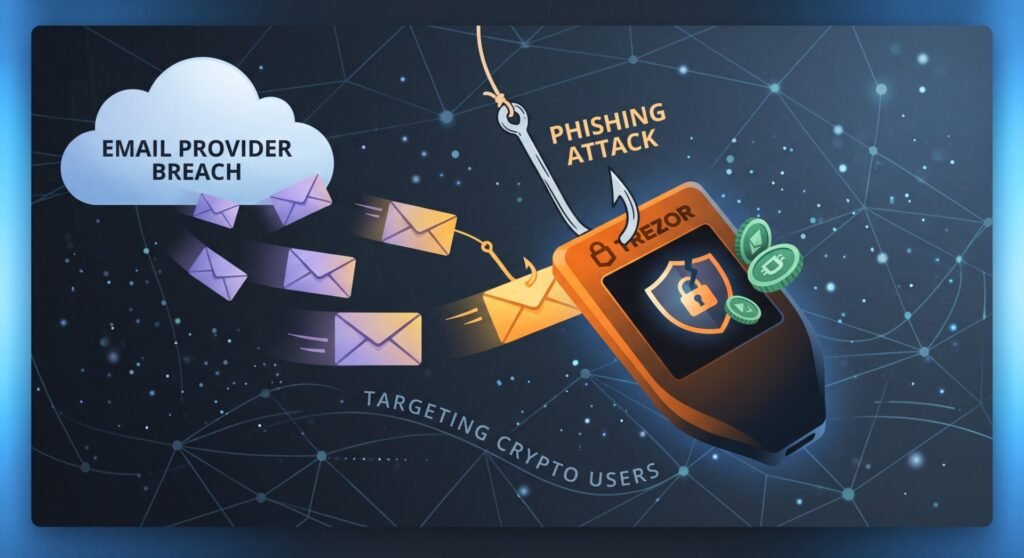
Trezor Email Provider Breached in Phishing Attack Targeting Crypto Users

Trezor warned users that attackers used a compromised third-party email provider to send a fake STM32 security alert, a phishing scam that also hit rival BitBox and other Bitcoin companies. The post Trezor Email Provider Breached in Phishing Attack Targeting Crypto Users appeared first on Crypto News Australia…

Trezor warned users that attackers used a compromised third-party email provider to send a fake STM32 security alert, a phishing scam that also hit rival BitBox and other Bitcoin companies.
The post Trezor Email Provider Breached in Phishing Attack Targeting Crypto Users appeared first on Crypto News Australia…
Read More

Continue Reading
Internet Security

Liquid ‘white hats’ return $270M in Bitcoin as network prepares restart

The actors returned 85% of the Bitcoin withdrawn from Liquid’s federation wallet following the security incident…

The actors returned 85% of the Bitcoin withdrawn from Liquid’s federation wallet following the security incident…
Read More

Continue Reading