“You Don’t Do That to an Ally”: Longtime French Ambassador to U.S. Scorches Biden

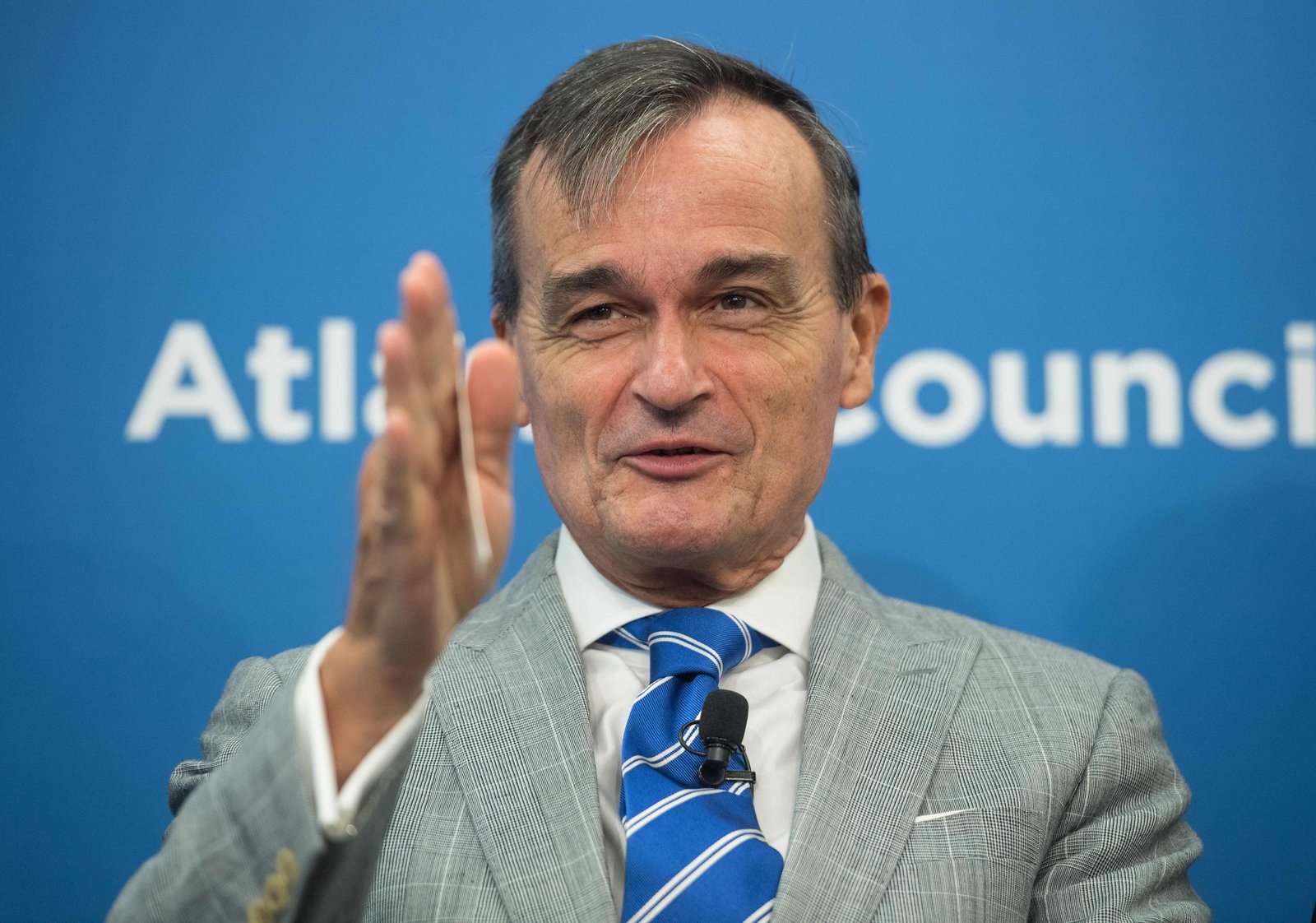
As of Monday, Biden administration
officials were in active discussions with their French counterparts to connect
the president with French President Emmanuel Macron to clean up a diplomatic spat between the
two countries that blew up last week. The row centers on a new Indo-Pacific-focused
alliance between the United Kingdom and Australia. As part of the alliance, the
U.S. agreed to provide
nuclear-powered submarine technology to Australia in a $66 billion deal that
left France out in the cold. France had previously been negotiating its own $66
billion submarine contract with Australia that the new deal papered over.Biden administration officials didn’t
expect the response they got. The French ambassador, Philippe Étienne, was
recalled for consultations, as was Étienne’s diplomatic colleague in Australia.
A gala scheduled at the French Embassy marking the 240th anniversary
of the Battle of Chesapeake Bay, an important event during the American
Revolutionary War involving the French and British, was canceled. On Sunday, France’s
foreign minister, Jean-Yves le Drian, talked with ambassadors from the U.S. and Australia about “the strategic consequences of the current crisis.”The crisis also marks an example of America’s pivot to countering China around the world. Helping Australia
with submarines is part of that pivot. Privately though, U.S.
diplomatic officials have also been suggesting that France’s irritated response
is in part about politics. Macron wants to appear tough as he heads into a difficult reelection fight.Over the weekend, I caught up with Étienne’s predecessor, Gérard Araud, the longtime ambassador to the U.S. from France who served from 2014 to 2019 and, prior to that, as the French permanent
representative to the U.S. for five years, and became a master
navigator of Washington political and diplomatic circles. Araud, speaking on
the phone to me from Paris, relayed the French frustration with the U.S., the scope of what this broken deal means, and what he expects to happen
next. A transcript of our conversation from Saturday is below. It has been
edited for brevity and clarity (and because my French is terrible):The New Republic: I guess I was
surprised when they recalled your successor over this. It just seemed to have
happened so quickly.Araud: He was on the phone
on the way to the airport, and I told him, “It is very chic to be recalled.
Really, for the career. It’s a moment in the career.” I was jealous. To be frank, I think the Americans had
totally underestimated the seriousness of what they were doing. Because for us, it’s not only the fact that we lost an important contract. But on top of that,
for us, it was not only a contract, because Australia was a strategic choice.
You don’t sell 12 submarines this way. We had decided to make Australia the
pillar of our Indo-Pacific strategy. The two French presidents, Hollande and
Macron, went to Australia. You know, it’s
20 hours of flight, hah!So for us, basically, it was seen at
the level of Macron of course assuming this real loss, but also as a strategic
defeat. And the strategic defeat inflicted by the U.S. in the most devious way.
They have negotiated [behind] our back for weeks! We are allies. You don’t do
that to an ally. On top of that, they have added an insult to the injury. By the
end of that there is a new partnership, and France is excluded. And they bring
the British! Why? For us it is so amazing that frankly it didn’t make sense. And
they didn’t warn us. We knew through the press. And there was no consultation,
cooperation, compensation—nothing! So it was really amazing. When I was
ambassador, I was telling my people never underestimate the incompetence of the
U.S. administration.TNR: But that was during Trump. Do you
think that applies here too with Biden? Araud: Well, you know, now
there is no assistant secretary for European affairs. There is no ambassador to
Paris. There is no ambassador to NATO. So I think that’s been playing a role.
As usual, the State Department is implying that the thing was committed by a
small group at the White House. But obviously the French element was not factored
in. Or it was simply swept under the carpet. My colleague, the ambassador, told
me that frankly he had the impression that the Americans didn’t realize what
they had done. Really, this sort of public humiliation of a major ally, really
they were surprised. So, in a sense, recalling the ambassador is, on one side,
telling [French] public opinion, which is outraged here, which is really [in] shock,
that we are reacting. It’s also telling the Americans, “Be serious. What you
have done is really serious.” And don’t forget also—it’s not the
major element, but don’t forget that we have presidential elections in seven
months.TNR: It does seem like that’s Macron’s
number one priority. Here, it seems like part of the appeal of doing this is
that he is showing the French people—his voters—that he will stand up to the
Americans.Araud: Yes, it’s an
element. But don’t overestimate the element. I think in a very strange way what
we have done with the Australians, and I can assure you it has been a long-term
game, was done in a sense by the pro-Americans in the French administration
because it was not that natural for the French to go to the Indo-Pacific and to
stand up to the Chinese. So there is also an element of betrayal of the
American lobby. The American-oriented civil servants [in France] feel totally
betrayed by the Americans. There is also another element which is certainly
important for Macron. It’s that we see that in the sort of long-term move on
the American side. You know, Obama didn’t care about Europe. Trump was hostile
to Europe. And here you have Biden. And Biden, to be frank so far, is a big
disappointment all over Europe.TNR: Really? Why is that? Araud: Because there is no
European policy. The administration has no European policy. The European
Commission has sent to Washington a big program to form what we call in Europe
a new transatlantic agenda saying we should work on that, that, and that. You
know, not only climate change, but we have a lot of issues: cryptocurrency, cybersecurity,
the taxation of high-tech companies. There are a lot of issues, and we should
work together. And frankly there has been no reaction from the U.S.
administration. When Biden went to Europe, he was patting the shoulders of
everybody and the back of everybody, the way he’s very good at doing it. But
there was no outcome. There was no substantial outcome but the creation of a
common council of technology. No initiative. No announcement that Europe and
the Americans are going to work together on such, such, and such issues. You
can ask other European ambassadors, and I was on the phone with them, and they
were agreeing, saying, “Its a big disappointment. There is no European policy.” The Americans are shifting to China. So they have a foreign policy: China,
China, China.You also have Afghanistan. So
Afghanistan has been a trauma.TNR: And I do remember reading about French
forces helping people and evacuating the Kabul Embassy
and getting people to the airport a few weeks ago.Araud: So we started the
evacuation well ahead of other countries. We were considered stupid and
defeatist by the other Europeans. But really, the way it was done without any
consultation with Europeans was of course resented also by the allies. You have
people who have lost a lot of soldiers actually in Afghanistan, and they were
totally taken by surprise. I don’t know if you saw, but the minister of foreign
affairs of the Netherlands has been obliged to resign.So in Europe we have been [given] the
impression to be a secondary quantity. So there is a general feeling in Europe.
I don’t want to overestimate it, because at the end of the day, I’m personally
convinced that Europeans value so much the American guarantee that they will
moan, but at the end of the day, they will close ranks behind the Americans as
usual. But nevertheless, there is a sort of disappointment about this
administration and worry. After Trump maybe there were too high expectations. And
suddenly, [there’s] the impression that the administration doesn’t value the Europeans
really.You remember people saying the U.S. is
a cowboy who doesn’t chew gum and work at the same time, and again it’s a bit
that.TNR: What happens next?Araud: There will be this
outburst really of passion, but I think that this will cool down at the end of
the day. But only because the French can’t do really anything. Here, I’m
talking in French terms and French politics. There is a very short campaign,
and Macron has been very critical of NATO for a [long] time, and saying, “The
Americans have been quite obstructive of the idea of European capabilities,” which frankly I don’t understand why. But again, that’s personal.TNR: Do Macron and Biden get along?
It seems like they might not.Araud: Now, first you know
your president is getting along with everybody.TNR: He’s known as sort of a backslapper, yeah.Araud: So we saw the pictures,
and as I told you, he’s slapping all the shoulders, all the backs, and I know
him personally. I met him a lot of times. So I don’t know what is genuine and
what is political theatricals. TNR: Who’s left in Washington? Is the
chargé d’affaires in charge?Araud: Frankly, the
ambassador will be back in a few days.TNR: This is just for show?Araud: Yes, show for the
French, and show for the Americans. But when you say “show,” it appears as a
negative. No. It’s a signal. It’s a political signal. He has been recalled for
consultation, and this expression means it’s only for a few days. I think in
five days or six days he’ll be back.
Read More
Be the first to write a comment.
