Crypto Currency

AI Needs Your Data—and You Should Get Paid for It

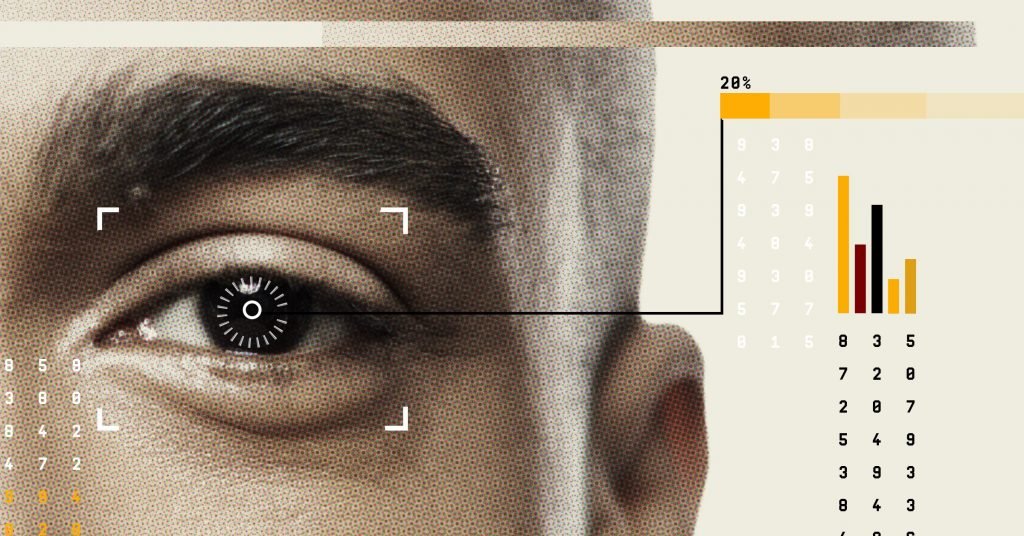
artificial intelligence. Doctors like Chang often rely on eye imaging to track the development of conditions like glaucoma. With enough scans, he reasoned, he might find patterns that could help him better interpret test results.Gregory Barber covers cryptocurrency, blockchain, and artificial intelligence for WIRED.That is, if he could get his hands on enough data. Chang…

artificial intelligence. Doctors like Chang often rely on eye imaging to track the development of conditions like glaucoma. With enough scans, he reasoned, he might find patterns that could help him better interpret test results.

Gregory Barber covers cryptocurrency, blockchain, and artificial intelligence for WIRED.

That is, if he could get his hands on enough data. Chang embarked on a journey that’s familiar to many medical researchers looking to dabble in machine learning. He started with his own patients, but that wasn’t nearly enough, since training AI algorithms can require thousands or even millions of data points. He filled out grants and appealed to collaborators at other universities. He went to donor registries, where people voluntarily bring their data for researchers to use. But pretty soon he hit a wall. The data he needed was tied up in complicated rules for sharing data. “I was basically begging for data,” Chang says.

Chang thinks he might soon have a workaround to the data problem: patients. He’s working with Dawn Song, a professor at the University of California-Berkeley, to create a secure way for patients to share their data with researchers. It relies on a cloud computing network from Oasis Labs, founded by Song, and is designed so that researchers never see the data, even when it’s used to train AI. To encourage patients to participate, they’ll get paid when their data is used.

That design has implications well beyond healthcare. In California, Governor Gavin Newsom recently proposed a so-called “data dividend” that would transfer wealth from the state’s tech firms to its residents, and US Senator Mark Warner (D-Virginia) has introduced a bill that would require firms to put a price tag on each user’s personal data. The approach rests on a growing belief that the tech industry’s power is rooted in its vast stores of user data. These initiatives would upset that system by declaring that your data is yours, and that companies should pay you to use it, whether it’s your genome or your Facebook ad clicks.

In practice, though, the idea of owning your data quickly starts looking a little … fuzzy. Unlike physical assets like your car or house, your data is shared willy-nilly around the web, merged with other sources and, increasingly, fed through a Russian doll of machine learning models. As the data transmutes form and changes hands, its value becomes anybody’s guess. Plus, the current way data is handled is bound to create conflicting incentives. The priorities I have for valuing my data (say, personal privacy) conflict directly with Facebook’s (fueling ad algorith

Read More

Be the first to write a comment.

Leave a Reply

Your email address will not be published. Required fields are marked *

Crypto Currency

Is the AI bubble about to burst? | Henrik Zeberg

We are living through what may be the largest economic bubble in history, spanning AI, cryptocurrency and tech company stocks, says financial analyst Henrik Zeberg. He explores why the current AI-crypto bubble mirrors the great economic frenzies of the past, revealing the psychological forces behind them — and why it looks like we’re repeating the

We are living through what may be the largest economic bubble in history, spanning AI, cryptocurrency and tech company stocks, says financial analyst Henrik Zeberg. He explores why the current AI-crypto bubble mirrors the great economic frenzies of the past, revealing the psychological forces behind them — and why it looks like we’re repeating the same patterns again…
Read More

Continue Reading
Crypto Currency

Bitcoin’s Pullback Tests Institutional Adoption Narrative as Pompliano Stays Bullish

Bitcoin Magazine Bitcoin’s Pullback Tests Institutional Adoption Narrative as Pompliano Stays Bullish Bitcoin’s recent pullback is testing the institutional-adoption thesis, but Anthony Pompliano argues the decline reflects normal capital rotation and Bitcoin’s maturation into a mainstream financial asset. This post Bitcoin’s Pullback Tests Institutional Adoption Narrative as Pompliano Stays Bullish first appeared on Bitcoin Magazine

Bitcoin Magazine

Bitcoin’s Pullback Tests Institutional Adoption Narrative as Pompliano Stays Bullish
Bitcoin’s recent pullback is testing the institutional-adoption thesis, but Anthony Pompliano argues the decline reflects normal capital rotation and Bitcoin’s maturation into a mainstream financial asset.
This post Bitcoin’s Pullback Tests Institutional Adoption Narrative as Pompliano Stays Bullish first appeared on Bitcoin Magazine and is written by Micah Zimmerman…
Read More

Continue Reading
Crypto Currency

Bitcoin Price Plunges Below ‘Fire Sale’ Territory as Fear Index Reads 12 — Echoing the FTX Crash

Bitcoin Magazine Bitcoin Price Plunges Below ‘Fire Sale’ Territory as Fear Index Reads 12 — Echoing the FTX Crash Bitcoin price plunged below the Bitcoin Rainbow Chart’s lowest “Basically a Fire Sale!” band for only the second time since the FTX collapse, while the Fear and Greed Index sank to 12…

Bitcoin Magazine

Bitcoin Price Plunges Below ‘Fire Sale’ Territory as Fear Index Reads 12 — Echoing the FTX Crash
Bitcoin price plunged below the Bitcoin Rainbow Chart’s lowest “Basically a Fire Sale!” band for only the second time since the FTX collapse, while the Fear and Greed Index sank to 12…
Read More

Continue Reading
Crypto Currency

Schwab Strategist: Bitcoin’s $60,000 Mining Cost Could Mark the Cycle Bottom

Bitcoin Magazine Schwab Strategist: Bitcoin’s $60,000 Mining Cost Could Mark the Cycle Bottom Bitcoin’s recent crash may have found a durable bottom near $60,000 because that level roughly matches the production cost of the most efficient miners, creating an energy-based floor. This post Schwab Strategist: Bitcoin’s $60,000 Mining Cost Could Mark the Cycle Bottom first

Bitcoin Magazine

Schwab Strategist: Bitcoin’s $60,000 Mining Cost Could Mark the Cycle Bottom
Bitcoin’s recent crash may have found a durable bottom near $60,000 because that level roughly matches the production cost of the most efficient miners, creating an energy-based floor.
This post Schwab Strategist: Bitcoin’s $60,000 Mining Cost Could Mark the Cycle Bottom first appeared on Bitcoin Magazine and is written by Micah Zimmerman…
Read More

Continue Reading