Internet Security

Dominion Voting Systems’ Legal Rampage Against Trump’s Grifters

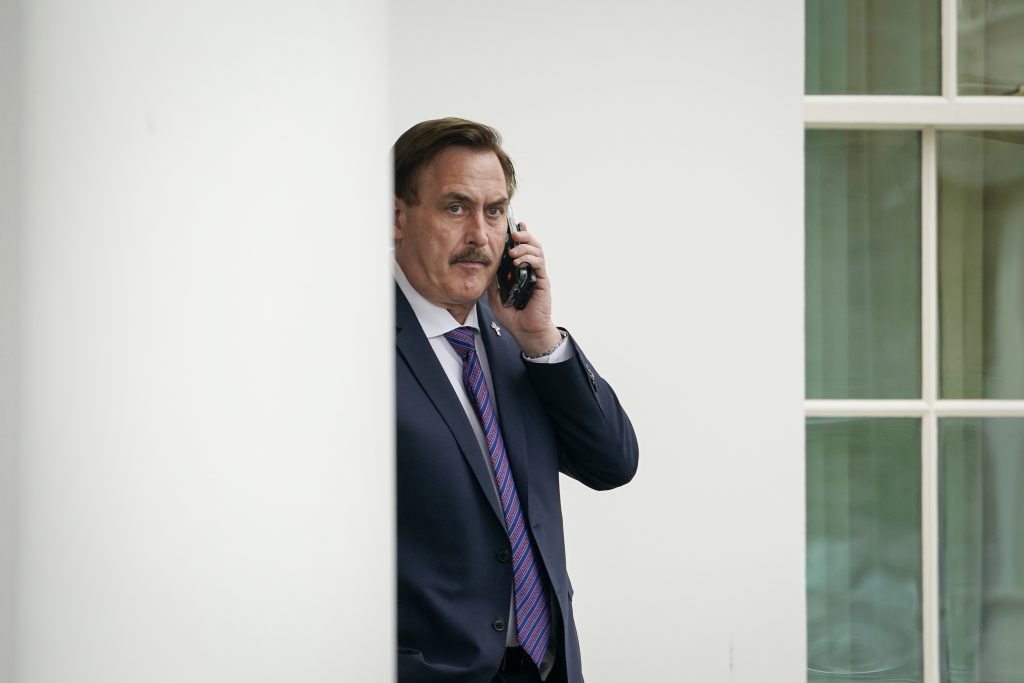
Every year, my colleagues and I get to go through “libel training.” Every year, I also make the insufferable joke to my co-workers that we’re going to be trained to commit libel. Unfortunately, it’s not quite that exciting. A lawyer who’s worked with The New Republic for many years presents a PowerPoint on the basics…

Every year, my colleagues and I get to go through “libel training.” Every year, I also make the insufferable joke to my co-workers that we’re going to be trained to commit libel. Unfortunately, it’s not quite that exciting. A lawyer who’s worked with The New Republic for many years presents a PowerPoint on the basics of American defamation law. He describes what counts as defamation and what doesn’t, what can insulate us from liability and what can increase it, and some of the gray areas where caution might be warranted.The annual lesson is a useful reminder that we have a responsibility, both legal and moral, to use our platform wisely. (I believe it’s also required by TNR’s insurance.) From a global perspective, we’re actually pretty lucky on this front. The First Amendment makes it extraordinarily difficult to bring a successful defamation lawsuit against someone in American courts. Australia and Britain, by comparison, have much lower legal thresholds for libel claims to succeed. This is one reason, among others, why the #MeToo movement spread further in American society than it did in many other countries, where survivors’ stories could be stifled with legal threats.But the U.S. threshold for defamation claims is not insurmountable. Mike Lindell, the far-right CEO of MyPillow, may soon find this out the hard way. Dominion Voting Systems filed a lawsuit against him this week for his central role in spreading what it refers to in its suit as the “Big Lie” that Donald Trump actually won the 2020 election, which among other things implicates the company as a participant in this unhinged conspiracy to thwart American democracy. “Despite having been specifically directed to the evidence and sources disproving the Big Lie, Lindell knowingly lied about Dominion to sell more pillows to people who continued tuning in to hear what they wanted to hear about the election,” Dominion said in the complaint.Dominion is suing the MyPillow CEO not just for lying about the election but for trying to monetize those lies, as well.Lindell is one of multiple right-wing figures who have recently found themselves on the other end of a defamation lawsuit in recent weeks over this “Big Lie.” But what makes Lindell’s case interesting is how it doesn’t simply rest on that wrong. Dominion is suing the MyPillow CEO not just for lying about the election but for trying to monetize those lies, as well. Along the way, the beleaguered voting-machine company provides a useful window into how the right-wing media grift really operates.Dominion’s lawsuits are clearly written to be read by a lay audience. Its 107-page complaint against Rudy Giuliani, which was filed a few weeks after the attack on the Capitol, doubles as a partial history of the postelection chaos. It weaves Giuliani’s incendiary claims about election fraud with how those claims resonated among Trump supporters—and how Giuliani sought to hawk various products along the way, including “gold coins, supplements, cigars, and protection from ‘cyberthieves.’” Taken together, the insurrection on January 6 feels almost inevitable, in hindsight, as Giuliani and others repeatedly warned their listeners that the nation was in peril and that American democracy had been stolen.Giuliani did not disavow his past claims after January 6, but he at least had the good sense to be less conspicuous about them. Mike Lindell took a different approach. Dominion’s 121-page complaint against him documents in exacting detail how Lindell’s actions unfolded. The MyPillow CEO claimed for months that Trump’s victory was stolen from him—and from his supporters—by Dominion, the Democrats, a few foreign governments, and a dizzying array of other co-conspirators. To say there is no evidence to support his claims is to suggest that he meant for them to be falsifiable. They are pure and unadulterated nonsense. Time and time again, he claimed that the evidence would bear out his extraordinary claims. That evidence invariably turned out to be false or nonsensical. Every election official and court of law in the country that scrutinized the “Big Lie” found it to be wrong.Dominion devotes ample space in its complaint to documenting how Lindell’s claims were not just wrong, but recklessly and intentionally wrong in their view. The company had no choice if it wanted to meet the legal threshold for defamation. What’s even more interesting is how Dominion wove in the economic forces at play. Lindell, in its telling, is not just some random guy with an unusually large platform. He’s a key advertising sponsor on the networks that aired his sensational claims, creating a conflict of interest for the media outlets that hosted him—and a profit opportunity for himself.To that end, Dominion also charged him with engaging in deceptive trade practices. Lindell, Dominion argued in its complaint, “willfully made them in the course of his business as the CEO of MyPillow because he and his company could derive—and did in fact derive—financial benefits from making those false statements, namely, sales of MyPillow products that occurred because Lindell was exploiting and disseminating defamatory falsehoods about Dominion.” No such claim was raised against Giuliani in the company’s complaint against him.Lindell, who is better known as “the MyPillow guy,” became an early ally of Donald Trump and used that connection to leverage his brand even further. He advertised prolifically on Fox and other right-wing networks, even as other sponsors abandoned them. Lindell’s ubiquity made it even more remarkable when he openly clashed with Newsmax hosts over his election-fraud lies. Dominion’s complaint recounts the showdown:Five days later, Newsmax gave Lindell an interview to discuss the fact that Twitter had banned Lindell’s account for spreading election disinformation and then had banned MyPillow’s corporate account because Lindell had used it to circumvent the ban on his personal account. Newsmax knew that the discussion of those bans was an invitation to have Lindell repeat the Big Lie that had gotten Lindell banned from Twitter in the first place. For weeks prior to that, Newsmax had broadcast defamatory falsehoods about Dominion. And Newsmax was fully aware at this point that the Big Lie was in fact a lie, as evidenced by Newsmax’s own prior “clarifying” segment on the topic. Newsmax had broadcast that segment because it was worried about being sued for defamation—not because it cared about the truth. If Newsmax cared about the truth, it would not have broadcast the Big Lie again after issuing the “clarifying” segment. But, unwilling to lose MyPillow ad dollars and seeking to protect its credibility with people it had already misled into believing the election was stolen, Newsmax bowed to the pressure and gave its financial backer a global platform to repeat the Big Lie that Newsmax knew was false—and to market MyPillow. Foreseeably, Lindell—introduced with the chyron “CEO, MyPillow”—said “we have all this election fraud with these Dominion machines. We have 100% proof.” Newsmax anchor Bob Sellers interjected by reading a legal disclaimer that was clearly drafted beforehand by Newsmax lawyers in a calculated attempt to shirk responsibility for what Newsmax knew Lindell would say on air. Lindell shouted over Sellers, saying that Twitter had banned him “because I’m reviewing all the evidence on Friday of the election fraud with all these machines.” Despite Sellers’s on-air plea to Newsmax to “get out of here,” Newsmax did not cut Lindell’s mic, and Sellers walked off set.The Newsmax-Lindell blowup went semi-viral on social media and received some news coverage. What received less attention, however, was a follow-up appearance made on the network later that evening by Lindell to, according to Dominion, “smooth things over, market MyPillow, and lend further credibility to Lindell and the Big Lie about Dominion.”Rob Schmitt acknowledged the earlier interview and told Lindell, “obviously you were on the network earlier in the day and we made some waves there. We’ll leave it at that. But you and Newsmax have always had a good relationship.” Newsmax again promoted the Big Lie by giving Lindell a platform to say, in reference to the earlier interview where he had said he had “100% proof” of “fraud with the Dominion machines,” that he would have “something coming out on Friday that is going to really help, a documentary I have put together.” When asked how the Twitter ban had impacted MyPillow’s business, Lindell said “Everyone is buying, and we are so busy, we are so busy, we are hiring. We have over 102 products, it is not just pillows anymore. Customers have always stepped up right now. It’s amazing. Just like Newsmax did.” Schmitt responded, “No kidding, my parents have one of your pillows in fact.” Lindell then pitched MyPillow and told viewers they could still use “the promo code ‘Newsmax’ on MyPillow.com to save up to 66%.”When Lindell later bought large chunks of airtime on One America News Network, or OAN, the network tried to distance itself from what would undoubtedly be false claims by running a legal disclaimer before his broadcasts. But Dominion argued that this maneuver was disingenuous, at best. “In stark contrast to OAN’s barely legible fine-print disclaimer that the film contained ‘opinions’ ‘not intended to be taken or interpreted by the viewer as established facts,’ on its official Twitter feed, OAN explicitly endorsed and promoted the film as a ‘report breaking down election fraud evidence & showing how the unprecedented level of voter fraud was committed in the 2020 Presidential Election,’” Dominion noted in its complaint.For Dominion itself, the impact of these lies is immense. “Because of death threats and other threatening messages prompted by the lies told by Lindell and his allies, Dominion has made significant expenditures to protect its people from harm—including by employing on-site police and security,” the company told the court. “Since the beginning of the viral disinformation campaign, Dominion has spent more than $565,000 on private security for the protection of its people.” The company itself has also suffered business damages from the reputational harm it suffered over the past few months. Dominion told the court that it projected a loss of $200 million in potential profits over the next five years and that its resale value, which once ranged between $450 million and $500 million, had been effectively “destroyed.”What other remedy, beyond these kinds of lawsuits, is available to companies like Dominion?What other remedy, beyond these kinds of lawsuits, is available to companies like Dominion? The First Amendment means that Congress can’t simply pass a law banning right-wing outlets from lying to their audiences. (This would also be a mistake for other reasons, even if the First Amendment did allow it.) Activist groups have tried to fight speech with speech by targeting Fox News with boycotts for more than a decade. Their efforts may have had some impact on individual hosts and shows, but they failed to tilt the network as a whole toward more responsible coverage. Fox’s corporate owners announced a 31 percent jump in advertising in the most recent quarterly report, increasing both revenue and profits even as it lost ratings share to right-flank rivals like OAN and Newsmax after the election.Litigation, however, is a uniquely potent threat to right-wing purveyors of falsehoods. It imposes an outer bound of conduct where basic ethics, civic values, and common sense will not. Lou Dobbs, who spent months disputing the election results without evidence, lost his Fox Business Network show one day after Smartmatic, another voting-machine company, filed a lawsuit against him and his network. Other right-wing outlets have scrambled to retract or rewrite articles that fed into the “Big Lie” before January 6. Some conservative networks have even run special segments disavowing their previous coverage under the threat of legal action.Lindell, for his part, has welcomed the possibility of a lawsuit. “I dare Dominion to sue me, because then it will get out faster,” he recently told Fox News’s Tucker Carlson, referring to the purported evidence of wrongdoing he has thus far failed to deliver. This does not seem like a wise legal strategy, but it’s also not uncommon among his fellow “Big Lie” adherents. Reflexively doubling down is what got them to this point in the first place. Rudy Giuliani made a similarly audacious claim and then spent a week evading a process server, according to Dominion. Sidney Powell reportedly sat silently in a car as someone tried to serve her with a similar lawsuit, as if it were a Tyrannosaurus rex and she could escape Jurassic Park undevoured as long as she didn’t flinch. This is a jarring glimpse into how the right-wing media grift operates. There are individual journalists who are conservative and do good or even great work. But the idea of “conservative journalism” has proven somewhat hollow, especially over the past few years. As my colleague Alex Pareene once noted, conservative media outlets tend to trend toward misinformation and propaganda over substantive reporting for the simple reason that it’s easier and more congruous with the conservative movement’s goals. The Trump era laid bare how this dynamic worked: Virtually every great scoop of the last four years came not from Fox, OAN, or Breitbart, but from mainstream networks and newspapers. Trumpworld couldn’t stop complaining about “fake news” while leaking to the same reporters it disparaged.I am not optimistic that this barrage of lawsuits will lead to a deeper reckoning among the purveyors of right-wing slop. It’s simply too profitable to tell legions of American viewers that Alexandria Ocasio-Cortez sabotaged Texas’s power grid earlier this month for these outlets to stop any time soon. And there is still a vast array of lies and half-truths that right-wing figures can spread without rising to the level of legal action. The First Amendment, for all its glory, is also merciless. As an American journalist, I want that threshold to remain high. But I would be lying if I said it wasn’t somewhat satisfying to watch large swaths of the conservative media ecosystem reckon with the deadly consequences of its actions over the past few months.
Read More

Be the first to write a comment.

Leave a Reply

Your email address will not be published. Required fields are marked *

Internet Security

How a national security threat label has reignited Indonesia’s LGBTQ debate

Advertisement Asia How a national security threat label has reignited Indonesia’s LGBTQ debate Indonesia last October classified the “spread of LGBTQ culture” as one of the country’s non-military threats. A series of developments thrust the provision into the public eye this month, sparking a debate.   A street vendor walks past a banner reading ‘Indonesia

Advertisement

Asia

How a national security threat label has reignited Indonesia’s LGBTQ debate

Indonesia last October classified the “spread of LGBTQ culture” as one of the country’s non-military threats. A series of developments thrust the provision into the public eye this month, sparking a debate.


How a national security threat label has reignited Indonesia's LGBTQ debate

A street vendor walks past a banner reading ‘Indonesia LGBT Emergency’ in front a mosque in Jakarta, Indonesia, January 25, 2018. (REUTERS/Beawiharta)


New: You can now listen to articles.


This audio is generated by an AI tool.

Ericssen

Ericssen

Ericssen

21 Jul 2026 06:00AM
(Updated: 21 Jul 2026 10:59AM)


Bookmark


Bookmark


Share

SINGAPORE: For more than eight months, a provision tucked away in an Indonesian presidential regulation on national defence drew little public attention.

In an appendix to Presidential Regulation No. 111/2025 on the General National Defence Policy signed in October last year, the government classified the “spread of LGBTQ culture” as one of the country’s non-military threats. 

The clause, referring to lesbian, gay, bisexual, transsexual and queer culture, appeared alongside a range of other threats deemed capable of affecting national resilience. They included illegal trafficking, natural resource theft, terrorism, atheism and radicalism.

A presidential regulation is a legally binding regulation published in the State Gazette, while General National Defence Policy documents are highly technical and usually attract little public attention outside government and defence circles.

But a series of developments thrust the provision into the public eye this month, sparking a debate on the place of LGBTQ issues in state policy and the extent to which social issues should be framed within Indonesia’s defence strategy.

The issue quickly spread beyond social media into mainstream Indonesian media with national outlets including Antara, Kumparan, and Tempo examining the regulation and prompting public responses from senior government officials.

Some observers and activists say the clause could heighten discrimination against LGBTQ individuals in society, even as Indonesian ministers have defended the regulation while saying the government has no intention of curtailing the fundamental rights of citizens.

“As Indonesian citizens, LGBTQ people are entitled to education, employment, healthcare and other public services without restrictions, segregation or discrimination,” Indonesia’s Human Rights Minister Natalius Pigai told CNA in a phone interview.

CNA Games
Guess Word
Guess Word
Crack the word, one row at a time

Buzzword
Buzzword
Create words using the given letters

Mini Sudoku
Mini Sudoku
Tiny puzzle, mighty brain teaser

Mini Crossword
Mini Crossword
Small grid, big challenge

Word Search
Word Search
Spot as many words as you can

Show More

Show Less

Indonesia’s Human Rights Minister Natalius Pigai. (Photo courtesy of Human Rights Ministry)

But he added that Indonesian society is not ready to accept the LGBTQ community, even as the state remains obliged to respect, protect and fulfil every citizen’s rights to education, employment, healthcare and public services.

“The time has not yet come to formally recognise them as an official group because society is not yet ready to accept them,” he said.

HOW THE CLAUSE CAME TO PUBLIC ATTENTION

While it remains unclear what first drew widespread attention to the provision, it resurfaced amid a series of developments involving LGBTQ issues. One was a Pride Month-themed social media post in mid-June by Suara Mahasiswa, a student publication at the University of Indonesia.

The post had led to a heated online debate, with critics arguing it was inconsistent with Indonesia’s religious and social norms. They questioned why it invoked the Pancasila national ideology to defend the LGBTQ community. Pancasila comprises five principles: Belief in one God, civilised humanity, national unity, democracy and social justice.

The backlash prompted the university to publicly distance itself from the post and launch an internal review.

Then in late June, the Indonesian Ulema Council (MUI) said it was preparing an academic paper and a draft bill to criminalise LGBTQ-related conduct for Parliament’s National Legislation Programme.

MUI deputy chairman Muhammad Cholil Nafis argued that moral appeals alone were no longer sufficient to curb what he described as the growing activities and campaign surrounding LGBTQ culture.

“If there are no legal penalties at all, it eventually becomes normal. We should not normalise it. Punishment helps people understand that it is not normal,” he said.

“Deviant activities, such as same-sex parties, are now increasingly being displayed openly in public without any sense of shame,” he added.

Scrutiny then shifted to the new regulation that had previously gone largely unnoticed.

The belated attention came as no surprise to Agus Wahyudi, head of the Inter-Religious Studies Programme at Gadjah Mada University (UGM) in Yogyakarta.

Documents such as the General National Defence Policy typically circulate within government bureaucracy and rarely become the subject of public debate, he said.

But a provision can take on political significance when a series of events – in this case, the Pride Month-themed social media post and the MUI’s planned bill – draws the public’s notice, said Agus.

“What changed was not necessarily the policy itself, but the public attention it attracted,” Agus said.

WHY WAS IT PLACED IN A NATIONAL DEFENCE DOCUMENT?

Asked whether the presidential regulation represented the first national policy to explicitly mention LGBTQ, human rights lawyer Asfinawati said Indonesia’s 2008 Pornography Law referred to “lesbian” and “homosexual” acts in its explanatory notes to a provision banning the production, distribution and sale of pornographic material.

It defined what the law described as “deviant sexual intercourse” for the purposes of pornography offences, rather than creating a standalone offence based on sexual orientation or gender identity.

Presidential Regulation No. 111/2025 goes further by classifying the “spread of LGBTQ culture” itself as a non-military threat, argued Asfinawati, the former chair of the Indonesian Legal Aid Foundation.

“This regulation no longer links it to sexual conduct. Simply having a particular sexual orientation or gender identity is placed within a threat framework,” she said.

Experts have questioned whether a national defence framework was an appropriate instrument for addressing issues such as sexual orientation and gender identity.

In principle, national defence should focus on military threats, said Tangguh Chairil, a lecturer in security studies at the Department of International Relations at Binus University, Jakarta.

Indonesia, however, classifies threats into three categories: Military, non-military and hybrid. As a result, issues beyond the traditional defence sphere are increasingly viewed as national security issues.

“Because the definition is so broad, almost anything can be treated as a national security threat,” Tangguh told CNA.

Classifying LGBTQ culture as a non-military threat under a defence framework means the issue may be treated as a security concern requiring state attention and resources, he added.

“Issues that have been successfully securitised tend to receive greater attention than others,” he said.

Yusril Ihza Mahendra, Coordinating Minister for Legal Affairs, Human Rights, Immigration, and Corrections, told news outlet Tempo on Jul 9 that “non-military threat” was used to categorise risks against national resilience.

In the socio-cultural context, “resilience” refers to values, ethics, character of the younger generation, families, digital space, and social cohesion, he said.

“What the government perceives as a threat is the campaign, propaganda, and dissemination of LGBT behaviour aimed at altering the values that align with the nation’s culture and morality,” he added.

Indonesia’s Chief Minister for Law and Human Rights, Yusril Ihza Mahendra, speaks as Australia’s Minister for Home Affairs, Tony Burke, listens during a press conference following their meeting in Jakarta, Indonesia, December 3, 2024. (REUTERS/Willy Kurniawan)

Asfinawati said the regulation cannot serve as the legal basis for introducing new criminal provisions or for regional governments to impose criminal sanctions unless authorised by law.

Under Indonesian law, a person’s sexual orientation as well as consensual same-sex relations between adults are not, by themselves, criminal offences. The exception is Aceh province, which implements Islamic crimina

Read More

Continue Reading
Internet Security

Nigeria: UNICEF chief urges child protection amid security, humanitarian crises

Violence in Nigeria The head of the U.N. children’s agency visited northwestern Nigeria on Friday as conflict, poverty and rising food insecurity leave millions of children in the region in need of aid. Catherine Russell, executive director of UNICEF, toured the state of Sokoto, where the agency is seeking to draw attention to worsening humanitarian

Violence in Nigeria

The head of the U.N. children’s agency visited northwestern Nigeria on Friday as conflict, poverty and rising food insecurity leave millions of children in the region in need of aid.

Catherine Russell, executive director of UNICEF, toured the state of Sokoto, where the agency is seeking to draw attention to worsening humanitarian challenges facing children.

She met with state officials and visited UNICEF-supported programs aimed at improving the health of both mothers and children and protecting vulnerable youngsters.

“We have to make sure that children are protected in these conflicts,” she said.

“That their healthcare is protected, that their food is protected, that their education is protected. Children can’t waste years of their life because conflicts are going on.”

Northern Nigeria is already gripped by an intensifying security crisis that has killed thousands.

The ongoing Middle East conflict has deepened food insecurity for millions living in poverty, making children in poor households more vulnerable.

According to UNICEF between 18.3 million and 23.4 million more children in monetarily poor households worldwide have fallen into deeper poverty, including 6.5 million to 8.8 million in Africa.

Nigeria has one of the world’s largest populations of impoverished children, and humanitarian organizations warn that those in the country’s conflict-torn north remain among the most vulnerable.

For some, UNICEF-supported programs have made a tangible difference.

Zainab Bello, 19, said she had been out of school before joining the agency’s “Digital Village” program.

“I was taught digital literacy… how to use a digital tool,” she said.

“I also learned how I can promote my vocational skills on various social media platforms.”

The head of the U.N. children’s agency visited northwestern Nigeria on Friday as conflict, poverty and rising food insecurity leave millions of children in the region in need of aid.

Catherine Russell, executive director of UNICEF, toured the state of Sokoto, where the agency is seeking to draw attention to worsening humanitarian challenges facing children.

She met with state officials and visited UNICEF-supported programs aimed at improving the health of both mothers and children and protecting vulnerable youngsters.

“We have to make sure that children are protected in these conflicts,” she said.

“That their healthcare is protected, that their food is protected, that their education is protected. Children can’t waste years of their life because conflicts are going on.”

Northern Nigeria is already gripped by an intensifying security crisis that has killed thousands.

The ongoing Middle East conflict has deepened food insecurity for millions living in poverty, making children in poor households more vulnerable.

According to UNICEF between 18.3 million and 23.4 million more children in monetarily poor households worldwide have fallen into deeper poverty, including 6.5 million to 8.8 million in Africa.

Nigeria has one of the world’s largest populations of impoverished children, and humanitarian organizations warn that those in the country’s conflict-torn north remain among the most vulnerable.

For some, UNICEF-supported programs have made a tangible difference.

Zainab Bello, 19, said she had been out of school before joining the agency’s “Digital Village” program.

“I was taught digital literacy… how to use a digital tool,” she said.

“I also learned how I can promote my vocational skills on various social media platforms.”

Read More

Continue Reading
Internet Security

UK police arrest man over threat to shoot Reform leader Nigel Farage

A man who threatened on social media in May to shoot Reform UK party leader Nigel Farage was arrested, London police said on Wednesday, as concerns grow over the security of politicians following the killing of Ann Widdecombe, a former member of parliament. The man was arrested on Tuesday on suspicion of sending threatening communications

A man who threatened on social media in May to shoot Reform UK party leader Nigel Farage was arrested, London police said on Wednesday, as concerns grow over the security of politicians following the killing of Ann Widdecombe, a former member of parliament.
The man was arrested on Tuesday on suspicion of sending threatening communications to a member of parliament…
Read More

Continue Reading
Internet Security

Kiambu CCTV captures 2 young men’s suspicious activity in apartment: “Who knows them?”

CCTV footage captured two young men attempting a daytime break-in in Ndumberi, sparking social media reactions amid rising insecurity and calls for vigilance…

CCTV footage captured two young men attempting a daytime break-in in Ndumberi, sparking social media reactions amid rising insecurity and calls for vigilance…
Read More

Continue Reading