Apple

Facebook is afraid of apps that can replace WhatsApp

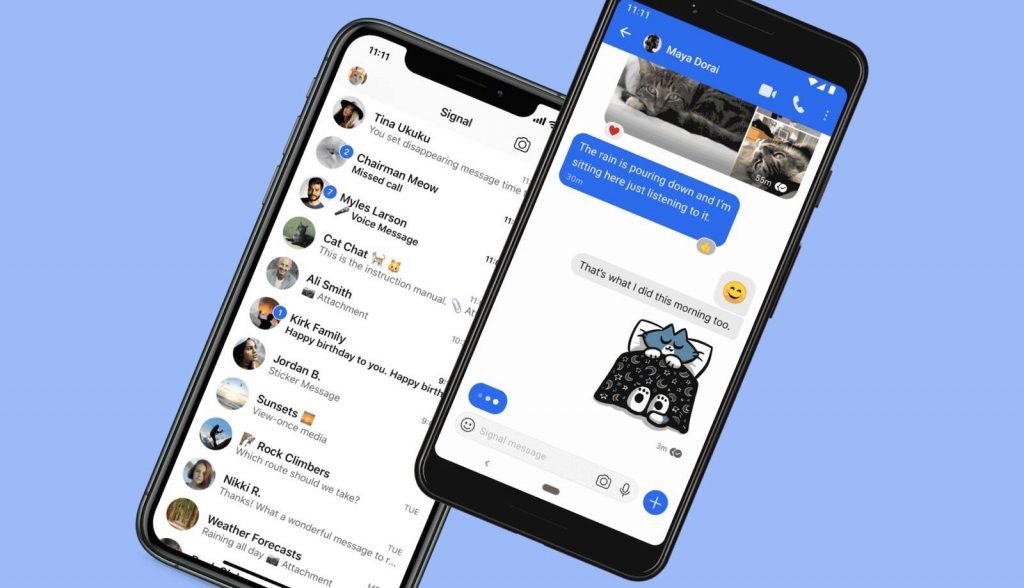
Facebook responded to the backlash over the new WhatsApp privacy policy changes, explaining in a FAQ that the app will not lose end-to-end encryption and other privacy features in the upcoming update. WhatsApp prompted users to agree to the new privacy policy a few days ago. Millions of people downloaded competing instant messaging apps like…

Facebook responded to the backlash over the new WhatsApp privacy policy changes, explaining in a FAQ that the app will not lose end-to-end encryption and other privacy features in the upcoming update.
WhatsApp prompted users to agree to the new privacy policy a few days ago. Millions of people downloaded competing instant messaging apps like Signal and Telegram in response.
Signal and Telegram offer the same end-to-end encryption as WhatsApp and work on iPhone and Android.
Facebook now tells customers that it’s WhatsApp business and commerce features that will lead to data sharing with Facebook.

Facebook confirmed a few days ago that it’s about to ruin WhatsApp, as users discovered prompts on Android and iPhone telling them the chat app would start sharing personal data with Facebook. Facebook has been trying to make it seem like it cares about user privacy and security for its users, but its moves say otherwise. The recent attack on Apple following the introduction of the app privacy labels that tell users exactly how terrifying data collection practices can prove that. The decision to start grabbing data from WhatsApp users is also controversial, considering that the only option to opt out is to leave WhatsApp completely. Millions of users have responded to WhatsApp’s notification by flocking to competing apps that offer similar services. And now Facebook is already putting up defenses, proving it’s afraid of the backlash.

The reason WhatsApp is so popular is quite simple. The app offers end-to-end encryption, just like iMessage and works on both iPhone and Android. It’s the perfect app on your phone, tablet, and desktop to keep in touch with all your friends and family, no matter what devices they might use. But WhatsApp isn’t the only chat app that can do that.

Signal and Telegram both support end-to-end encryption and work on iPhone and Android. Like WhatsApp and iMessage, they also offer the same features you’d expect from an instant messaging client, including file-sharing, phone calls, emoji, and many of the bells and whistles you’d want from an iMessage alternative.

Both Signal and Telegram have seen massive surges in downloads since the WhatsApp privacy prompt hit phones, with millions of people flocking to download the apps. Even the CEOs of Tesla and Twitter took sides, with Elon Musk endorsing Signal and Jack Dorsey retweeting it. WhatsApp’s dominance isn’t likely to be threatened anytime soon. But if more people start using competing services like Signal and Telegram, they could move more of their contacts to those platforms in time.

Facebook is already addressing the privacy problem it created, proving it’s very aware of the backlash. The company posted a FAQ section that explains exactly what WhatsApp data Facebook will not be able to collect from users and shared the infographic above on social media.

Facebook will not be able to see your private messages and hear your calls. That was never a worry, as Facebook doesn’t intend to remove end-to-end encryption from the app. Facebook also says that WhatsApp will not keep messaging and calling logs and won’t see shared location data. WhatsApp will not share contacts, and groups will remain private. The app will support disappearing messages, and users can download their data.

These are all good things, of course. But Facebook doesn’t include in the infographic the data WhatsApp will share with Facebook, even though the FAQ section does contain more details about the new WhatsApp privacy update.

“We want to be clear that the policy update does not affect the privacy of your messages with friends or family in any way. Instead, this update includes changes related to messaging a business on WhatsApp, which is optional, and provides further transparency about how we collect and use data,” the page reads.

Facebook explains that WhatsApp users who choose to communicate with businesses will have some of their data shared with those companies. “Whether you communicate with a business by phone, email, or WhatsApp, it can see what you’re saying and may use that information for its own marketing purposes, which may include advertising on Facebook,” the FAQ section reads.

“If you choose to interact with Shops, your shopping activity can be used to personalize your Shops experience and the ads you see on Facebook and Instagram, the FAQ says. “Features like this are optional, and when you use them, we will tell you in the app how your data is being shared with Facebook.”

Discovering businesses on Facebook and then contacting them via WhatsApp could also lead to more data tracking. “If you have WhatsApp installed on your phone, you’ll have the option to message that business,” the page reads. “Facebook may use the way you interact with these ads to personalize the ads you see on Facebook.
Read More

Be the first to write a comment.

Leave a Reply

Your email address will not be published. Required fields are marked *

Apple

New Apple CEO’s LinkedIn leaves everyone saying the same thing

Many social media users associate LinkedIn with a certain type of cringey business-speak. Ternus’s profile is a little different.

Many social media users associate LinkedIn with a certain type of cringey business-speak. Ternus’s profile is a little different.
Read More

Continue Reading
Apple

Did Jacob Misiorowski really hit an apple off Quinn Priester’s head?

The Brewers’ social media team has been killing it.

The Brewers’ social media team has been killing it.
Read More

Continue Reading
Apple

Apple Music pokes fun at latest Spotify price increase

Last month, Spotify announced a new round of price increases for subscribers in the United States and other countries. As the price increases start to go into effect starting with February renewals, Apple Music is poking fun at Spotify’s drama on social media. Apple Music is also offering a free three-month trial right now…

Last month, Spotify announced a new round of price increases for subscribers in the United States and other countries. As the price increases start to go into effect starting with February renewals, Apple Music is poking fun at Spotify’s drama on social media.

Apple Music is also offering a free three-month trial right now…
Read More

Continue Reading
Apple

Trust Wallet integrates Apple Pay to streamline cryptocurrency purchases

Individuals can now buy crypto on Trust Wallet using Apple Pay. The feature is currently available in more than 45 countries. Such updates reduce entry barriers into the crypto and blockchain world. Trust Wallet, one of the reputable digital asset wallets, has made another step toward promoting cryptocurrency adoption. It has confirmed adding Apple Pay


Trust Wallet integrates Apple Pay to streamline cryptocurrency purchases

  • Individuals can now buy crypto on Trust Wallet using Apple Pay.
  • The feature is currently available in more than 45 countries.
  • Such updates reduce entry barriers into the crypto and blockchain world.

Trust Wallet, one of the reputable digital asset wallets, has made another step toward promoting cryptocurrency adoption.

It has confirmed adding Apple Pay today, November 27, on X, allowing individuals in more than 45 countries to purchase their favourite virtual tokens within seconds.

Notably, the new feature promises an enhanced experience for new and existing users. The announcement read:

Trust Wallet has integrated Apple Pay. Buy your first crypto in seconds. Available in 45+ countries.

Indeed, purchasing digital tokens has been challenging for newbies, with lengthy verification procedures, numerous account setups, and limited payment methods often discouraging them.

Trust Wallet wants to address this challenge. With the integration of Apple Pay, it aims to make digital assets more accessible than ever, as individuals can now buy their “first crypto in seconds.”

How to get started

Depositing funds in a Trust Wallet account using Apple Pay is straightforward.

Users only need to open the app, visit the ‘Fund’ tab, and choose Apple Pay as the desired payment option.

Everything takes a few taps, mirroring the smooth experience when using Apply Pay for day-to-day purchases.

Most importantly, Trust Wallet benefits from Apple Pay’s credibility and security features, which include Touch ID, encrypted payments, and Face ID.

That promises streamlined crypto purchases that don’t compromise user safety.

Trust Wallet expands footprint globally

The team confirmed that users in more than 45 countries can access the Apple Pay transaction option.

Trust Wallet is lowering barriers to joining crypto, which will likely make it an entry point for millions who have struggled to access the digital assets market.

Individuals in jurisdictions with limited options to participate in the cryptocurrency industry now have a swift and secure option.

TWT price outlook

Trust Wallet’s native token remained somewhat muted in the past 24 hours.

The alt is trading at $1.08 after a slight 0.09% uptick on the daily price chart.

TWT has consolidated over the past week after losing nearly 15% in the last 30 days, influenced by broader selling pressure.

Meanwhile, TWT has underperformed the broader market today.

CoinMarketCap data shows the value of all cryptocurrencies increased by more than 3% the last 24 hours to $3.12 trillion.

Bitcoin is trading at $91,480, pumping the altcoin space as risk-on sentiments surfaced.

For now, Bitcoin should reclaim the key zone between $93,000 and $94,000 to shift its near-term trajectory to bullish.

That can support steady upswings towards the $100,000 psychological market.

However, a sudden selling wave will see it retracing to the ‘new’ liquidity region at $85,000 – $86,000.

Read More

Continue Reading