Crypto Currency

San Francisco Bans Agency Use of Facial Recognition Tech

facial recognition by city agencies, a first-of-its-kind measure that has inspired similar efforts elsewhere.Gregory Barber covers cryptocurrency, blockchain, and artificial intelligence for WIRED.San Francisco’s ban covers government agencies, including the city police and county sheriff’s department, but doesn’t affect the technology that unlocks your iPhone or cameras installed by businesses or individuals. It’s part of…

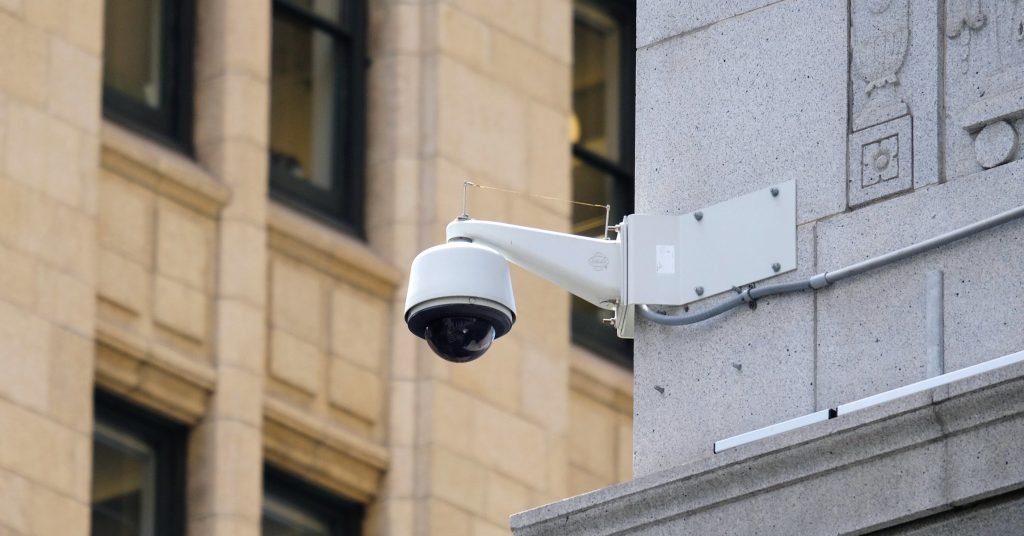
facial recognition by city agencies, a first-of-its-kind measure that has inspired similar efforts elsewhere.

Gregory Barber covers cryptocurrency, blockchain, and artificial intelligence for WIRED.

San Francisco’s ban covers government agencies, including the city police and county sheriff’s department, but doesn’t affect the technology that unlocks your iPhone or cameras installed by businesses or individuals. It’s part of a broader package of rules, introduced in January by supervisor Aaron Peskin, that will require agencies to gain approval from the board before purchasing surveillance tech and will require that they publicly disclose its intended use. In coming weeks, Oakland and Somerville, Massachusetts, are expected to consider facial-recognition bans of their own.

Facial-recognition technology has been used by law enforcement to spot fraud and identify suspects, but critics say that recent advances in AI have transformed the technology into a dangerous tool that enables real-time surveillance. Studies by researchers at MIT and Georgetown have found that the technology is less accurate at identifying people of color and could automate biases already pervasive in law enforcement. Privacy advocates see banning facial recognition as a unique opportunity to prevent the technology from getting too entrenched. “We’re doing it now before the genie gets out of the bottle,” says Brian Hofer, an attorney who heads Oakland’s Privacy Advisory Commission, which spearheaded the legislation in that city.

In San Francisco, the police department says it doesn’t currently use facial recognition, although it tested the technology on booking photos between 2013 and 2017. The Sheriff’s department, which is included under the board’s unique city-and-county authority, says it doesn’t either. “We will comply with whatever the requirements are,” says spokeswoman Nancy Crowley, adding that officers are equipped with Axon body camera

Read More

Be the first to write a comment.

Leave a Reply

Your email address will not be published. Required fields are marked *

Crypto Currency

Nearly 7 Million Bitcoin is Sitting in a Quantum Minefield, Including Satoshi’s

On-chain reports suggest that almost 6.7 million Bitcoin are currently sitting in quantum-vulnerable addresses. These tokens have not moved in years, and some have not moved for over a decade. A portion of these coins is also believed to belong to Satoshi Nakamoto. Currently, these coins are the most valuable target in the history of

On-chain reports suggest that almost 6.7 million Bitcoin are currently sitting in quantum-vulnerable addresses. These tokens have not moved in years, and some have not moved for over a decade. A portion of these coins is also believed to belong to Satoshi Nakamoto. Currently, these coins are the most valuable target in the history of
The post Nearly 7 Million Bitcoin is Sitting in a Quantum Minefield…
Read More

Continue Reading
Crypto Currency

Google slashes quantum cracking estimates by 20X creating $600 billion countdown for Bitcoin and Ethereum

A new paper from Google Quantum AI has sharply reduced the estimated hardware required to crack elliptic-curve cryptography used by Bitcoin and much of Ethereum, moving a long-running security debate closer to market terms. At current market prices, the quantum computing risks could affect more than $600 billion in Bitcoin…

A new paper from Google Quantum AI has sharply reduced the estimated hardware required to crack elliptic-curve cryptography used by Bitcoin and much of Ethereum, moving a long-running security debate closer to market terms. At current market prices, the quantum computing risks could affect more than $600 billion in Bitcoin…
Read More

Continue Reading
Crypto Currency

Bitcoin Sell-Offs Are Ramping Up As Price Struggles, But Where Is All That BTC Going To?

Bitcoin has shed about $3,500 in value over recent days, slipping from above $70,000 earlier in March to around $66,500, as short-term holders take their exits. On one particularly turbulent day, about 22,000 BTC were moved to exchanges in a single session. Yet, the Bitcoin price is still holding above support and hasn’t broken below

Bitcoin has shed about $3,500 in value over recent days, slipping from above $70,000 earlier in March to around $66,500, as short-term holders take their exits. On one particularly turbulent day, about 22,000 BTC were moved to exchanges in a single session. Yet, the Bitcoin price is still holding above support and hasn’t broken below the $60,000 range. …
Read More

Continue Reading
Crypto Currency

Google’s New Quantum Research Reignites Push to Harden Bitcoin

Bitcoin Magazine Google’s New Quantum Research Reignites Push to Harden Bitcoin Google’s quantum research is accelerating fears that Bitcoin’s cryptography may face a real timeline — not a theoretical one — forcing the network to race toward quantum-resistant upgrades. This post Google’s New Quantum Research Reignites Push to Harden Bitcoin first appeared on Bitcoin Magazine

Bitcoin Magazine

Google’s New Quantum Research Reignites Push to Harden Bitcoin
Google’s quantum research is accelerating fears that Bitcoin’s cryptography may face a real timeline — not a theoretical one — forcing the network to race toward quantum-resistant upgrades.
This post Google’s New Quantum Research Reignites Push to Harden Bitcoin first appeared on Bitcoin Magazine and is written by Micah Zimmerman…
Read More

Continue Reading