Antivirus

Avira Prime 2020 antivirus suite

No price informationCheck AmazonWe check over 130 million products every day for the best pricespowered by Avira originated more than thirty years ago, started by an electrical engineer Tjark Auerback and his business partner who formed an IT company called H+BEDV Datentechnik.Its HQ is located on the German shores of Lake Constance along with other…

No price information

Avira originated more than thirty years ago, started by an electrical engineer Tjark Auerback and his business partner who formed an IT company called H+BEDV Datentechnik.

Its HQ is located on the German shores of Lake Constance along with other offices in San Jose in the USA, Bucharest in Romania and another German site in Munich.

You can sign up for Avira Prime here

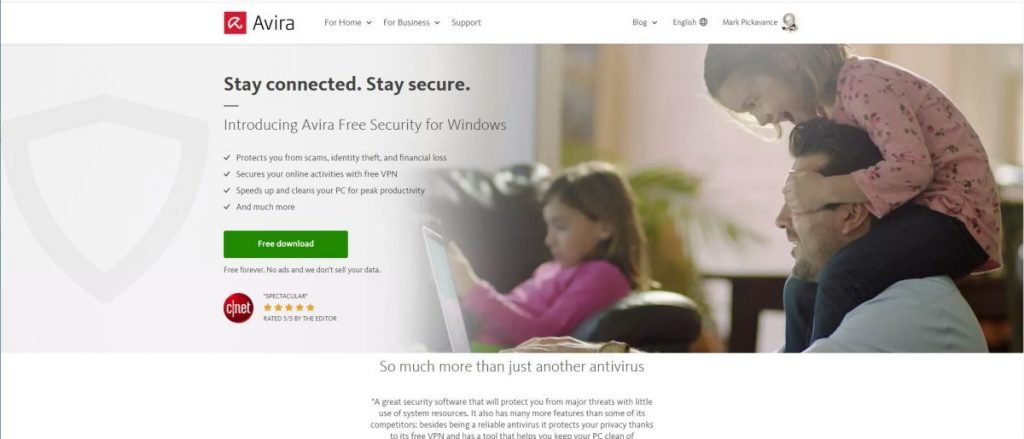
Avira security comes in three distinct flavours; Avira Free Security, Avira Internet Security and the focus of this review, Avira Prime.

As the name implies Avira Free Security is free to download and use, the Internet Security option is the first paid level that offers a single device license. Prime, reviewed here, offers licencing for five devices, VIP customer support, and free upgrades. It includes Avira’s Antivirus Pro, Password Manager Pro, Phantom VPN Pro and Software Updater Pro tools that can be licensed on their own.

Internet security costs £38.99 per annum, and Prime is currently offered at a 25% discount, down from £85.99 to just £63.99.

It is possible to pay £6.99 monthly or get more significant discounts by buying licensing for two or three years ahead.

At those prices and with all the functionality included, Avira Prime looks like a bargain. But are all the features of this product equally useful, and how does it compare to the other security suites available?

Avira Prime

Avira Prime secures, enhances and protects your privacy (Image credit: Avira)

Design

For Windows users, Avira tries to look like a single solution with a single master interface, but the functionality is split into modules that you can ignore or embrace at will.

They are grouped under three sub-sections labelled Security, Privacy and Performance.

Security includes the antivirus solution, software updater and firewall controls. Privacy is all about browser safety and includes the VPN, and Performance has all the system optimising elements that make sure your system is the best it can be.

Rather than having to navigate around these to find trouble, Avira has a top-level status screen that alerts you to potential problems, and also allows a smart scan to be run that will seek out all security, privacy and performance issues.

The Apple Mac version only contains the Antivirus and VPN technology and leaves out the maintenance, password manager and software updating features of the Windows installation.

These ommissions are also true of the Android and iOS installs, although they both contain the VPN and Password Manager.

Avira Prime

Avira Prime delivers timely analysis of your computer (Image credit: Avira)

The password manager isn’t part of the main software bundle on PC but instead operates through a browser extension. If you don’t like extensions, you can decline to have these placed on your system.

While password managers are useful, as most browsers have this functionality inbuilt, it isn’t something that is a necessity.

But these extensions aren’t the only things that come along with Avira. When we’d completed the installation and ran our first ‘smart scan’, we noticed that it found a few things it wanted to fix, including issues with Opera browser.

As we never installed Opera, this seemed odd. It turns out that Avira installs it for you, and we didn’t notice it doing that.

Avira Prime

Scanning for viruses and malware is fast and efficient (Image credit: Avira)

Antivirus

Undoubtedly one of the strongest parts of this offering is the antivirus tool. This module allows for basic quick, full, and scheduled scans in addition to having live file scanning. But if you want you can set it to scan just for rootkits or removable drives, there are lots of options.

Compared with the Windows Defender tools, Avira is quicker and less obtrusive.

Any files it doesn’t like can be quarantined or deleted, and logs of all scanning are automatically created.

We also noticed that a full Defender scan looked at about 52,000 files on our tests system, where Avira examined a whopping 3.8 million using full scan setting. And, even while it performed the full scan that took a couple of hours,  we could use the system without noticing any significant performance impact.

Our only reservation about the ‘Security’ part of this product is that it has a firewall section, and that infers that as part of Prime you get a firewall.

But when you go into the advanced settings of the firewall, it takes you to the Windows controls for the inherent Windows Defender Firewall.

What Avira allows you to do from its interface is to disable the firewall and switch it between Public and Private network modes, but the firewall is the same one built into every copy of Windows.

Avira Prime

Even while performance a full scan, the computer can still be used (Image credit: Avira)

What impressed us more was that all email is scanned, both outgoing and incoming. All this is done through the network, handling both installed desktop clients and web interfaces.

This feature is fully configurable, allowing whitelists for email addresses and custom handling of alerts. The only disappointment is that it doesn’t include any spam elimination, but it does catch more dangerous attachments, critically.

Avira Phantom VPN Pro

Forty internationally placed servers allow the Phantom VPN to mask your true location (Image credit: Avira)

Phantom VPN Pro

For many reasons have access to a VPN can be an especially useful tool, in both protecting your laptop on public Wi-Fi networks, or enabling access to regionalised content.

We often use them to see the pricing of products in different countries, as websites usually show

Read More

Be the first to write a comment.

Leave a Reply

Your email address will not be published. Required fields are marked *

Antivirus

Why There’s Simply No Need For Android Antivirus Apps Anymore

Many Android users install an antivirus app on a new device without thinking twice. In 2026, there are good reasons to skip that step entirely…

Many Android users install an antivirus app on a new device without thinking twice. In 2026, there are good reasons to skip that step entirely…
Read More

Continue Reading
Antivirus

‘People use smartphones more but invest less in their security’: New report claims McAfee and Norton remain the most loved antivirus brands as users ditch lesser-known security products for free tools like Microsoft Defender or Apple Xprotect

Copy link Facebook X Whatsapp Reddit Pinterest Flipboard Threads Email Share this article 0 Join the conversation Follow us Add us as a preferred source on Google Newsletter Subscribe to our newsletter Most smartphone users rely on built-in security without additional protection Paid antivirus adoption on mobile devices continues to decline steadily A significant share


  • Most smartphone users rely on built-in security without additional protection
  • Paid antivirus adoption on mobile devices continues to decline steadily
  • A significant share of users remains unprotected or unaware of safeguards

Most Americans now use their smartphones more than their computers, but very few spend money to protect those phones from hackers, new research has claimed.

A Cybernews report surveyed over 1,000 American adults, and found only 18% of mobile phone users pay for third-party antivirus software.

Built-in tools like Microsoft Defender and Apple’s XProtect have become the default choice for most people, while McAfee and Norton lead the paid market for the second year in a row.

Latest Videos From

You may like

  • Best antivirus software Best Antivirus Software 2026
  • People using Windows 11 laptops Can Windows 11’s built-in antivirus keep you safe? Microsoft thinks so
  • Norton 36src Premium Norton 360 Premium will protect your devices from AI scams, malware, and identity theft for less than $30

Smartphone owners are skipping extra security protections

Most consumers believe the security features already built into their phones are sufficient for daily use, and see little reason to spend extra money on something they think they already own for free.

Roughly 14% of mobile users say they have no cybersecurity tools installed at all on their devices. Another 16% cannot even name what protections they currently have in place.

On desktop computers, the situation looks very different, with far fewer unprotected machines and much wider adoption of third-party security tools.

Windows Defender and Apple’s native security features now serve as the primary defense for 53% of computer users and 51% of mobile users.

Most people choose these free options because they trust the operating system vendor to provide adequate baseline protection.

Paid antivirus adoption on computers has actually grown by 2% since last year, reaching 41% of users.

On mobile devices, however, third-party antivirus usage has dropped by roughly 10% over the same period, falling from 28% to just 18%.

What to read next

  • Customer at home looking happy because his network is protected by ESET Home Security We all need digital protection and the ESET Home Security Plan is the bees knees
  • A hand holding a mobile phone scans a QR code on a blurry laptop screen. The phone issues a warning that the QR code could be malicious. Microsoft phishing threat report shows 146% surge in quishing
  • Malware attack virus alert , malicious software infection , cyber security awareness training to protect business Time for an upgrade? Report warns outdated operating systems could be the ‘unnecessary risk’ your business forgot about

Mobile users face growing risks

Ransomware attacks targeting smartphones are still less common than those aimed at computers, but the threat landscape is shifting rapidly.

Users who depend solely on the free security tools that came with their phones may be underestimating what modern cybercriminals can do.

Paid subscriptions have gained ground over free alternatives, yet the majority of mobile owners still avoid spending money on dedicated protection.

Cybercrime exposure does influence some users to change their habits, but personal experience is not the main driver of adoption for most people.

Many users employ layered security approach, combining antivirus with VPNs and password managers.

However, the data shows that a large segment of mobile users remain either unprotected or unsure about what safeguards they have.

Established brands like McAfee and Norton continue to benefit from user trust, while lesser-known products struggle to gain acceptance even when their features are comparable.


Google logo on a black background next to text reading

Follow TechRadar on Google News and add us as a preferred source to get our expert news, reviews, and opinion in your feeds. Make sure to click the Follow button!

Read More

Continue Reading
Antivirus

Surfshark One review: Adequate antivirus protection with caveats

At a glanceExpert’s Rating Pros Clean, extremely simple interface Alternative ID lets you mask your whole identity, not just an email address VPN service is solid Cons Full scans hit PC performance hard Very few settings to adjust Not as many features as similarly priced rivals Our Verdict If VPN coverage is your first priority…

At a glanceExpert’s Rating

Pros

Clean, extremely simple interface

Alternative ID lets you mask your whole identity, not just an email address

VPN service is solid

Cons

Full scans hit PC performance hard

Very few settings to adjust

Not as many features as similarly priced rivals

Our Verdict
If VPN coverage is your first priority…
Read More

Continue Reading
Antivirus

NITDA raises alarm on DeepLoad AI malware attacks, proffers solutions

“Never paste commands from a website into your computer; legitimate software never asks for this. Do not open files named ‘Chrome Setup’ or ‘Firefox Installer’ from USB drives; scan all USB devices with antivirus software before use,” the agency said, warning corporate companies of possible cyber attacks…

“Never paste commands from a website into your computer; legitimate software never asks for this. Do not open files named ‘Chrome Setup’ or ‘Firefox Installer’ from USB drives; scan all USB devices with antivirus software before use,” the agency said, warning corporate companies of possible cyber attacks…
Read More

Continue Reading